Score |
43


Adedamie
 Medical laboratory scientist, visual artist, business owner. @ Lagos



What's Wrong with Your Hair?
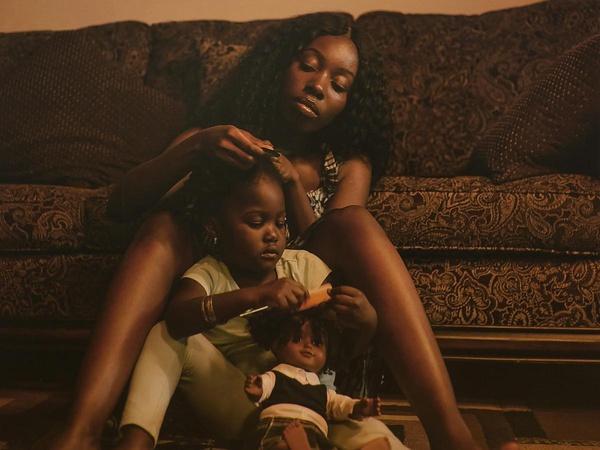
<p>Believe it or not, African hair has long been regarded as less beautiful than other hair textures. The roots of this perception can be traced to colonialism, when our skin and hair were labelled dirty, unkempt, and all sorts of undesirable things.</p><p>Many years later, there has been some improvement, but we are still not quite there. You may not hear someone tell you your natural hair is ugly, but you will hear questions like, "Why haven't you plaited your hair?"</p><p>This article is not an attempt to condemn any hairstyle. Rather, it seeks to raise a question: What is wrong with African hair?</p><p>Years ago, chemical relaxers became popular because they straighten the natural kinky African hair, and for many women, that makes it easier to manage. Over time, concerns emerged about the potential health risks associated with some hair-relaxing products, alongside familiar problems such as hair thinning, breakage, and scalp damage. Research has also raised concerns about possible links between certain chemical hair products and health conditions, including hormone-related cancers.</p><p>And so, we have continued to find ways to transform our hair.</p><p>Today, there are various forms of hair extensions in different colours, textures, styles, and designs, many marketed specifically to African women. Wigs, in particular, have become so fashionable that some cost hundreds of thousands or even millions of naira.</p><p>We spend so much money on these hairstyles, sometimes in the name of protecting our natural hair.</p><p>But again, what is wrong with African hair?</p><p>A friend once told me that a company she works for has a rule against women not plaiting their hair. What the company means is that women are expected to add extensions or wear wigs.</p><p>Think about that for a moment. What exactly is wrong with a woman showing up to work with her natural hair?</p><p>A colleague of mine has neck-length relaxed hair that she has been wearing for weeks. It is neatly combed, falls beautifully, and looks well-maintained. Yet, every day, other colleagues ask her, "When are you plaiting your hair?"</p><p>By plaiting, they mean adding extensions.</p><p>There are hardly any comments about the beauty of her actual hair, the hair that grows from her scalp. The assumption seems to be that she is yet to do something with it.</p><p>How many times have you picked a bone-straight wig over an Afro?</p><p><img alt="" src="/media/inline_insight_image/kaeme-rgN-MzrZ5h4-unsplash.jpg"/></p><p>Somehow, we have internalised the idea that a woman is classier because of the hair she wears. Hair extensions and wigs have become associated with sophistication, while women who wear their natural hair are sometimes labelled as “Deeper Life”, not fashionable, or, at best, described as conservative.</p><p>It is interesting how much we can infer about a woman's personality, lifestyle, or social standing from the way she chooses to wear her hair.</p><p>It becomes a big deal when a woman visits the salon and comes out with bum-length, goddess braids or a frontal glueless wig. We admire the transformation. We notice the length, the volume, the colour, and the styling.</p><p>We know the hair is artificial, yet somehow, we judge it more sophisticated, more fashionable, and, let's say, more beautiful than the hair growing naturally from our scalps.</p><p>Why?</p><p>Is it the cost? Is it the effort involved in getting these hairstyles? Or is it simply a mindset we have inherited and continue to reinforce: that African hair cannot stand on its own as a thing of beauty? That even when it is beautiful, it is somehow still not in the same class as the hairstyles we create with extensions?</p><p>Many of these wigs are designed to mimic textures associated with other racial groups. We spend a lot of money to wear a different texture, because society taught us it's more sophisticated. Maybe that's another layer of colonialism. But that's a conversation for another day</p><p>Consider 4C hair, a tightly coiled hair texture common among people of African descent. It can be challenging to maintain, particularly when you are unfamiliar with its needs or do not have access to suitable products and styling techniques.</p><p>As more women began embracing their natural hair and moving away from chemical relaxers, they had to find ways to care for and style their hair without changing its natural texture. Several companies responded by introducing products designed to support natural hair care.</p><p>I think that is a step forward.</p><p>Not because every African woman must wear her hair naturally, but because we are beginning to recognise that our hair deserves products, care, attention, and investment without necessarily having to be transformed into something else.</p><p>The goal is not to reach a point where we stop wearing wigs, braids, or extensions. Far from it.</p><p>African women have always had a wide range of hairstyles, and this diversity is part of what makes our beauty culture so vibrant. From colourful braids to elaborate updos, we have found creative ways to express ourselves through our hair.</p><p>A friend of mine has worn almost every colour of hair extensions you can think of. Honestly, it is lovely to see. I love that she can experiment with different colours and looks.</p><p>There is beauty in that freedom.</p><p><img src="/media/inline_insight_image/ben-iwara-QkWLhLbtpH8-unsplash.jpg"/></p><p>But there should also be beauty in the freedom to do nothing to your hair beyond washing, moisturising, combing, or styling it as it naturally grows.</p><p>We must come to a place where we see African hair as sufficient on its own. Beautiful without needing to be hidden beneath a wig, transformed by extensions, or justified to anyone.</p><p>Imagine a world where a woman can walk into her workplace with her Afro, her coils, or her tightly shrunken 4C hair without being asked when she intends to plait it.</p><p>Imagine a world where wearing natural hair is not interpreted as a statement about your religion, social class, personality, or financial status.</p><p>Imagine a world where a woman can wear a bone-straight wig today, colourful braids next week, and her natural hair the week after, without one choice being considered inherently more sophisticated than another.</p><p>Wigs and extensions should be ways to switch up our looks, experiment with styles, and express ourselves. They should be choices, not requirements for being considered beautiful or classy.</p><p>Our natural hair should not have to compete with the hairstyles we create.</p><p>We should be able to enjoy the beauty of both without treating one as an improvement on the other.</p><p>So, the next time you see a woman wearing her natural hair, before you ask when she is adding extensions, ask yourself: What is wrong with African hair?</p><p><br/></p>


 15


Other insights from Adedamie




Contributor Points

Points-to-Coupons

Referral Earning

Insights for you.




This ugly face of mine
I was at Cold Stone by 10:00 a.m, Tuesday because I was craving my favourite flavour. T...
621 views
18 upvotes
24 comments




Minding my own pot.
"The beans will be fine," you tell yourself as you place the pot on the stove and reduc...
233 views
20 upvotes
31 comments



The conversation
Tell me, why are you ashamed?No, no, no, no…Tell me why.Come on, talk to me.You dressed...
127 views
25 upvotes
26 comments

The dark dusty room
Tolani’s wedding was a proper Yoruba wedding.Loud music, abundant food in different var...
438 views
15 upvotes
22 comments


FUCK YOU 2.
It was that beautiful evening.I had just returned from work. It was Cover Meeting day, ...
191 views
23 upvotes
26 comments
































