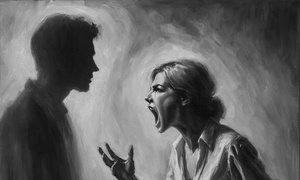



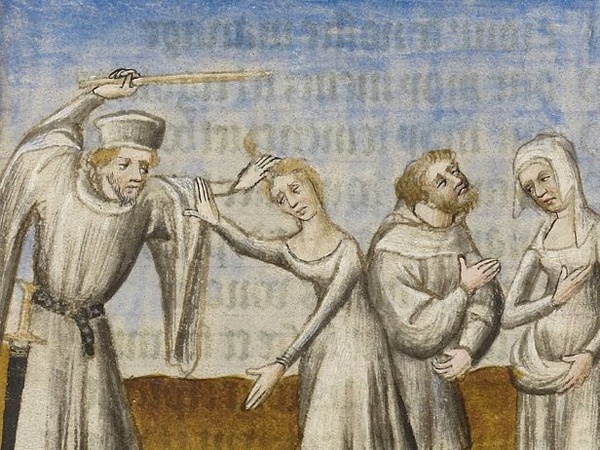
The first time he hit her, it was called a mistake
The second time, perhaps he was angry.
By the third time, it had become a family matter.
And somewhere between the bruises, apologies and endless calls for patience, a woman was slowly being taught that keeping her marriage was more important than keeping herself alive.
They had built a home together, but that home gradually became a place of fear for the woman.
At first, it happened occasionally, and those around them thought it was something the couple could resolve privately.
But it continued.
The woman eventually reported the abuse to both families, hoping someone would recognise the danger she was living in.
Instead, she was told to endure.
She was reminded that marriage required patience. She was asked whether she wanted to leave her children.
They promised to speak to her husband, as though another conversation would undo the injuries she had already suffered.
The beatings continued. There was pain, blood and repeated injuries.
The violence became so severe that he would reportedly lift her and throw her to the floor, as though her body meant nothing.
Some women in their compound could no longer watch.
They gathered to help her and took the matter to the human rights authorities.
After several discussions and interventions, the matter was eventually settled.
The husband pleaded, promised to change and insisted that he still loved his wife.
Everyone hoped that would be the end of the violence.
The woman was given another reason to believe things could get better, and the families seemed satisfied that the issue had been resolved.
But what they had settled was the matter, not the violence itself.
Barely a month later, the beatings returned, proving that an apology and promises were never enough to guarantee her safety.
One night, reportedly under the influence of alcohol, he attacked her again.
This time, the injuries were so severe that blood was everywhere.
The police were eventually called, the husband was arrested, the woman was taken to the hospital, and the marriage finally ended in separation.
Now, I want us to pause and ask a question: How many opportunities did this man have to stop before the situation became almost fatal? And how many people had to witness a woman suffer before someone decided that enough was enough?
This is where tradition, the crowd and the cover-up enter the conversation.
When tradition becomes an excuse.
Marriage is respected in many African societies, and rightly so.
Family, commitment and the responsibility of building a home are values many people hold dear.
However, there is a difference between respecting marriage and preserving an abusive one.
Somewhere along the line, the idea of a woman's patience became confused with her ability to tolerate suffering
Women are told to endure, adjust, pray harder and protect their homes, even when the same homes are becoming dangerous places for them.
But when did endurance become a requirement for survival?
A marriage certificate does not give anyone ownership over another person's body.
Cultural expectations cannot turn violence into a husband's privilege, and family values should never require a woman to sacrifice her safety to maintain appearances.
Tradition should preserve values that protect people, not practices that put them in danger.
One thing that stands out in this story is the role of the neighbours.
They heard, they witnessed and eventually, some of them acted.
But imagine if nobody had intervened.
Imagine if everyone had dismissed the situation as a disagreement between husband and wife.
This is how violence survives in communities.
Not necessarily because everyone supports it, but because too many people have convinced themselves that getting involved is not their responsibility.
We hear statements like, "It's their marriage,"
"Let them settle their differences," or "I don't want trouble."
But what happens when the next scream is followed by silence?
Being a bystander does not automatically make someone responsible for the violence itself.
However, when people repeatedly witness abuse and deliberately choose to protect the abuser or silence the victim, their inaction can help the abuse continue
The neighbours in this story remind us that intervention matters.
Being the person who refuses to look away can make the difference between life and death
The most disturbing part of this experience was not just the violence but the response of the families.
The woman spoke up. She sought help. She gave the people around her an opportunity to intervene.
Yet, instead of making her safety the priority, she was reminded of her children and encouraged to remain in the marriage.
Why do families sometimes become more concerned about the shame of a failed marriage than the suffering of the person trapped in it?
Why is a separated woman sometimes treated as though she has failed, while an abusive husband is given repeated opportunities to explain himself?
We need to stop treating separation as a greater tragedy than violence.
A marriage ending is painful, but a life ending because everyone wanted the marriage to survive is far worse.
So, who should answer for it?
The person who commits the violence must answer for their actions.
There is no justification for abuse, whether anger, alcohol, financial pressure or marital disagreement is involved.
But accountability should not end there.
Families must stop using culture and religion as excuse to silent the victim
Communities must learn that intervention does not mean encouraging conflict.
Institutions must take reports of domestic violence seriously and provide victims with protection rather than sending them back into dangerous situations.
And as individuals, we must examine the things we casually say to people experiencing abuse.
Because sometimes, the person telling a woman to endure is not the one sleeping beside her, waking up to the beatings or cleaning the blood from her wounds.
Tradition is not a defence for cruelty.
Marriage is not a licence for violence.
Silence is not neutrality when someone's life is at risk.
The real question is not just why some men abuse women.
We should also ask why so many people make it easier for them to continue.
The next time a woman speaks about the violence she experiences, let us not be another voice asking her to endure.
Let us be the reason she knows she does not have to.



 45