Score |
43


Edder
 Student @ University of Abuja
Student @ University of Abuja



WHEN THE MIND BECOMES THE CRIME SCENE
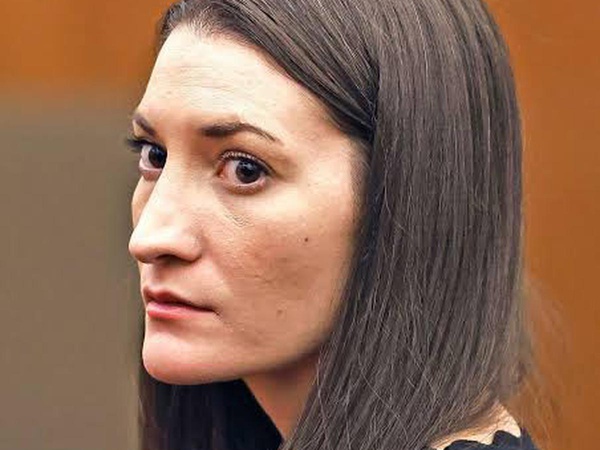
<p style="text-align: justify; "><strong>Three children are dead.</strong></p><p style="text-align: justify; "><br/></p><p style="text-align: justify; ">That sentence is difficult enough to write without adding anything to it.</p><p style="text-align: justify; "><br/></p><p style="text-align: justify; ">Cora was five. Dawson was three. Callan was eight months old. Their deaths cannot be made less painful by explaining what happened to their mother. And perhaps that is where this conversation becomes difficult: because understanding a person's mind should never require us to forget the people who suffered because of it.</p><p style="text-align: justify; "><br/></p><p style="text-align: justify; ">But there is another sentence we must be willing to say:</p><p style="text-align: justify; "><br/></p><p style="text-align: justify; ">A sick mind is not necessarily a guilty mind.</p><p style="text-align: justify; "><br/></p><p style="text-align: justify; ">Lindsay Clancy does not deny killing her children. Her defence has argued that she was experiencing postpartum psychosis and, because of that condition, lacked criminal responsibility. Her first trial ended in a mistrial after jurors could not reach a unanimous verdict.</p><p style="text-align: justify; "><br/></p><p style="text-align: justify; ">That distinction matters.</p><p style="text-align: justify; "><br/></p><p style="text-align: justify; ">We often talk about criminal responsibility as though committing an act automatically settles the question of guilt. But the law has never been quite that simple. In Massachusetts, the question is not merely whether someone committed the physical act. It also asks whether a mental disease or defect left that person without substantial capacity to appreciate the wrongfulness of the conduct or to conform their behaviour to the law.</p><p style="text-align: justify; "><br/></p><p style="text-align: justify; ">And I think there is something important hidden inside that principle.</p><p style="text-align: justify; "><br/></p><p style="text-align: justify; ">Punishment assumes a person was capable of understanding the rule they broke.</p><p style="text-align: justify; "><br/></p><p style="text-align: justify; ">If severe psychosis genuinely destroyed that capacity, then giving someone a long prison sentence may satisfy our anger without necessarily satisfying justice.</p><p style="text-align: justify; "><br/></p><p style="text-align: justify; ">That does not mean the deaths suddenly become less important.</p><p style="text-align: justify; "><br/></p><p style="text-align: justify; ">It means we have to stop treating justice and punishment as identical words.</p><p style="text-align: justify; "><br/></p><p style="text-align: justify; ">I understand the instinct to say, “Three children are dead, so there must be punishment.” I feel the weight of that argument. The children had no choice in what happened to them. They cannot explain their fear. They cannot grow older. They cannot tell us what they would have become.</p><p style="text-align: justify; "><br/></p><p style="text-align: justify; ">Their absence is permanent.</p><p style="text-align: justify; "><br/></p><p style="text-align: justify; ">But imagine, for a moment, that the medical evidence ultimately establishes beyond reasonable doubt that Clancy was experiencing a genuine psychotic break so severe that she could neither understand the wrongfulness of what she was doing nor control her actions.</p><p style="text-align: justify; "><br/></p><p style="text-align: justify; ">What exactly would a prison sentence punish?</p><p style="text-align: justify; "><br/></p><p style="text-align: justify; ">Would we be punishing a conscious decision, or punishing a person for something her diseased mind made her incapable of understanding?</p><p style="text-align: justify; "><br/></p><p style="text-align: justify; ">That question makes this case different from ordinary murder.</p><p style="text-align: justify; "><br/></p><p style="text-align: justify; ">It also makes postpartum psychosis more than a convenient excuse that can simply be attached to a crime after the fact. It is a serious psychiatric condition, and the justice system has to determine whether it actually destroyed criminal responsibility in this particular case. That is precisely why reasonable people can look at the same evidence and disagree.</p><p style="text-align: justify; "><br/></p><p style="text-align: justify; ">But there is another uncomfortable question that receives less attention:</p><p style="text-align: justify; "><br/></p><p style="text-align: justify; ">Where was the system before the children died?</p><p style="text-align: justify; "><br/></p><p style="text-align: justify; ">If a mother is deteriorating mentally after childbirth, what opportunities existed to notice it? Who was responsible for asking the difficult questions? Was she screened properly? Did her family know what signs to watch for? Did healthcare professionals have enough information? And when warning signs appeared, was there somewhere safe for her to go?</p><p style="text-align: justify; "><br/></p><p style="text-align: justify; ">These questions do not transfer responsibility for the killings away from the person who committed them.</p><p style="text-align: justify; "><br/></p><p style="text-align: justify; ">They simply recognise that prevention is also part of justice.</p><p style="text-align: justify; "><br/></p><p style="text-align: justify; ">Interestingly, Massachusetts officials have already begun discussing expanded postpartum support and mental-health screening following the Clancy case.</p><p style="text-align: justify; "><br/></p><p style="text-align: justify; ">That may be one of the most important lessons here.</p><p style="text-align: justify; "><br/></p><p style="text-align: justify; ">Because if we respond to every tragedy only by asking, “How severely should we punish the person who did it?”, we may miss the question that could save the next family:</p><p style="text-align: justify; "><br/></p><p style="text-align: justify; ">“What should we have noticed before it happened?”</p><p style="text-align: justify; "><br/></p><p style="text-align: justify; ">Still, compassion must have boundaries.</p><p style="text-align: justify; "><br/></p><p style="text-align: justify; ">If Clancy is found to have been criminally responsible, then accountability should follow. The deaths of three children cannot disappear behind a diagnosis.</p><p style="text-align: justify; "><br/></p><p style="text-align: justify; ">But if the evidence proves that she genuinely lacked criminal responsibility because of severe psychosis, I do not believe the answer should be to manufacture guilt simply because the outcome was horrifying.</p><p style="text-align: justify; "><br/></p><p style="text-align: justify; ">There can still be accountability.</p><p style="text-align: justify; "><br/></p><p style="text-align: justify; ">There can be secure psychiatric confinement. There can be court supervision. There can be treatment. There can be permanent recognition of the harm caused. There can be a system that protects the public while treating the illness that contributed to the crime.</p><p style="text-align: justify; "><br/></p><p style="text-align: justify; ">That is not the same thing as saying, “Nothing happened.”</p><p style="text-align: justify; "><br/></p><p style="text-align: justify; ">Something happened.</p><p style="text-align: justify; "><br/></p><p style="text-align: justify; ">Three children lost their lives.</p><p style="text-align: justify; "><br/></p><p style="text-align: justify; ">A mother lost her children and, depending on what the evidence ultimately establishes, may also have lost the ability to understand the world around her at the moment she needed that understanding most.</p><p style="text-align: justify; "><br/></p><p style="text-align: justify; ">Justice should be able to hold both truths at once.</p><p style="text-align: justify; "><br/></p><p style="text-align: justify; ">Perhaps the real test of justice is not whether we can punish someone for doing something terrible.</p><p style="text-align: justify; "><br/></p><p style="text-align: justify; ">Perhaps it is whether we can look at something terrible without allowing our grief to erase the difference between evil, illness, responsibility and consequence.</p><p style="text-align: justify; "><br/></p><p style="text-align: justify; ">The children deserve justice.</p><p style="text-align: justify; "><br/></p><p style="text-align: justify; ">But justice does not always mean punishment.</p><p style="text-align: justify; "><br/></p><p style="text-align: justify; ">And compassion does not always mean forgiveness.</p><p style="text-align: justify; "><br/></p><p style="text-align: justify; ">Sometimes justice is simply having the courage to find out exactly what happened inside a person's mind before deciding what that person deserves.</p>



 10
10


Other insights from Edder











Contributor Points

Points-to-Coupons

Referral Earning

Insights for you.



Silence: The things we don't say.🥺
I walked out of my house, shutting the door behind me, and moved to the terrace.I neede...
221 views
59 upvotes
63 comments
Suicide: The Permanent Solution.
“Did you regret it?”“You know…”I hesitated.“What happened?”A heavy sigh was the first r...
224 views
51 upvotes
54 comments


2 a.m.
Maybe it's all the nights I spent not sleepingOr all the days I sat thinkingOf how I've...
236 views
50 upvotes
48 comments

Yours in the Empty
Losing a father is one thing,Losing a best friend is another.Losing the "head" is one t...
389 views
59 upvotes
43 comments


I’m Skinny, and So What?
What if I told you that I have cried more over my own arms than over any guy who has ev...
202 views
47 upvotes
50 comments


One step forward, Three steps back
I'm tired...But not for the reason you're thinking How much more must life take?How muc...
422 views
51 upvotes
40 comments


After Alhaji
"Kai, yarinyar nan ta yi sa'a ƙwarai.""Wallahi. Alhaji Ibrahim da kansa zai aura ta.""T...
257 views
36 upvotes
43 comments

A Passing Thought
Literally didn't even know it,How could I miss it when it was always right in front of ...
357 views
62 upvotes
30 comments


HARBINGER
HARBINGERWhere have I come to catch you? In your room? At your workplace? In school? Wh...
111 views
40 upvotes
41 comments