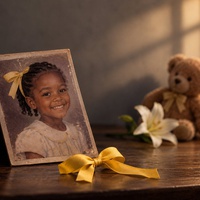



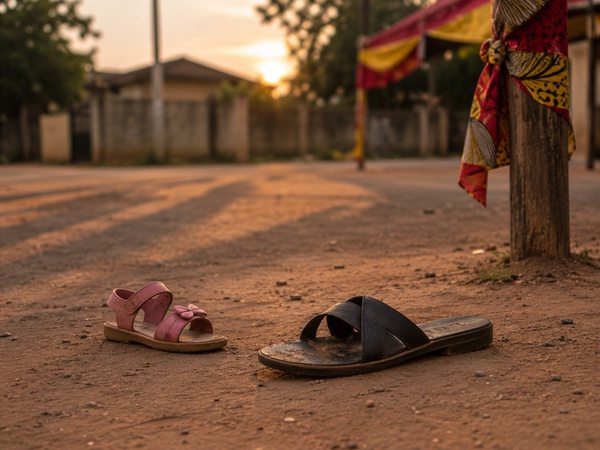
A 17-year-old girl on her way back from school. She isn't attending a festival; she's simply going about her day. Within minutes, she finds herself surrounded by a crowd of men. She is dragged to the ground, touched inappropriately and left traumatised by an experience she never anticipated.
She eventually escapes, but escaping the crowd does not mean escaping the experience.
She becomes afraid of returning to the area. Even worse, people laugh when they see her.
This is not a fictional story. It is one of the accounts documented by the International Centre for Investigative Reporting (ICIR) following the incidents at the Ozoro festival in Delta State that happened on Thursday, March 19, 2026.
The Alue-Do festival, held in Oramudu, Ozoro, Isoko North Local Government Area, on March 19, 2026, attracted widespread attention after videos emerged showing groups of men chasing, stripping and sexually assaulting women.
But before discussing what happened, it is important to understand the festival itself.
The Alue-Do festival is an age-long tradition associated with fertility, childbirth and family continuity. According to accounts from residents and traditional sources, it is a spiritual practice intended to seek blessings for women and couples experiencing difficulties with conception.
The king and other community representatives described it as a fertility rite. Some of the traditional practices involve prayers and the symbolic use of sand from sacred grounds, which is believed to carry blessings for women seeking children.
However, the festival also comes with certain traditional expectations. Unmarried women are reportedly expected to remain indoors during certain periods because of the belief that they should not see the chief priest. Some accounts suggest that seeing him could bring infertility.
In some communities, tradition is deeply respected, and I understand the importance of preserving cultural identity. But there is a difference between preserving a tradition and allowing its interpretation to become a source of fear, intimidation and violence.
Why should women be warned not to come outside? Why should their movements be restricted because a festival is taking place? And why should groups of men be allowed to take it upon themselves to enforce such restrictions?
According to some accounts, the rites could extend over seven days. Imagine living in fear of stepping outside during a period of cultural celebration. A festival intended to seek blessings for women should not become a reason for women to fear their own surroundings.
Women are human beings, not objects. They are not possessions whose movements can be controlled at the convenience of others. Their bodies are not public property, and no cultural practice gives anyone the right to touch, strip, chase or sexually assault them.
Some of the women affected during the Ozoro incident were simply going about their everyday activities. A 17-year-old girl was on her way back from school. Another woman was on a motorcycle when she was attacked. Another had just returned from a trip and was approaching her hostel when she was dragged off the motorcycle.
According to ICIR's investigation, one victim, was attacked by four men who touched her inappropriately. When she asked to be released, she was asked how much she could pay for her freedom. She mentioned ₦5,000, but was eventually forced to send ₦10,000.
Another victim, was returning from a trip when she was attacked. Her clothes were torn, her belongings were damaged, and she was eventually rescued by students from her hostel.
Think about that. A woman had to pay for her freedom, while another had to depend on the intervention of strangers to escape an attack.
Imagine the fear, the helplessness and the humiliation.
What makes the situation even more disturbing is that some people were recording instead of helping. Others were reportedly laughing at the women. One of the victims, told ICIR that she no longer liked going through the area because people laughed when they saw her passing.
How does someone move on from such an experience when the same people who should show concern become part of the humiliation?
I understand that not everyone can physically intervene when violence is taking place. Fear is real, and intervening in a crowd can be dangerous. However, there are other ways to help. People can call for assistance, alert the authorities, help victims escape or simply refuse to encourage the perpetrators.
Recording someone's suffering for entertainment does not make you a better witness. Laughing at someone who has been violated does not make you innocent of the cruelty surrounding the situation.
And this is where the conversation extends beyond Ozoro.
As I continued researching this incident, I realised that I was becoming so invested in the festival that I did not even want to go out. The fear surrounding the incident was beginning to affect how I viewed ordinary activities.
But why should anyone have to feel this way?
Sexual violence is not peculiar to one festival or community. It happens in our homes, workplaces, schools and public spaces. Women are violated while going about their everyday activities. Even children are victims of sexual abuse, some as young as three to six years old.
What exactly are we going to ask a three-year-old child? What were they wearing? Why were they outside? Why were they not careful enough?
At that age, a child is still learning how to understand the world around them. They should be protected, not made responsible for an adult's criminal behaviour.
A woman who is sexually assaulted at work is not responsible because of what she wore. A woman assaulted in her home is not responsible because she opened her door. A girl returning from school is not responsible because she was outside.
There is no acceptable explanation that makes victims responsible for another person's decision to violate them.
Yet, victim-blaming remains a problem. Instead of concentrating on the actions of perpetrators, attention is often shifted to what the victims wore, where they went, who they went with and whether they followed certain instructions.
We cannot keep telling women to stay indoors, dress differently and avoid certain places while failing to address the behaviour of those who violate them.
According to findings from the Thomson Reuters Foundation's 2018 global poll, Nigeria ranked ninth among the ten most dangerous countries in the world for women. In the category of sexual violence, Nigeria ranked fourth. The survey involved 548 experts on women's issues and considered areas such as healthcare, discrimination, harmful cultural practices, sexual violence and human trafficking.
Although this was a perception-based survey rather than a ranking of countries using measured crime statistics, the findings highlighted serious concerns about the safety and treatment of women in Nigeria.
The report is particularly concerning when we consider the prevalence of sexual violence, cultural stigma and weak enforcement of protective laws. Eight years later, we are still having conversations about the safety of women, the treatment of survivors and the failure to hold perpetrators accountable.
Nigeria cannot move forward while women and children continue to live with the fear of being violated. We cannot talk about development and progress while a significant part of our population struggles to enjoy basic safety and dignity.
The Ozoro incident also raises questions about our institutions and the people responsible for protecting citizens.
Following the incident, the police stated that no formal report of rape had been made in connection with the festival. The police spokesperson also said that among the four girls interviewed by the police, none had reported being raped.
It is important to report this accurately. The absence of a formal rape complaint is not proof that no sexual violence occurred. The victims' accounts and the available videos documented sexual harassment, groping, forced stripping and other forms of assault. The police themselves said they were investigating sexual assault.
The law must be guided by evidence, but the process of obtaining that evidence must also recognise the fear, stigma and trauma that can prevent victims from reporting their experiences.
Traditional leaders also have questions to answer. Some community representatives maintained that the festival had been hijacked by hoodlums and that the sexual assaults were not part of the original tradition. They also pointed to poor communication and the failure to inform important stakeholders before the event.
The police similarly stated that the organisers had failed to inform the traditional ruler, school authorities, student representatives and the police.
These explanations are important, but they do not end the conversation.
An organised cultural event requires preparation, coordination and adequate security. The responsibility to protect people cannot be replaced with a warning telling women to stay indoors. To tell you how the traditions are weapons being used against women.
The Deputy President General of the community reportedly acknowledged that unmarried women had traditionally been chased indoors, although he said they were not supposed to be sexually harassed.
Even if the traditional expectation was to chase women indoors rather than assault them, chasing people and restricting their movements through intimidation is itself troubling. A tradition should not create an environment where individuals believe they have the authority to police other people's movements.
The ICIR also reported that the Dean of Students' Affairs of Southern Delta University declined to speak when contacted. This is particularly concerning because students were among those affected. Institutions responsible for students' welfare should be willing to clarify what happened and explain the support available to affected students.
There is also the account of a woman who spoke to ICIR about what happened to her in 2015. She had recently relocated to Ozoro after getting married and had opened a small shop. When the festival was held that year, her mother-in-law advised her to close her shop early.
She did not initially take the warning seriously. Later, she saw groups of young men chasing women. While trying to return home, she was attacked by a group of about 30 or more young men. She told ICIR that they attempted to rape her but stopped after an elderly woman appealed to them.
She explained that the experience was even harder for her because there was no social media at the time.
ICIR noted that it could not independently verify her account. However, the community's Deputy President General acknowledged that women had been chased indoors during previous celebrations.
This account is important because it shows that concerns about how women were treated during the festival did not begin in 2026. Even if the scale and circumstances differed, the earlier experience should prompt serious questions about the practices that had been allowed to continue.
Following the March 2026 incident, the police confirmed several arrests. By April 2, the ICIR reported that 18 suspects had been arrested and that some had been granted bail. The police spokesperson said the offences under investigation were bailable and that suspects would be charged after investigations were concluded.
Arresting suspects is important, but it is not enough. Bail is not an acquittal, and an arrest is not a conviction. The investigation must be allowed to run its course, and anyone found guilty must face the consequences prescribed by law.
I believe that perpetrators of sexual violence should face severe and proportionate punishment. There should be no excuses for grown-up men who knowingly violate other people, and no protection for individuals simply because of their positions, connections or associations.
The Nigerian Constitution recognises the dignity of every person and the freedom of citizens to move throughout the country. These rights should not become meaningless whenever a cultural event is taking place. The government has a responsibility to ensure that laws protecting citizens are enforced, that public gatherings have adequate safety arrangements and that traditional practices do not become opportunities for abuse.
The Delta State Government subsequently announced that the Alue-Do festival had been banned following the incident. That is an important development, but the wider problem requires more than banning one festival. Other cultural practices and public gatherings must also be examined where they involve intimidation, restrictions on women's freedom or opportunities for abuse. The aim should not be to condemn every tradition but to ensure that no tradition becomes a justification for violating human rights.
When discussing responsibility, I do not believe it belongs to one person alone, although the level of responsibility differs.
The perpetrators are directly responsible for their actions. Those who encouraged, enabled or celebrated the abuse must answer for their conduct. Onlookers who laughed, recorded for entertainment or deliberately prevented victims from receiving help must examine their actions. Traditional leaders and organisers must answer for their responsibilities in planning and supervising the event. Law enforcement agencies must investigate allegations thoroughly, while the government must ensure that adequate safeguards and protective laws are enforced.
Those who attempt to conceal wrongdoing or sweep the matter under the carpet must also be held accountable.
We cannot keep giving silly excuses for grown-up men while questioning the behaviour of women and children. We cannot continue hiding behind culture whenever something goes wrong. And we cannot place the reputation of a community above the lives, safety and dignity of its people.
Victims should not be exposed, ridiculed or treated as though they have brought shame upon themselves. Their identities and privacy should be protected, especially when they are children. They deserve medical attention, psychological support, respect and access to justice. Their stories should be heard without forcing them to relive their experiences for public entertainment.
Ultimately, the perpetrators must answer for their actions. The crowd must answer for its role. Traditional institutions must answer for the practices they permit and the safeguards they put in place. Government must answer for the protection it provides and the enforcement of its laws.
A society cannot claim to value women and children while failing to protect them.
A woman should not have to pay for her freedom. A girl should not have to fear going home because a festival is taking place. A child should never have to bear the consequences of an adult's criminal behaviour.
Tradition should give a community its identity, not become a shield for wrongdoing.
Preserving culture should never mean sacrificing human dignity. And protecting the reputation of a community should never come before protecting the people who live in it.



 6