Tradition, Family Pressure, Silence and the Cost of Denying a Woman Her Choice
There lived a beautiful and successful woman in Lagos. She was in her thirties, financially independent, intelligent and hardworking. Through determination and sacrifice, she had built a comfortable life for herself. She owned a beautiful home, drove a luxury car and had established a successful career.
Yet, despite everything she had achieved, her family seemed to focus on one thing she had not achieved: marriage.
Her mother constantly reminded her that she was getting older and needed a husband. Whenever they spoke on the phone, their conversations somehow returned to her marital status. It was not that she disliked marriage. She wanted companionship and a loving partner, but her previous relationships had ended after some men took advantage of her financially.
One day, her mother invited her to a family celebration at their parents' home. She was told that the family was celebrating the wedding of one of her brother's children. She requested two days off work and travelled to attend.
On arriving, she noticed something unusual. Relatives welcomed her with congratulations and spoke about her new home. She was confused but assumed they were simply being playful.
Her mother also welcomed her enthusiastically, congratulating her on her ceremony. Before she could ask what was happening, her father approached and instructed her to sit beside a man she had never met.
In an authoritative voice, he announced that the man was now her husband.
She was shocked. She looked at her father, whose expression showed no room for argument. Her mother appeared uncomfortable and silently begged her to sit down. She looked around, hoping someone would speak for her, but nobody did.
Eventually, she sat beside the stranger.
She later discovered that her family had made arrangements for her marriage without properly informing her or obtaining her free agreement. The man became her husband, and she eventually became his sixth wife. Her life changed. She was stopped from working and had two children.
Sadly, she is no longer alive. It was later discovered that she had experienced domestic violence and did not survive.
May her soul rest in peace.
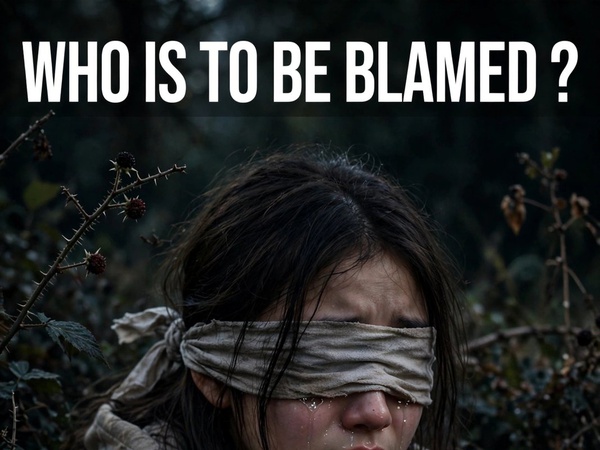
Her story leaves us with a difficult question: Who are we to blame?
When marriage becomes a measure of a woman's worth
In many Nigerian communities, marriage is celebrated as an important part of adult life. There is nothing wrong with valuing marriage or encouraging people to build families. The problem begins when marriage becomes the only measure of a woman's worth.
An unmarried woman may be successful, educated, responsible and financially independent, yet people may still treat her as though something is missing from her life.
Questions such as "When are you bringing a husband home?" may sound harmless, but repeated pressure can become emotionally exhausting. Families must understand that marriage is a personal decision, not a competition or a social obligation.
A woman's achievements should not become invisible simply because she is unmarried.
When tradition becomes an instrument of control
Tradition plays an important role in Nigerian society. It gives communities a sense of identity, belonging and continuity. However, not every practice should be defended simply because it has existed for generations.
Respect for parents does not mean surrendering one's right to make important life decisions. Parents can advise their children, introduce potential partners and share their experiences. But forcing someone into marriage is different from offering guidance.
Marriage should involve the free and informed consent of both people. A family ceremony, parental approval or community celebration cannot replace that consent.
The important question is not whether a practice is old or popular. It is whether that practice respects the dignity, freedom and safety of the people involved.
The danger of collective silence
One of the most disturbing parts of this story is not only the decision made by the parents, but also the silence of the people who were present.
Relatives knew something was happening, yet nobody appeared willing to question it. Some may have feared challenging the father. Others may have believed it was a family matter that did not concern them.
This reflects a wider social problem: people sometimes witness harmful behaviour but remain silent because they do not want to offend elders, disturb family relationships or go against community expectations.
However, silence can allow harmful situations to continue. People who notice coercion, threats or abuse should consider safe ways to seek help, report concerns and support the person affected.
Respect for elders should never become an excuse for ignoring another person's suffering.
Domestic violence is not a private family matter,
Domestic violence should never be dismissed as an ordinary disagreement between husband and wife. It is a serious issue that can threaten a person's physical and emotional well-being.
In some communities, victims may be encouraged to remain in abusive relationships to protect the family's reputation or avoid public embarrassment. This attitude places social expectations above human safety.
The responsibility for violence belongs to the person who commits it. A victim should not be blamed for being abused, and marriage should never be used as an excuse to control, threaten or harm another person.
Families, community leaders and relevant authorities all have roles to play in preventing abuse, supporting victims and ensuring that credible allegations are taken seriously.
So, who should answer?
Returning to the question in our headline, responsibility must be considered carefully.
The person who commits domestic violence must answer for that conduct. Parents who coerce their children into major life decisions must also be questioned about their actions. Communities that excuse harmful practices should examine the beliefs they continue to defend.
Witnesses also have a responsibility to think about what they can safely do when they see someone being mistreated. Institutions responsible for protecting citizens must take reports seriously and respond appropriately.
This does not mean that everyone carries the same responsibility. It means that preventing harm requires more than one person or institution to take action.
A society must know what it is willing to change.
The purpose of questioning harmful traditions is not to condemn every Nigerian culture, family or community. Our traditions contain valuable lessons about respect, unity, responsibility and belonging.
But any practice that denies a person their dignity, freedom or safety deserves to be questioned.
A woman should not have to choose between respecting her family and having control over her own future. She should not be forced into marriage to satisfy society, and she should never be expected to endure violence to protect a family's reputation.
Perhaps the question is not only who are we to blame? Perhaps we should also ask what we are willing to change.
Because when society protects harmful practices through pressure and silence, the consequences can be devastating.
The next injustice is practice let's learn how to speak up, don't just agree to it, speak up for yourself, for your fellow man, and also for the society
THE CHANGE BEGIN WITH YOU.
The story above is fictional.



 5