Something has always bothered me about the way we measure intelligence.
A person can speak polished English, use big grammar and sound very confident, and we immediately assume they are intelligent.
But let another person explain the same thing in Pidgin, Yoruba, Igbo or Hausa, and suddenly their intelligence becomes questionable.
Ahh, why?
When did the language you speak become more important than the sense you make?
I remember thinking about how much knowledge exists in our communities, even outside classrooms. An elderly woman who has never attended a university may not know the academic definition of conflict resolution, but she knows how to settle disagreements, manage relationships and advise people through difficult situations.
Where did that knowledge come from? Experience, observation and generations of learning.
Of course, not everything traditional is automatically right. Some practices deserve to be questioned and abandoned. But rejecting harmful traditions should not mean rejecting everything African.
That is where we sometimes get it wrong.
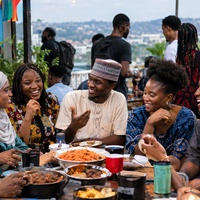
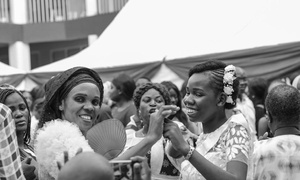
We have become so concerned about sounding educated that some of us are almost embarrassed to speak our own languages in serious conversations. We celebrate our culture during festivals, wear our traditional clothes proudly, but sometimes treat our indigenous languages as though they are unsuitable for intellectual discussions.
Omoh, think about that contradiction.
There is nothing wrong with learning English or any other foreign language. Those languages open doors, create opportunities and connect us to the world. But learning another language should not require looking down on the one you grew up speaking.
And this goes beyond language. It concerns whose stories are published, whose knowledge is documented and whose experiences are considered worthy of attention.
Africa should not have to imitate somebody else's voice before its ideas become valuable.
I believe we should preserve our languages, document our knowledge, question harmful practices and give our younger generation room to create new ways of expressing themselves.
We should be open to learning from the world without becoming ashamed of where we come from.
So, who gets to decide what sounds real?
Perhaps the problem is not that Africa has no voice. Perhaps we have spent too much time judging our voices by standards that were never designed to understand all of us.
Intelligence does not have an accent. And African voices should never have to apologise for sounding African.
©️Sammy Góld


 16