Score |
103


Sammy Góld
 Freelancer, Student @ Federal University of Kashere
Freelancer, Student @ Federal University of Kashere



SOME PEOPLE LOVE YOU BETTER WHEN YOU NEED THEM
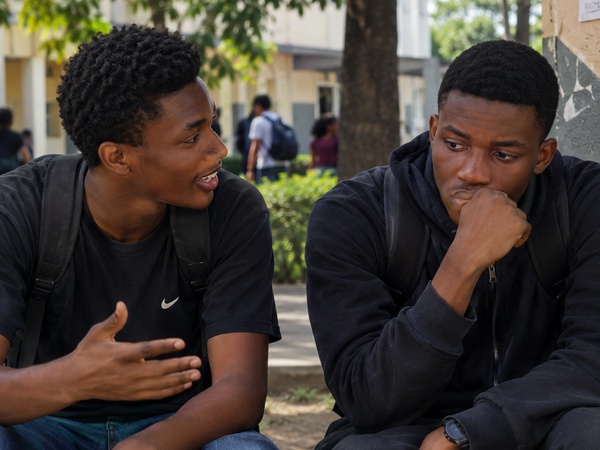
<p>There is a difference between the friend who wants you to succeed and the friend who knows how to relate to you when you are struggling.</p><p><br/></p><p>Sometimes, they are the same person. Sometimes, you only discover the difference when your life begins to change.</p><p><br/></p><p>Think about two friends who have spent years complaining about how difficult life is. They understand each other's frustrations. They discuss their disappointments, encourage each other after failed attempts, and laugh about the things they cannot afford.</p><p><br/></p><p>Neither person has to pretend. They are both figuring things out.</p><p><br/></p><p>Then something changes.</p><p><br/></p><p>One of them gets an opportunity. Maybe they secure a good job, begin earning more money, gain recognition for their work, or finally make progress on something they have discussed for years.</p><p><br/></p><p>At first, the friend is happy. They congratulate them, celebrate the news, and perhaps even tell other people about the achievement.</p><p><br/></p><p>But as time passes, conversations begin to feel different.</p><p><br/></p><p>The struggling friend becomes less interested in hearing about the new opportunities. Their usual jokes start carrying small hints of resentment. Invitations become less frequent. Achievements that would once have generated long conversations now receive a brief response before the subject changes.</p><p><br/></p><p>Nothing dramatic has happened. Nobody has openly declared war.</p><p><br/></p><p>Yet something in the friendship feels different.</p><p><br/></p><p>It is tempting to call this jealousy and move on. Sometimes, jealousy really is the explanation. But there is another possibility worth considering.</p><p><br/></p><p>Perhaps the friendship had become comfortable around a particular version of both people.</p><p><br/></p><p>They were the two friends who had not figured things out yet. Their struggles gave them common ground. Neither had to explain why they were still trying, because the other person was standing in the same place.</p><p><br/></p><p>When one begins to move forward, that familiar balance changes.</p><p><br/></p><p>The friend who is still struggling may begin to compare their progress with yours, even if you never compare yourself with them. Your good news may remind them of promises they made to themselves, opportunities they missed, or goals they have not reached.</p><p><br/></p><p>Your success is not necessarily an attack on them. But it can become a painful reminder of what they feel is missing from their own life.</p><p><br/></p><p>Understanding this does not mean you should excuse every negative reaction. It simply means that not every uncomfortable friendship is built on deliberate hatred.</p><p><br/></p><p>Sometimes, people are fighting battles within themselves that they do not know how to explain.</p><p><br/></p><p>There is another side to this, too.</p><p><br/></p><p>Some people become so accustomed to being the helper that they struggle when they are no longer needed in the same way.</p><p><br/></p><p>When you were confused, they had advice. When you were broke, they offered encouragement. When you were discouraged, they knew how to make you feel better.</p><p><br/></p><p>Being useful gave them a clear place in your life.</p><p><br/></p><p>But now you are becoming more confident. You are making decisions without asking for permission. You have found new opportunities, new sources of support, and perhaps new people who understand the direction you are going.</p><p><br/></p><p>They may still love you, but they have to learn how to relate to you without occupying the same role they once did.</p><p><br/></p><p>Some will make that adjustment. Others will quietly resist it.</p><p><br/></p><p>This is why we should be careful about judging friendships by how people behave when we are struggling alone. We should also pay attention to how they respond when our circumstances improve.</p><p><br/></p><p>Can they listen to your good news without turning the conversation into a competition?</p><p><br/></p><p>Can they offer advice without assuming you still need to be directed?</p><p><br/></p><p>Can they disagree with your decisions without treating your independence as disrespect?</p><p><br/></p><p>And when they are the ones making progress, can you offer them the same generosity you expect from them?</p><p><br/></p><p>That last question matters because it is easy to demand genuine friendship from others while secretly struggling with their success ourselves.</p><p><br/></p><p>We all want friends who celebrate us. Fewer of us examine whether we know how to celebrate people when their lives begin moving in a direction we wish ours would move.</p><p><br/></p><p>Still, there is an important distinction between a friend who is temporarily struggling with comparison and one who repeatedly diminishes your achievements, competes with your progress, or makes you feel guilty for growing.</p><p><br/></p><p>The first may need an honest conversation. The second may require firmer boundaries.</p><p><br/></p><p>You do not have to shrink your life to preserve somebody else's comfort. Neither should you assume that everyone who becomes distant is jealous of your progress. People change, circumstances change, and friendships sometimes drift for reasons that have little to do with success.</p><p><br/></p><p>The point is not to become suspicious of everyone around you.</p><p><br/></p><p>It is to understand that genuine friendship must be able to survive changes in the people involved.</p><p><br/></p><p>A friendship that only works when both people are equally unhappy is not necessarily a friendship built on deep understanding. It may simply be a friendship that has never been tested by change.</p><p><br/></p><p>Sometimes, the real test of a relationship is not whether someone stood beside you when you had nothing to celebrate.</p><p><br/></p><p>It is whether the two of you can still stand beside each other when your lives no longer look the same.</p><p><br/></p><p>©️Sammy Góld</p>


 12
12


Other insights from Sammy Góld














Contributor Points

Points-to-Coupons

Referral Earning

Insights for you.


Gen Z, Are We.... Hungry?
If aliens were to read our texts, they'd think Gen Z are in a perpetual state of starva...
605 views
59 upvotes
68 comments



The Gender War.
I was doomscrolling yesterday.I hardly do that, but for some reason, I chose that and s...
206 views
54 upvotes
67 comments


In Her Likeness.
I hail from the southwestern part of Nigeria, and oftentimes, when I walk through the n...
181 views
48 upvotes
55 comments

The Yahoo Culture.
Let's talk about the Yahoo CultureSomething that is gradually becoming a norm.And every...
193 views
49 upvotes
60 comments


Dear Dad
Dear dad,It's been 7 years, 3 months and 1 day and your name still echoes in my brain.W...
300 views
48 upvotes
44 comments


Curiosity or Clout?
Omooo I have a bad habit. 😭Whenever something starts trending in Nigeria, I click on it...
237 views
36 upvotes
48 comments