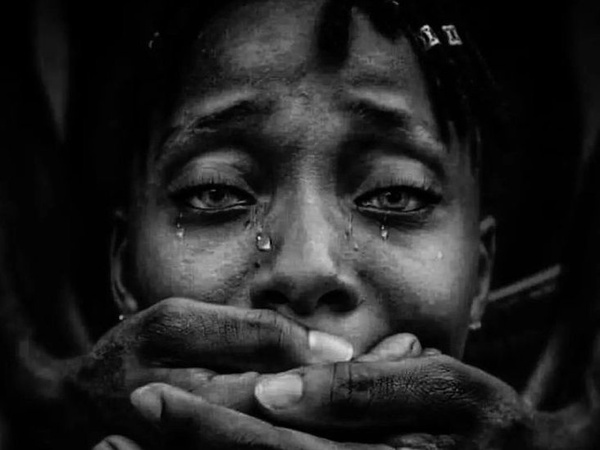
“Grandfather, who is responsible when everybody knows what happened, but nobody is willing to talk about it?”
My grandfather looked at me for a moment before asking,
“Why do you ask, Bala?”
“I heard people talking at the village square,” I replied.
“They said some young men had attacked a girl during the festival. Some said it was part of the tradition. Others said she should not have been there in the first place. But Grandfather, I heard that she cried for help. If everybody heard her, why did nobody help?”
The evening breeze moved gently through the branches of the old iroko tree beside his compound. Somewhere in the distance, the last sounds of the festival were fading. I watched him draw a long breath, as though the question had taken him somewhere he had not intended to go.
“Come closer, Bala. There are things about this village you must understand. The people you saw today did not all touch that girl. Some did not even stand where it happened. Yet, somehow, they all had a hand in what followed.”
I moved closer. “Tell me, Grandfather. How?”
“He said, “This is the story of the crowd.”
He began with the festival ground.
Bala, The drums are beating, people are dancing, and the square is filled with laughter. Then, suddenly, the laughter changes. A girl is being dragged away by a group of young men. She struggles. She cries out. People turn their heads. A woman stops dancing. A man pulls his friend by the arm and whispers something. Another man raises his phone.
“Now, tell me, what do you see?”
“People,” I answered.
“Look again.” I tried to picture it.
“I see the young men. I see the people watching. I see the person recording.”
“And what do you think the person recording is doing?”
“Recording what is happening.”
My grandfather shook his head. “ A girl is crying for help, and he has decided that the best thing he can offer her is a video. He will send it to his friends, people will laugh when they watch it. It will become the talk of the next morning. While he is making sure the incident is not forgotten by the internet, he has forgotten the person inside the video.”
He paused. “Another man is standing close enough to intervene, but he looks around first. He wants to know whether anybody else is going to do something. Nobody moves, so he doesn't move either. A third man recognises the girl. He knows her family. He knows what is happening is wrong, but he does not want to become involved in a matter that could bring trouble to his doorstep. So he stands there, waiting for the moment to pass.
“And the young men who attacked her? They have people around them. People who know them. People who will later find reasons for what they did. Some will say they were carried away by the excitement of the festival. Others will say the girl should have known better than to be there.”
“Grandfather, but how can they blame her?”
He looked at me.
“Because it is easier to question the presence of a girl than the behaviour of the men who harmed her. It is easier to ask what she wore, where she went and why she was there than to ask why those men believed they could do what they did.”
I was quiet. “Now, Bala, the festival is over. The drums have stopped. But do you think the matter is over?” I shook my head.
He told me how the elders had assembled beneath the large tree outside the palace. The oldest among them sat at the centre, his walking stick resting against his chair. The traditional custodian of the festival sat beside him, while other community representatives filled the remaining seats.
The matter was placed before them. For a moment, nobody spoke. Then one elder cleared his throat.
“We must be careful about how this matter is handled,” he said. “The festival has been part of this village for generations. We cannot allow a few incidents to destroy what our fathers handed down to us.”
Another elder nodded. “The young people of today question everything. If we allow them to question this, what else will they question tomorrow?”
The custodian adjusted his wrapper and leaned forward.
“Young men can become carried away during celebrations,” he said. “That does not mean the entire festival should be condemned. People outside this village are already talking. We must not allow them to use this incident against our people.”
I imagined the elders exchanging worried looks. Their voices grew louder as they debated what should be said about the festival, who should speak to the press and how the village could prevent further embarrassment.
Then a younger man, who had been standing near the entrance, asked, “But what about the girl? Has anybody asked whether she is safe?” The room went quiet.
One elder turned towards him.
“Young man, we are discussing a serious matter. Do not allow emotion to distract us from the bigger picture.”
And the bigger picture, Bala, was apparently a village whose reputation mattered more than the girl whose dignity had been violated in its name.
“Grandfather,” I asked, “did nobody challenge them?”
“Some people did. But the voices that wanted the matter buried were louder. And when the meeting ended, the elders had agreed on what the village should say. They had not agreed on what should happen to the men.”
He shifted in his chair. “Do you know what is most dangerous about a person who uses tradition to defend wrongdoing? It is that he can make an injustice sound like an obligation. He can stand before everybody and speak about ancestors, customs and the need to preserve our identity until nobody remembers to ask whether the practice being defended is still right.”
“But Grandfather, does tradition itself tell them to hurt her?”
“Tradition does not have a mouth, Bala. People speak for it. People interpret it, choose what to preserve and decide what to enforce. The custodian knows the songs, the ceremonies and the stories of his people. But he must also know that the authority to preserve a tradition does not give him the right to excuse harm. If he can speak when the tradition is being celebrated, he must also be able to speak when people are being hurt under its name.”
He looked towards the palace. “Unfortunately, the meeting beneath that tree was not the only meeting taking place that morning.”
He told me about the girl's family. Her mother had been sitting beside her when her father returned from the elders' meeting. She asked whether the men responsible had been identified. Her husband did not answer immediately. Instead, he asked whether anybody outside the family had spoken to the girl.
“People are already talking,” he said. “Do you know what this will do to our name?”
The mother looked at him in disbelief.
“Our daughter is the one who was hurt. Is that not what we should be talking about?”
An uncle, who had come to visit, interrupted.
“Let us not make this bigger than it already is. The elders can handle it. We should not take our family problems to outsiders.”
The girl sat quietly. She had barely spoken since the incident. Every few minutes, someone asked her to explain what happened, but nobody seemed interested in asking what she needed. Her mother wanted to take her somewhere she could receive help. Her uncle insisted that they should wait. Her father kept returning to the question of who had heard about it.
Then the uncle said something that made the mother turn sharply towards him.
“Do you want people to start saying that no man will marry into this family?”
My grandfather paused.
“Bala, Put yourself in the shoes of being hurt and then discovering that the people who should stand between you and the world are more afraid of what the world will say about them. Having to measure every word you speak because the people listening are already calculating the consequences of your truth.” I swallowed.
“But Grandfather, why would her family do that to her?”
“The crowd is the people who help injustice survive and the very people whose names you call when you need protection.” He continued.
“Later that afternoon, the girl was taken to the religious assembly. The leader sat on a raised platform, surrounded by members of the congregation. Her mother explained what had happened and asked for guidance. The leader listened, nodded slowly and spoke about forgiveness, patience and the importance of preserving a home and family.
“Then he looked at the girl. ‘You must not allow this incident to destroy your future,’ he said. ‘Pray about it. Do not let anger take over your heart. There are things a woman must learn to endure.’
“Her mother asked whether the men responsible would be confronted. “He adjusted the book in his hand and replied, ‘We must not be too quick to judge. Let the elders handle the matter.’
“Bala, do you see what happened there? The girl came looking for counsel, but the people who should have challenged the wrong were already advising her on how to live with it. Her pain was being turned into a lesson in endurance. The men who caused it were nowhere near the conversation, yet the person who had been hurt was being given instructions.” I shook my head.
“But Grandfather, the religious leaders did not attack her.”
“No, they did not. But tell me, what did they do with the influence they had? Did they use it to challenge the men who committed the act, or to make the girl accept what had been done to her? A person does not have to commit the original offence before becoming part of the reason it continues.” I looked towards the road.
“Then what happened?”
“The matter reached the palace.”
The guards had been instructed to keep the entrance clear. People who came to ask questions were told that the elders were handling the situation. One woman who wanted to submit a complaint was asked to return another day. A young man who had offered to identify one of the attackers was warned not to create trouble for himself.
When the girl's mother finally approached the authorities, she was asked whether the families could settle the matter privately.
“Is this not a family matter?” one officer asked.
The mother stared at him.
“My daughter was attacked during a public festival. How has this become only a family matter?”
The officer leaned back.
“Madam, we are only trying to avoid unnecessary complications.”
And so the matter moved from one office to another. A complaint became a discussion. A discussion became a family disagreement. A family disagreement became something the elders were expected to resolve. By the time anyone remembered that an offence had been committed, the people responsible had already been given enough time to disappear behind the protection of their names and connections.
“Grandfather,” I said, “so everybody knew, but nobody wanted to be the person who would do something?” He nodded.
“And that is how a crowd becomes larger than the people gathered in one place. The men at the festival, the elders beneath the tree, the family behind closed doors, the religious leader on his platform, the guards at the palace and the officers at their desks may never sit together. They may never even agree with one another. But look at where their decisions have led. The girl is still waiting for justice, and the people who should answer for what happened are still finding places to hide.”
I looked down at the ground.
“But Grandfather, some of them did not touch her.”
He turned towards me.
“Must a person touch the wound before becoming responsible for keeping it open?”
I had no answer.
“Bala, there is a saying that a person who remains neutral in the face of injustice has chosen the side of the oppressor. People like to think that they can stand somewhere in between. They want to be neither here nor there. But when one person is being harmed and another is being protected, what exactly is that middle ground?
“You cannot watch a person being denied justice and call your silence neutrality. You cannot hear a cry for help, know that something is wrong and keep quiet simply because the person suffering is not your sister, your daughter or your friend. You cannot refuse to help, refuse to speak, refuse to report, refuse to question and then claim that you have taken no side.
“Whether you stand at the festival, sit in the council, kneel in the assembly or occupy an office, your choices matter. And when those choices protect the person causing harm, you have chosen a side.”
I remembered the people at the village square. I remembered the phones held up in the air and the people who had walked away. I wondered how many of them had gone home that evening and slept peacefully.
“Grandfather, does this happen only in our village?”
He gave a short laugh, but there was no humour in it.
“Bala, if it happened only here, perhaps we would have a much smaller problem.”
He reached for a folded newspaper lying beside him. He opened it carefully and pointed to a report. “Look at these figures. The 2018 Nigeria Demographic and Health Survey reported that 31 per cent of women aged 15 to 49 had experienced physical violence since the age of 15. The 2024 survey reported 19 per cent. And among women who had experienced physical or sexual violence, 58 per cent had neither sought help nor told anyone about it.”
He lowered the paper.
“Do you understand what that last figure means?”
I shook my head.
“It means that many women have carried experiences like these without telling another soul. Some have been afraid of what their families would say. Some have not trusted the people who were supposed to help them. Others have been made to believe that speaking would bring more shame than the violence itself. And some have simply had nowhere safe to turn.”
I stared at the figures. They were numbers on a page, but I could not stop thinking about the women behind them.
“Grandfather, how can so many people go through something like that and nobody knows?”
“People know more than they admit, Bala. Sometimes they know because they saw it. Sometimes because someone told them. Sometimes because they heard the cries from the next compound. But knowledge is not the same as action. And a society that keeps hearing the cries of its women without changing what happens to them must ask itself what it has chosen to become.”
He folded the newspaper and placed it beside him.
“Do you remember the story of Funmilayo Ransome-Kuti?”
I nodded. I had heard her name in school.
“She was a woman who refused to accept that an arrangement was just simply because those in authority had become comfortable with it. She helped organise the Abeokuta Women's Union and brought women together to challenge unfair taxation and their exclusion from political decisions. Those women did not wait for the people benefiting from the arrangement to invite them to question it. They organised, raised their voices and demanded change.
“Imagine if they had all decided that it was not their business or each woman had said, ‘Let somebody else speak. Let somebody else protest. Let somebody else challenge the authorities.’ What would have happened?”
He looked at me.
“Sometimes, Bala, the people who want an unjust arrangement to continue are counting on everybody else to remain quiet.”
I thought about the girl again.
“But Grandfather, what if she does not want people talking about what happened to her?”
He nodded slowly.
“Then we must listen to her. We must not confuse speaking against injustice with taking possession of another person's pain. Her story is not a public performance. She does not owe the village, the palace or anybody on the internet an explanation of what happened to her. She has a right to decide when her story is told, whether it is told and who is allowed to hear it.
“But that does not mean the people who hurt her should be protected by silence. We can speak about what happened without publishing her name. We can demand that the men responsible be investigated without circulating her pictures. We can challenge the people defending the practice without making her private experience the price of public awareness.
“Do you understand the difference? We must not silence the wrongdoing in the name of protecting the survivor, and we must not expose the survivor in the name of speaking against the wrongdoing.”
I nodded.
“So, what should people have done?” I asked.
My grandfather looked at me for a moment.
“Bala, when the girl cried at the festival, somebody could have raised an alarm. Somebody could have helped her get to safety. Somebody could have refused to turn her suffering into entertainment. When the elders gathered, somebody could have stood up and asked why they were discussing the reputation of the village instead of the safety of the girl. When her family began to talk about shame, somebody could have reminded them that the shame belonged to the people who hurt her. When the religious leader spoke about endurance, somebody could have asked why he was not speaking about accountability. When the authorities hesitated, somebody could have insisted that a complaint deserved to be taken seriously.
“And when the people responsible began to hide behind tradition, somebody should have challenged them.
“Do you see? Justice does not fall from the sky. People make it possible. People protect survivors. People report crimes, investigate complaints and ensure that offenders are held accountable. People challenge harmful practices. People refuse to let family names, religious positions, traditional authority or political connections become hiding places for wrongdoing.
“Every one of these things requires people. The same people who can help injustice survive can also make it impossible for injustice to continue.”
The night had grown darker. A few lamps had been lit in neighbouring compounds, and the sound of footsteps occasionally interrupted our conversation. I looked towards the village square, now empty after the festival.
“Grandfather, I think I understand now. I thought the crowd was only the people who gathered to watch.”
He smiled faintly.
“And what do you think now?”
I took a moment before answering.
“I think the crowd followed the girl home.”
He looked at me, and for the first time that evening, he said nothing.
I thought about the men who had attacked her, the people who had watched, the person who had recorded, the elders who had gathered, the family that had worried about its name, the religious leader who had counselled endurance and the officers who had turned a complaint into a discussion.
They were not all in the same place. They did not all know one another's conversations. They did not all commit the same offence. But their choices had met at the same destination.
The girl was left carrying the weight of what had happened, while the people who could have helped her were busy protecting something else.
That's the most uncomfortable truth about the crowd. It had no single face because it had too many faces.
And that is why I keep returning to my grandfather's question: must a person touch the wound before becoming responsible for keeping it open?
The festival will end. The drums will fall silent. The elders will return to their homes. The guards will leave the palace gates. The people who gathered at the square will return to their different compounds.
But the crowd will remain wherever people continue to defend the indefensible, wherever a survivor is told to keep quiet, wherever an authority chooses reputation over justice and wherever people who know the truth decide that speaking is too inconvenient.
You may not have been at the festival. You may never have seen the girl. You may not know the men who attacked her. But when injustice calls for a response, your choices still matter.
You cannot always control what your eyes witness. You cannot always control what your ears hear. But you can decide whether your mouth will participate in a conspiracy of silence
The crowd is not innocent.
The crowd is the culprit.



 9