Score |
314


Strength ⚜️
 Speaker | Entrepreneur @ Prince Abubakar Audu University
Speaker | Entrepreneur @ Prince Abubakar Audu University



Many ways to come home.
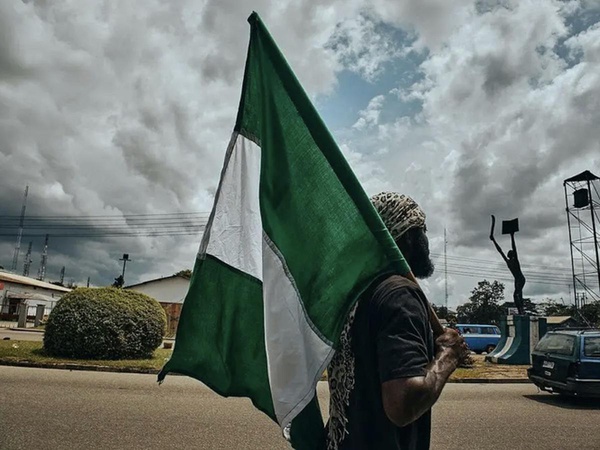
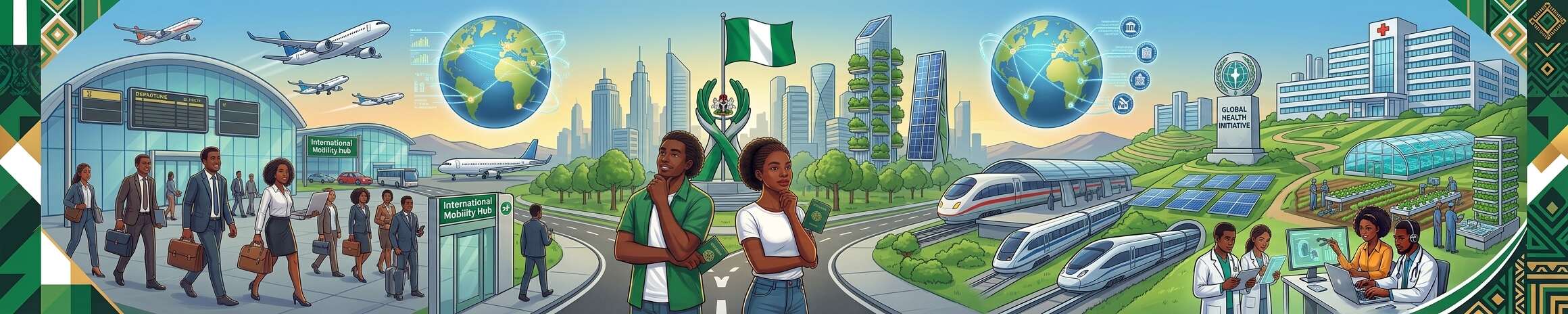
<p>They told us this was home. I believed them. </p><p><br/></p><p>I believed them when my teachers told me to study hard because my future was in my hands. I believed them when they called us leaders of tomorrow. I believed that if I worked hard, got my degree and did the right things, there would be a place for me here.</p><p><br/></p><p>So I studied, graduated with a first class, and then, Nigeria introduced me to adulthood.</p><p><br/></p><p>My certificate did not come with a job. When I finally found one, my salary disappeared into transport, food, electricity, data and the endless little expenses that somehow became big ones. Basic amenities that should be provided. </p><p><br/></p><p>I learnt that having a degree did not mean having an opportunity. Hard lesson. I learnt that getting sick could frighten you for reasons beyond the sickness itself and many times you could be doing everything you were told to do and still feel like you were standing in one place.</p><p><br/></p><p>“Do your part” became a slang I heard day-in-day-out, but I never ceased to question; what exactly am I supposed to do with my part when the system keeps failing its own?</p><p><br/></p><p>I can take responsibility for my life, yes, but personal responsibility cannot replace a functional institution.</p><p><br/></p><p>Then came 20:10:20</p><p>The day I watched Nigerians carry their flags into the streets, asking for a country that worked. The day the protectors spilled the blood of the ones who should be protected. </p><p>But we carried flags, not weapons. We came with hope, and somehow left with threats.</p><p><br/></p><p>That was when something changed in me.</p><p>We had been taught that this was home, but to the best of my knowledge, home was supposed to be where a child could dream without apologizing for it. Where a classroom was a place to learn, not a place to fear. Where a graduate could carry a certificate without carrying it like a begging bowl.</p><p><br/></p><p>This wasn't the bargain.</p><p><br/></p><p>I still loved her tho, and that was the most frustrating part. </p><p><br/></p><p>I was angry with her and still called her home. She’s home. </p><p>I looked at the cost of living rising like Mount Everest and still wonder what had happened to the green on our flag. Isn't green supposed to mean fertile? What is it doing on a land where people struggle to grow hope?</p><p><br/></p><p>The land is rich. The people are tired.</p><p><br/></p><p>And then someone asked me why I wanted to “japa”, as if leaving meant I had stopped loving home.</p><p><br/></p><p>What do you do when the home you love keeps hurting you? At what point does staying stop being patriotism and become self-sacrifice?</p><p><br/></p><p>I don't have the answer, still, </p><p><br/></p><p>I don’t think the Nigerian who leaves is necessarily abandoning Nigeria. She’s is simply looking for somewhere her effort can breathe. Life first. </p><p><br/></p><p>She can leave and still send money home. She can leave and still build. She can cross a border without crossing her heart. She can leave and still love. </p><p><br/></p><p>The Nigerian who stays is not automatically more patriotic either. We cannot measure love for a country by who remained within its borders.</p><p><br/></p><p>So, yes, I may leave. I may return, and I may not. But wherever I go, I will still carry this place with me, because once a Nigerian, always a Nigerian.</p><p><br/></p><p>Hope will surely find us again, but my question;</p><p>What happens when hope finally comes, and the people who needed it most are already gone?</p><p><br/></p><p>Until then, Happy 66, Nigeria. 🇳🇬 </p>


 25
25


Other insights from Strength ⚜️













Contributor Points
Points-to-Coupons

Referral Earning

Insights for you.


THE “NONSENSE” IS THE POINT; maybe.
I’m trying to write.. and somewhere between the first sentence and the next, I stop and...
138 views
31 upvotes
32 comments
You think say you wise!
A little gist on this Lagos and conductors matter! Maybe a mini rant, with a sprinkle o...
120 views
28 upvotes
29 comments


Drums Before Guns
Before we had tanks, we had talking drums. Before we had political parties, we had prai...
286 views
32 upvotes
29 comments

WAIT! WHO MADE THIS RULE?
I heard it’s “first of all, introduction”Hold on. Who said that? Because apparently, th...
129 views
26 upvotes
30 comments

Give up, Friend.
That wasn’t a hook bait. No.I don’t know if I’m delusional, but there’s really no unive...
133 views
24 upvotes
29 comments

STEENKINLI RITCH!
It is Sunday.And somehow, for almost the first time, I woke up without remembering.No S...
132 views
27 upvotes
26 comments



129 views
29 upvotes
27 comments
“Good morning, Tony.” What do you think?
You know the current trend, yeah? A young woman stood before one of Nigeria’s most prom...
117 views
25 upvotes
33 comments

LEARN FROM THE YAHOO BOY
Wait. Before you come for my teeth, allow the writer write.Everyday, in a generation li...
143 views
27 upvotes
26 comments