Score |
54


Writewithoma
 Fiction Author || Autofiction writer || Freelance writer || Content Creator @ National open university of Nigeria
Fiction Author || Autofiction writer || Freelance writer || Content Creator @ National open university of Nigeria



Nigeria at 66: Are We Really Going Forward?
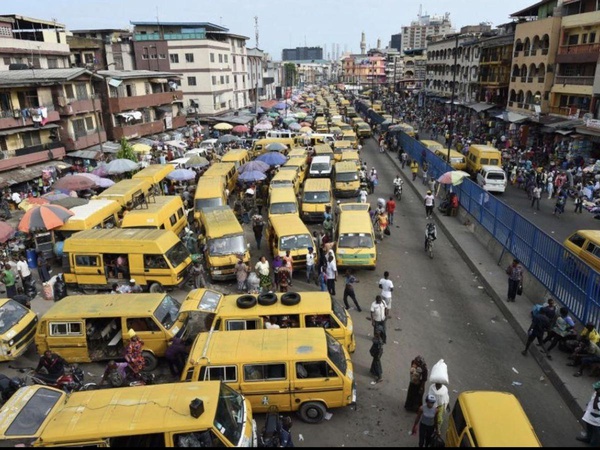
<p><br/></p><p>Every year, Nigeria gets older.</p><p><br/></p><p>But are we really moving forward?</p><p><br/></p><p>Every October 1st, we bring out the green and white. We post flags. We write Happy Independence Day. We talk about resilience, hope and the strength of the Nigerian people.</p><p><br/></p><p>And then October 2nd comes, and we go back to surviving.</p><p><br/></p><p>Because that is what it feels like to live here sometimes: not living, but surviving.</p><p><br/></p><p>We work constantly to afford things that should not require so much work. We adapt to things we should never have had to adapt to. We call suffering “the Nigerian spirit” because somehow, resilience has become our most reliable infrastructure.</p><p><br/></p><p>Take electricity.</p><p><br/></p><p>On January 23, 2026, Nigeria experienced its first national grid collapse of the year. Generation reportedly fell from over 4,500 megawatts to as low as 24 megawatts during the collapse, leaving distribution companies without power allocation. (Channels TV)</p><p><br/></p><p>So we buy fuel.</p><p><br/></p><p>Then fuel prices rise, transportation follows, and suddenly the cost of simply moving from one place to another becomes another calculation.</p><p><br/></p><p><img alt="" src="/media/inline_insight_image/IMG_7454.jpeg"/><br/></p><p><br/></p><p>The other day, I took a bus, as I usually do, to where I go for school runs or the market. It usually costs ₦800. That day, I was told ₦1,200.</p><p><br/></p><p>I walked further down, looking for a bus that would take the usual amount.</p><p><br/></p><p>I eventually found one for ₦1,000.</p><p><br/></p><p>By the end of the day, I had spent nothing less than ₦10,000, including transportation, food and the little things you don’t plan to buy until you have to.</p><p><br/></p><p>And I asked myself:</p><blockquote>How much do I even make in a day to spend more than I made simply trying to get through it?</blockquote><p>This is what the conversation about Nigeria often misses.</p><p><br/></p><p>People say, “Work harder.”</p><p><br/></p><p>But what happens when the cost of existing keeps rising faster than the reward for working?</p><p><br/></p><p>What happens when roads remain difficult, electricity remains uncertain, healthcare is something many people cannot confidently depend on, and employment does not necessarily mean financial security?</p><p><br/></p><p>At what point does survival stop being resilience and start becoming exhaustion?</p><p><br/></p><p>They say a fool at 40 is a fool forever.</p><p><br/></p><p>Funny enough, Nigeria is now 66.</p><p><br/></p><p>So what exactly are we supposed to call a country that keeps growing older without fixing the problems it has spent decades promising to fix?</p><p><br/></p><p><img alt="" src="/media/inline_insight_image/IMG_7458.jpeg"/><br/></p><p>Was it the “akara” moment, when the First Lady spoke about small businesses and the dignity of earning a living through things like selling akara?</p><p><img alt="" src="/media/inline_insight_image/IMG_7457.jpeg"/><br/></p><p>I even made a post about it on substack about the hypocrisy of this statement 🤦🏽.</p><p><br/></p><p><img alt="" src="/media/inline_insight_image/IMG_7456.jpeg"/><br/></p><p><br/></p><p>Or when she later called on Burna Boy, Asake and Davido to help poor Nigerians through charitable foundations, saying that “the burden on the government is huge”? (Channels TV)</p><p><br/></p><p>There is nothing wrong with asking wealthy Nigerians to help people in need.</p><p><br/></p><p>There is everything wrong with allowing charity to become a substitute for governance.</p><p><br/></p><p><br/></p><p>There is nothing wrong with selling akara.</p><p><br/></p><p>There is nothing wrong with starting small.</p><p><br/></p><p>There is everything wrong with making survival sound like a substitute for functioning systems.</p><p><br/></p><p>If a graduate has to create a business because there are no jobs, that person’s entrepreneurship should be celebrated. But it should not become an excuse for refusing to ask why the job market failed them in the first place.</p><p><br/></p><p><img alt="" src="/media/inline_insight_image/IMG_7453.jpeg"/><br/></p><p>And when the President tells Nigerians who cannot see the achievements of his administration that they may need eyeglasses, it raises another question: what exactly are Nigerians supposed to see? (Sele Media Africa)</p><p><br/></p><p>The electricity that disappears?</p><p><br/></p><p>The rising cost of living?</p><p><br/></p><p>The roads we keep hearing are being fixed?</p><p><br/></p><p>The hospitals people still fear they cannot afford when they are sick?</p><p><br/></p><p>Or the possibility that things will eventually get better?</p><p><br/></p><p>Maybe that is what we are all being asked to see: eventually.</p><p><br/></p><p>But people have to live now.</p><p><br/></p><p>And this is where “Japa” enters the conversation.</p><p><br/></p><p>By 2023, the National Association of Nigeria Nurses and Midwives said more than 75,000 nurses and midwives had migrated from Nigeria over the preceding five years, citing poor wages, inadequate compensation and poor working environments among the reasons. (The Guardian Nigeria)</p><p><br/></p><p>In that same period, the House of Representatives considered a bill that would have required Nigerian-trained doctors and dentists to practise in Nigeria for five years before receiving full licences. The bill passed second reading, although the Federal Government subsequently said it did not support the proposal. (Channels TV)</p><p><br/></p><p>And that, to me, is the bigger question.</p><p><br/></p><p>When people leave, why is the first question often:</p><p><br/></p><p>“Why are they leaving?”</p><p><br/></p><p>Instead of:</p><p><br/></p><p>“Why did staying become so difficult?”</p><p><br/></p><p>People don’t leave because they hate home.</p><p><br/></p><p>Sometimes, they leave because home stopped making room for them.</p><p><br/></p><p>They leave because they want electricity they can depend on. Jobs that pay enough to live. Hospitals that don’t make illness feel like a financial death sentence. Roads that don’t turn ordinary journeys into battles. A future that does not require them to apologise for wanting more.</p><p><br/></p><p>So when people “Japa,” I don’t think patriotism should be the weapon used against them.</p><p><br/></p><p>I understand loving Nigeria and still wanting to leave Nigeria.</p><p><br/></p><p>I understand being grateful for where you came from and still admitting that where you came from is not currently giving you what you need.</p><p><br/></p><p>And I understand wanting to stay.</p><p><br/></p><p>Some people will stay because they believe they can contribute to change. Some will leave because they believe they can build better lives elsewhere. Some will leave, learn, earn and eventually return. Some will never return.</p><p>Patriotism can't be one-sided. Nigeria wants our loyalty, our taxes, our votes and our green and white on October 1st. But what does Nigeria owe us? Light. Hospitals that work. Jobs worth staying for. A government that solves problems instead of handing them back to us.</p><p>Honestly, I wouldn't leave Nigeria if it were truly beneficial to us as citizens. We have our ups and downs, but 66 years after independence is bullshit, because we really have nothing to show for it.</p><p><br/></p><p>So, Nigeria is 66.</p><p><br/></p><p>Happy Independence Day.</p><p><br/></p><p>But perhaps the better question this year isn’t “How far have we come?”</p><p><br/></p><p>Perhaps it is:</p><p><br/></p><p>How much longer are we going to confuse getting older with getting better?</p><p><br/></p><p>Because 66 years is a long time.</p><p><br/></p><p>And honestly, we should have more to show for it.</p>


 72
72


Other insights from Writewithoma













Contributor Points

Points-to-Coupons

Referral Earning
Insights for you.


Vladimir Putin: The Man who stayed.
Putin is a man of interest.Not necessarily because he is easy to admire, but because it...
227 views
58 upvotes
62 comments

The Second Term.
Election is coming and there's already a lot of rampage about who will rule this countr...
168 views
38 upvotes
55 comments


U.S. Hits with Tariffs. China Hits Ba...
Have you been on TikTok lately? The Chinese market is blooming, thanks to Trump’s tarif...
937 views
17 upvotes
16 comments


Analytical article about "Negotiation...
The Hidden Gems in Politics and NegotiationsPolitics and negotiations often focus on hi...
897 views
20 upvotes
26 comments


NO POLITICIAN CAN SAVE YOU
if you're in Cameroon right now , navigating the noise and the tension, here is my two...
379 views
21 upvotes
20 comments

WHY BOKO HARAM IS BACK AND WHAT IT ME...
Let’s be honest — Nigeria has a habit of forgetting. We mourn today, move on tomorrow, ...
763 views
16 upvotes
14 comments


When the Mosquitoes Voted for the Spray
In the far corner of the Animal Kingdom, right behind a leaking bucket and a forgotten ...
351 views
17 upvotes
18 comments


Structure Before Sentiment.
What do the eastern states in Nigeria need to do, to produce the next Igbo president of...
308 views
14 upvotes
15 comments
OLD RULERS: HOW NIGERIA KEEPS RECYCLI...
I was going to write on how your vote doesn't count, but you all going to think I'm goi...
243 views
14 upvotes
13 comments


To each his own
Scrolling through my Instagram feed on Saturday, I came across the news of Nigerian pub...
1088 views
16 upvotes
13 comments