Score |
171


Thatdarkwriter

 Fashion model/crochet artist @ Lagos State University



Religion and power
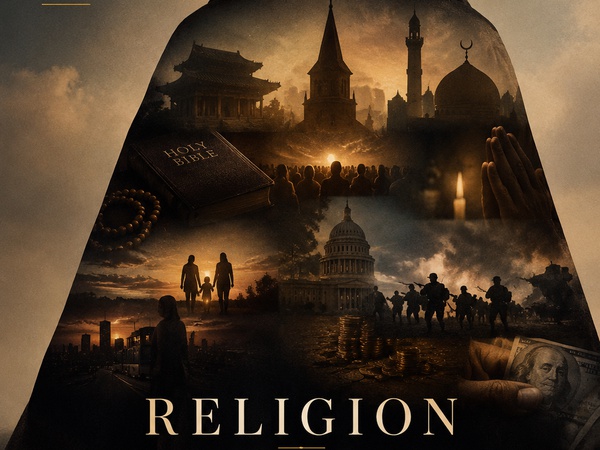
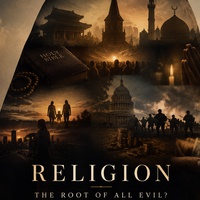
<p><br/></p><p>This is the part that pushed me to start writing.</p><p><br/></p><p>I recently completed an internship in a place where religion, government and power intersect. Every day, I watched religious institutions request government assistance while continuing to ask their members to contribute to the same causes. I saw how easily religion could influence public opinion, shape political loyalty and distract people from questions about power, money and accountability.</p><p><br/></p><p>That experience forced me to confront a question I could no longer ignore: what happens when an institution that commands spiritual trust also gains political influence and financial power?</p><p><br/></p><p>Class is in session. Take a seat.</p><p><br/></p><p>Think of a force that can influence how millions vote, what they consider right or wrong, how they spend their money and which leaders they trust.</p><p><br/></p><p>Now imagine that same force promising eternal rewards, threatening divine punishment and making any challenge to its authority feel like a challenge to God Himself.</p><p><br/></p><p>What happens when that kind of influence enters politics and the marketplace?</p><p><br/></p><p>Welcome to the intersection of religion, government and business.</p><p><br/></p><p>Religion and politics have been connected for centuries. Kings claimed divine authority, governments used religion to justify laws, and leaders sought religious approval to strengthen their legitimacy.</p><p><br/></p><p>That relationship remains visible in Nigeria. Politicians appear in places of worship, seek endorsements from influential clerics and use religious language to win voters.</p><p><br/></p><p>Faith can inspire good leadership and community service. The problem begins when religious authority replaces accountability.</p><p><br/></p><p>When does a politician stop answering to the people and start hiding behind God’s name?</p><p><br/></p><p>When does criticism of a leader become an attack on an entire religion?</p><p><br/></p><p>And when voters care more about a politician’s faith than their ability to govern, who really wins?</p><p><br/></p><p>The same tension appears when religious influence meets money.</p><p><br/></p><p>During my internship, religious institutions regularly requested one form of aid or another, even as they continued asking their members to contribute to those same causes. Tithes and offerings are not automatically evidence of exploitation. Religious institutions need money to operate, and many use donations to support their communities.</p><p><br/></p><p>But giving becomes troubling when it is presented as a transaction with God.</p><p><br/></p><p>Give this amount and receive a miracle. Sow this seed and unlock your breakthrough. Pay your way into a blessing.</p><p><br/></p><p>And if nothing happens?</p><p><br/></p><p>Perhaps you lacked faith. Perhaps you were disobedient. Perhaps you did not pray enough. Or perhaps you simply did not give enough.</p><p><br/></p><p>Notice how the blame keeps returning to the person who is losing money.</p><p><br/></p><p>I am not saying every religious leader is dishonest. But these days, everybody is a pastor. Give someone confidence and a microphone, and a church may be forming by evening.</p><p><br/></p><p>That is precisely why no institution should be exempt from scrutiny simply because it describes itself as “divine.”</p><p><br/></p><p>If businesses must account for customers’ money, why should religious leaders avoid questions about donations?</p><p><br/></p><p>If politicians must answer for public funds, why should religious influence protect political misconduct?</p><p><br/></p><p>I recently asked my mother where all the money we were contributing was going. She looked at me and said, “You better not let the devil use you. God will forgive you.”</p><p><br/></p><p>She did it. She did that thing where every question about religion becomes a sin.</p><p><br/></p><p>I had asked about churches and money. She interpreted the question as blasphemy and told me to ask for forgiveness instead.</p><p><br/></p><p>That moment showed me how deeply fear can interfere with accountability. People can see something and still refuse to acknowledge it. They can listen and choose not to hear. Many of our parents, especially, may have been taught to treat doubt as disobedience and questions as sin.</p><p><br/></p><p>But asking where money goes is not blasphemy. It is a reasonable question.</p><p><br/></p><p>The issue, then, is not whether religion should exist in government or whether religious institutions should collect money. It is whether faith should be used as a shield against accountability.</p><p><br/></p><p>No.</p><p><br/></p><p>“The Lord said if X enters, this country would change.”</p><p><br/></p><p>Do you see any change? I don’t, but maybe you can.</p><p><br/></p><p>No title, robe, pulpit or claim of divine appointment should place anyone above questions about money, power, conduct or harm.</p><p><br/></p><p>Religious leaders should not be treated as guilty simply because they are religious. But neither should they be treated as innocent for the same reason. Trust must be earned through conduct, not demanded through fear.</p><p><br/></p><p>Faith may be sacred to the believer. Authority is not sacred to the public.</p><p><br/></p><p>Once a religious institution collects money, influences elections or controls vulnerable people, it becomes accountable for its impact.</p><p><br/></p><p>No divine name should silence questions. No spiritual threat should replace an explanation. No promise of heaven should excuse misconduct on earth.</p><p><br/></p><p>That is not persecution. That is accountability.</p><p><br/></p><p>And no institution should be allowed to hide from it behind God.</p>


 17


More in this series
More insights from Thatdarkwriter







Contributor Points

Points-to-Coupons

Referral Earning

Insights for you.

My Body: God's Temple
My pastor doesn't know the difference between my last thought and my current, but what ...
424 views
38 upvotes
48 comments

POV: That Old Serpent
"And I will put enmity Between you and the woman, And between your seed and her Seed;He...
415 views
46 upvotes
36 comments
POV: Being Mary For Easter
"Hail Mary, full of grace, the Lord is with you. Blessed are you among women and blesse...
360 views
41 upvotes
33 comments

between me and God
There are things I have asked You for so many times that I am beginning to feel embarra...
184 views
30 upvotes
34 comments
POV: Judas Iscariot
"And truly the Son of Man goes as it has been determined, but woe to that man by whom H...
411 views
41 upvotes
25 comments


WHISPERS OF FREEDOM: WE MOVE.
That night, my father brought the lamb inside.Hope stood in the house with us and follo...
168 views
28 upvotes
29 comments

Steeze
About two decades ago, I had a memorable experience. I still remember it vividly. My fr...
140 views
21 upvotes
25 comments


The weight of dreams
People talk about dreams like they are light things.Like they are meant to lift you, to...
243 views
27 upvotes
26 comments

THE UNHEARD POV: Joseph On Easter.
PROLOGUE…Some question my presence…They ask, “Where was Joseph at the crucifixion?”Many...
325 views
17 upvotes
17 comments

Who am I?
Who are you?Someone asked me that question once.Before then, I would have thought the a...
246 views
21 upvotes
22 comments






























