Score |
239


Thatdarkwriter

 Fashion model/crochet artist @ Lagos State University
Fashion model/crochet artist @ Lagos State University



Religion in our daily lives
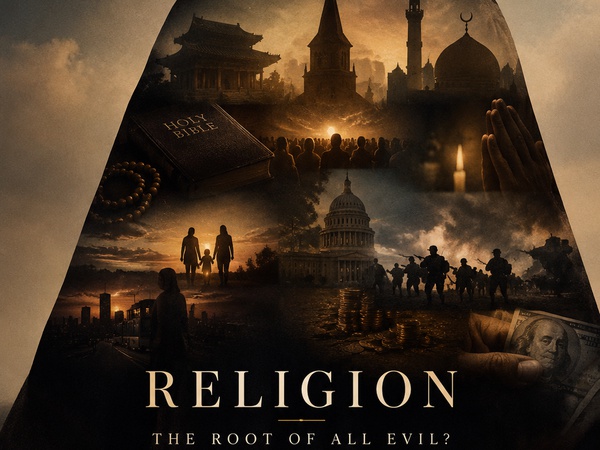
<p><br/></p><p>You might think religion is only about personal belief until you notice how often religious leaders, families, and communities use it to influence people’s lives, even when those people did not freely choose those rules.</p><p><br/></p><p>A woman wants to leave her marriage. Pray about it.</p><p><br/></p><p>A girl does not want children. You will change your mind when God gives you a husband.</p><p><br/></p><p>A young person questions a religious teaching. Do you think you are wiser than God?</p><p><br/></p><p>A child asks why. Because the Bible says so.</p><p><br/></p><p>These answers are not always harmful. Prayer can bring comfort, and religion can offer values, community, and guidance. The problem starts when these answers stop people from talking, thinking, or making their own choices.</p><p><br/></p><p>There is no real explanation. No room for questions. No concern for the fact that the person being told to pray, obey, submit, or endure has a mind and feelings of their own.</p><p><br/></p><p>And speaking of everyday life, have you ever entered a public bus in Nigeria, only for a pastor to turn it into a small church?</p><p><br/></p><p>There is nothing wrong with openly expressing your faith. But when everyone on the bus is treated as if they agreed to listen to a sermon, it becomes hard to tell the difference between sharing your beliefs and forcing them on others.</p><p><br/></p><p>That is the problem with religion in everyday life. Personal faith can be private and meaningful, but religious authority can enter other people’s spaces and decisions. Sometimes it takes over the room, the bus, the conversation, and everyone within hearing distance.</p><p><br/></p><p>And we are so used to it that we rarely stop to ask why.</p><p><br/></p><p>Apparently, God gave us brains, but using them too much is where we start having problems.</p><p><br/></p><p>Religion does not always need to threaten you with hell to control your choices. Sometimes all it needs is a mother who says questioning your husband is rebellion, a pastor who says suffering is a test of faith, or a community that cares more about a girl’s reputation than her happiness.</p><p><br/></p><p>Sometimes, all it needs is fear.</p><p><br/></p><p>Fear of disappointing God. Fear of being judged. Fear of being called rebellious, possessed, immoral, or lost. Fear that one wrong decision will send you to hell.</p><p><br/></p><p>For many believers, faith is a source of strength. But when fear becomes the main way of making people obey, religion is no longer working only as personal belief. It is being used to control people.</p><p><br/></p><p>Eventually, you become your own prison guard. You feel guilty for things that do not require an apology. You stop trusting your own judgment. You stay in painful situations because leaving would make you feel like a bad Christian, Muslim, daughter, or person.</p><p><br/></p><p>People may call this discipline, morality, or good upbringing.</p><p><br/></p><p>There is a difference between choosing to live by your faith and being taught that you have no right to choose otherwise.</p><p><br/></p><p>If religion gives you peace, meaning, or compassion, that is valuable. Personal faith can guide your choices without requiring everyone else to follow the same beliefs. The problem starts when religion is used to control another person’s body, decide their future, silence their questions, or excuse their suffering.</p><p><br/></p><p>Why must every challenge to tradition become a spiritual battle? Why can’t a woman be unhappy in her marriage without being lectured about submission? Why must changing your mind be treated as losing your faith?</p><p><br/></p><p>Some things we defend as religious are really inherited opinions, old rules, or traditions that people have mistaken for direct commands from God. This does not mean every tradition is harmful or that every believer has bad intentions. It means religious language can be used for both kindness and control. Calling a rule sacred does not mean people cannot misunderstand it, misuse it, or use it to gain power over others.</p><p><br/></p><p>But once God’s name is attached to a rule, questioning it can feel like a crime.</p><p><br/></p><p>And that is where things become dangerous.</p><p><br/></p><p>If you convince someone that disobeying you is the same as disobeying God, you no longer have to explain or defend your authority. You only have to make that person afraid to question you.</p><p><br/></p><p>I am not asking anyone to abandon their faith. I am asking why faith so often comes with a list of questions people are not allowed to ask.</p><p><br/></p><p>If an idea is true, why should an honest question threaten it?</p><p><br/></p><p>And if your morality disappears when someone stops believing in your religion, perhaps we should ask what was holding that morality together.</p><p><br/></p><p>The problem is not that people believe in God. The problem is what happens when religious authority convinces them that believing requires giving up the right to think for themselves.</p>


 24
24


More in this series
More insights from Thatdarkwriter







Contributor Points

Points-to-Coupons

Referral Earning
Insights for you.

My Body: God's Temple
My pastor doesn't know the difference between my last thought and my current, but what ...
415 views
38 upvotes
48 comments

POV: That Old Serpent
"And I will put enmity Between you and the woman, And between your seed and her Seed;He...
406 views
45 upvotes
35 comments
POV: Being Mary For Easter
"Hail Mary, full of grace, the Lord is with you. Blessed are you among women and blesse...
357 views
41 upvotes
33 comments

between me and God
There are things I have asked You for so many times that I am beginning to feel embarra...
177 views
29 upvotes
33 comments
POV: Judas Iscariot
"And truly the Son of Man goes as it has been determined, but woe to that man by whom H...
410 views
41 upvotes
25 comments


WHISPERS OF FREEDOM: WE MOVE.
That night, my father brought the lamb inside.Hope stood in the house with us and follo...
167 views
28 upvotes
29 comments

Steeze
About two decades ago, I had a memorable experience. I still remember it vividly. My fr...
133 views
21 upvotes
25 comments

THE UNHEARD POV: Joseph On Easter.
PROLOGUE…Some question my presence…They ask, “Where was Joseph at the crucifixion?”Many...
319 views
17 upvotes
17 comments

Who am I?
Who are you?Someone asked me that question once.Before then, I would have thought the a...
238 views
21 upvotes
22 comments

The Overlooked Controversy: Unpacking...
Atheism, a topic of intense debate, remains surprisingly overlooked in public discussio...
674 views
32 upvotes
19 comments