Score |
404


Favour Joseph Adi
 Freelance writer and Entrepreneur @ Abuja
Freelance writer and Entrepreneur @ Abuja



The Cost of Looking Away: Why Nigerian Politics Still Feels So Far From Nigerians
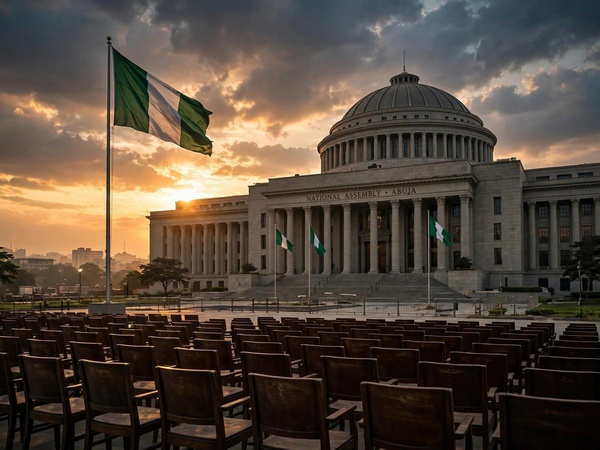
<p>Nigerian politics is not just what happens in Abuja. It is what happens in your kitchen, your business, and your blood pressure.</p><p><br/></p><p>When petrol price moves from 600 to 1,200, that is politics.</p><p>When a young graduate spends three years looking for a job that pays 70k, that is politics.</p><p>When ASUU goes on strike for months, that is politics.</p><p><br/></p><p>But many Nigerians, especially young people, have decided to look away. Not because they don't care, but because they are tired.</p><p><br/></p><p>1. The System Was Not Built For The Ordinary Person</p><p><br/></p><p>Let's be honest. To run for office in Nigeria, you need money. A lot of it.</p><p><br/></p><p>Nomination forms alone cost millions. Campaigns cost hundreds of millions. You need posters, buses, agents in every ward, and "mobilization."</p><p><br/></p><p>Where does an honest 32-year-old with good ideas but no godfather get that kind of money?</p><p><br/></p><p>So the door is technically open, but financially locked. And because of that, many good people never even try. They leave the field for those who see politics as investment — you put money in, you take more money out.</p><p><br/></p><p>2. We Only Show Up Every Four Years</p><p><br/></p><p>In Nigeria, we treat politics like AFCON. We shout for one month during elections, then we go to sleep for four years.</p><p><br/></p><p>We don't attend town halls. We don't know our local government chairman's name. We don't track what our senator is doing until another election comes.</p><p><br/></p><p>But governance happens every day. Budgets are passed when we are not watching. Loans are taken when we are not asking questions. That silence is what allows bad leadership to grow.</p><p><br/></p><p>3. The Real Divide Is Not APC vs PDP or LP</p><p><br/></p><p>If you go to a village in Ekiti and a village in Sokoto, you will see the same problems: bad roads, no water, young people leaving for the city, mothers worried about school fees.</p><p><br/></p><p>The divide is not really North vs South, or Christian vs Muslim. The real divide is between those inside the corridor of power, and the rest of us outside.</p><p><br/></p><p>Until we understand that, politicians will continue to use tribe and religion to distract us while the same cycle continues.</p><p><br/></p><p>What Then Should We Do?</p><p><br/></p><p>Not everyone has to run for office. But everyone can do three things:</p><p><br/></p><p>A. Pay attention beyond elections. Follow your state budget. Follow your LGA allocation. Ask: where did it go?</p><p><br/></p><p>B. Organize, don't just complain. Twitter rants don't build schools. Community associations, professional groups, market women's groups — when they speak together, politicians listen.</p><p><br/></p><p>C. Stop selling our future cheap. If we collect 5k or 10k to vote for someone who will steal billions, we are not poor — we are funding our own poverty.</p><p><br/></p><p>Nigeria is not a poor country. Nigeria is a poorly managed country. And management is a political decision.</p><p><br/></p><p>If we continue to say "politics is not my business," we should also be ready to accept that the</p><p> consequences will definitely be our business.</p>


 23
23


Other insights from Favour Joseph Adi







Contributor Points

Points-to-Coupons

Referral Earning
Insights for you.

Vladimir Putin: The Man who stayed.
Putin is a man of interest.Not necessarily because he is easy to admire, but because it...
244 views
59 upvotes
63 comments
The Second Term.
Election is coming and there's already a lot of rampage about who will rule this countr...
193 views
40 upvotes
58 comments



U.S. Hits with Tariffs. China Hits Ba...
Have you been on TikTok lately? The Chinese market is blooming, thanks to Trump’s tarif...
948 views
17 upvotes
16 comments

Analytical article about "Negotiation...
The Hidden Gems in Politics and NegotiationsPolitics and negotiations often focus on hi...
921 views
21 upvotes
27 comments

NO POLITICIAN CAN SAVE YOU
if you're in Cameroon right now , navigating the noise and the tension, here is my two...
401 views
22 upvotes
21 comments

WHY BOKO HARAM IS BACK AND WHAT IT ME...
Let’s be honest — Nigeria has a habit of forgetting. We mourn today, move on tomorrow, ...
779 views
16 upvotes
14 comments

When the Mosquitoes Voted for the Spray
In the far corner of the Animal Kingdom, right behind a leaking bucket and a forgotten ...
376 views
17 upvotes
18 comments