Score |
119


Princess Chronicles
 Writer || Speaker || Storyteller @ Adekunle Ajasin University
Writer || Speaker || Storyteller @ Adekunle Ajasin University



The Patriotic Japa
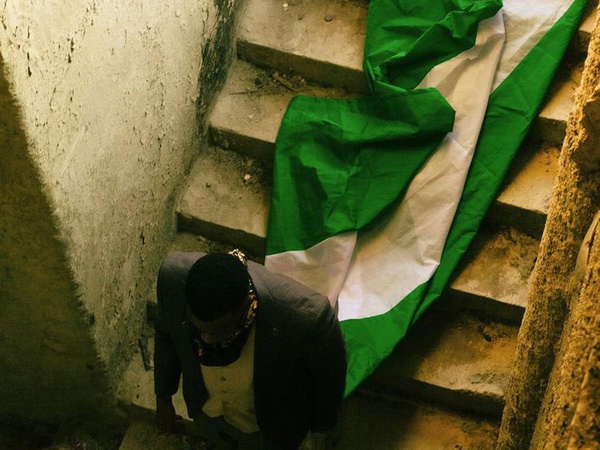
<p><strong>Nigeria met him when he was still young. </strong></p><p>She met him in a classroom, trying to pass his exams. She met him when he started learning skills because he had begun to understand that a degree alone might not be enough. She met him when he started stacking certificates.</p><p><br/></p><p>He had watched the economy over the years. He had seen prices move in a blink and heard adults say, “Things are hard.” He decided he could not afford to be unprepared.</p><p>Nigeria watched him toil for admission in a system that cannot accommodate everyone, even those who meet the requirements.</p><p><br/></p><p><strong>Staying in school came with a price.</strong></p><p>In NELFUND’s first year, 602,417 students registered on its portal; 554,719 applications were approved, and ₦56.85 billion was disbursed for tuition and upkeep.</p><p>Over half a million young Nigerians needed financial support just to remain in school.</p><p>Help, we call it. But help that becomes a loan is also a debt waiting to be repaid.</p><p><br/></p><p>He finished school. NYSC arrived in its finest form. Then, after the 33k cry the Federal Government approved ₦77,000, effective from July 2024.</p><p>He was grateful. If he had known that gratitude cannot erase mathematics. Transport, food, and accommodation costs a fortune. Nigeria’s headline inflation had reached 33.40% in that same July 2024.</p><p><br/></p><p><strong style="background-color: transparent;">So he kept working.</strong></p><p><br/></p><p><strong>Then someone told him, “Stay. Build Nigeria.”</strong></p><p><strong>And he asked, “Build with what?”</strong></p><p><br/></p><p>Today, CBN’s minimum paid-up capital for a commercial bank ranges from ₦50 billion for a regional bank to ₦500 billion for an international bank. And that is before the cost of actually building and running one.</p><p>He looks at the entrepreneur before him and wonders: the rules that allowed yesterday’s young person to build, can today’s young person still build under today’s realities?</p><p><br/></p><p>Where is the infrastructure to operate?</p><p>Or do you mean all of us should migrate to Lagos, where much of the country’s economic activity and infrastructure is concentrated?</p><p>The job that says you must not be more than 25, must have NYSC and years of experience, while ignoring the young person who spent those years working to afford school.</p><p>The World Bank says grid unreliability is a defining feature of electricity access in Nigeria; households report about seven outages a week, with typical outages lasting about 12 hours.</p><p><br/></p><p>So what do we do? Lose interviews because of light? Run a business on diesel? Move to Band A? Buy solar?</p><p>Can everyone afford that?</p><p><br/></p><p><strong>The problem is whether the country can even keep him healthy enough to build one.</strong></p><p>Nigeria still faces a huge gap in maternal and newborn healthcare. The WHO’s work with Nigerian hospitals continues to document the quality-of-care challenges surrounding maternal and newborn outcomes.</p><p>A woman giving birth in Nigeria and a Nigerian woman giving birth in a country with functional healthcare can encounter two radically different systems.</p><p><br/></p><p><strong>He watches all this and keeps asking the same question:</strong></p><p><strong>Where exactly do you want us?</strong></p><p><br/></p><p>In the room where decisions are made, he sees the gap. Over 60% of Nigeria’s population is under 30, yet at the start of the current National Assembly, only 1.1% of House members were 30 or younger, while the Senate had none in that age bracket.</p><p><br/></p><p><strong>And Nigeria says, “We need the young people.”</strong></p><p><strong>He wonders, where do you want us? </strong></p><p>In the queue? Or at home, sacrificing our youth while waiting for systems we did not create to become functional?</p><p><br/></p><p>This is where I struggle with the burden of patriotism. I understand that love should compel me to care, give, build, show up and help.</p><p><br/></p><p>Love does not automatically create a duty to destroy yourself for the person or place you love. Anything that demands so much of you that you lose yourself in the process becomes self-destruction in motion.</p><p><br/></p><p>And this is why I understand the young Nigerian who wants to Japa. He wants his hard work to have somewhere to land. He wants to build without spending his entire youth fighting problems that existed before he was born.</p><p><br/></p><p>Before we ask, “But what happens to Nigeria when everybody leaves?”</p><p>What happens to the young Nigerian when he stays at all costs?</p><p>Let's talk about what the young person loses when he stays without the capacity to thrive.</p><p><br/></p><p>Building a family becomes luxury. Opportunities become things we hold onto desperately, fighting through the eye of a needle.</p><p>An income too small to survive becomes something you are told to be grateful for.</p><p><strong>And the only thing he hangs on to is hope.</strong></p><p><br/></p><p>Migration has become a conversation of its own: where to go, how to go, what documents to prepare, what mistakes to avoid. People are even being scammed because they desperately want to leave. That desperation is saying something. The answer is to understand them.</p><p><br/></p><p>The Nigeria Tax Act 2025 itself distinguishes between resident and non-resident persons and provides circumstances under which income connected to Nigeria remains taxable.</p><p>Beyond taxes, a Nigerian abroad can send money home, build a company here, employ someone, invest here, support family, mentor someone, fund an idea and return with knowledge.</p><p><br/></p><p><br/></p><p><strong>So why have we reduced patriotism to geography?</strong></p><p><strong>Why must loving Nigeria mean living inside Nigeria?</strong></p><p><br/></p><p>Nigeria, you cannot ask a child to remain in a house that cannot shelter him and then call his search for shelter betrayal.</p><p><br/></p><p>I am saying the young Nigerian should be allowed to choose himself, the opportunity, the environment and the life he wants to build.</p><p>Then, when he has the strength, capital, knowledge, network and capacity to give back, let the love in him decide what he does with it.</p><p>A tree that is not strong enough cannot produce good fruit for everyone.</p><p><br/></p><p>This is true independence. The labour of our heroes past shall never be in vain. Would they want their children to inherit sacrifice as the price of citizenship?</p><p><br/></p><p><strong>I love Nigeria.</strong></p><p>I may build or live outside Nigeria.</p><p>My primary obligation is to build a life strong enough to give from. Where I do that should not determine whether my love for home is real.</p><p><br/></p><p><strong>Nigeria can have my patriotism.</strong></p><p><strong>But I must first have my life.</strong></p><p><br/></p>



 23
23





Other insights from Princess Chronicles











Contributor Points
Points-to-Coupons

Referral Earning
Insights for you.


Drums Before Guns
Before we had tanks, we had talking drums. Before we had political parties, we had prai...
285 views
32 upvotes
29 comments
Classism in a third-world country is ...
If you've ever driven through Abuja, you'd see the absurd theater of our class wars. A ...
453 views
21 upvotes
29 comments


We Are All Olodo's
/oh-loh-doh/ A Nigerian slang used to describe someone who is dull, slow to grasp conce...
177 views
21 upvotes
21 comments

Tight purse strings: trying to mainta...
Tight Purse StringsChinedu stared at his phone, the banking app's balance glaring back ...
509 views
17 upvotes
14 comments

The Fallen Giant: A lament for Nigeri...
Oh My Country NigeriaOh My Country Nigeria, your soil drinks the tears of toddlers, l...
223 views
18 upvotes
18 comments


Olodo Must Go! Or Must He?
The Big Celeb runs for dear life.The mob is faster.“See him there!”“Him wan try run. Ca...
161 views
21 upvotes
18 comments

THIS IS NIGERIA- NOT ALL OF IT
Popo stop me I fear dem wan to shoot meSearch my bags like say He wan to loot meComot m...
410 views
15 upvotes
19 comments


My Man, Our Man.
(EPISODE ONE)The sheets were still tangled around our legs when I opened my eyes. For a...
105 views
17 upvotes
17 comments

DEAR SALARY, I'M SORRY.
"You're late again."Bisi froze.Those three words were becoming painfully familiar.She l...
133 views
18 upvotes
19 comments


A CASE FOR JANUARY.
The hype of December is the very sponsor of the dread of January. But upon closer exami...
1024 views
16 upvotes
15 comments