Score |
50


Princess Chronicles
 Writer || Speaker || Storyteller @ Adekunle Ajasin University
Writer || Speaker || Storyteller @ Adekunle Ajasin University



Unmasked Healing
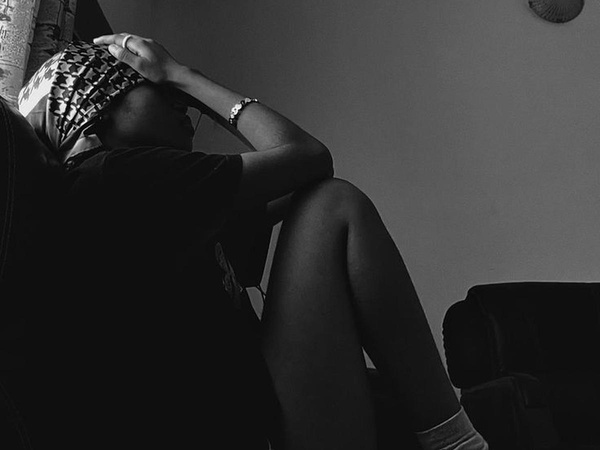
<p><strong>“I’m a failure.”</strong></p><p><br/></p><p>She says it with tears streaming down her face, sitting on the floor beside her bed, staring at a school-fees reminder she has read so many times.</p><p>As the first child, everybody expects her to have answers, even when she has none for herself. Her account balance is almost empty. She has become everyone’s go-to person, yet she has nobody she feels comfortable telling that she is mentally drained.</p><p><br/></p><p>She laughs with her friends, posts beautiful pictures, replies to messages, and tells her mother she is fine. But some nights, she cries until she has no strength left. </p><p>On other nights, her thoughts become so dark that she wonders whether there is any point in continuing, or whether ending her life would put an end to the pain.</p><p>Tomorrow, she will wake up, dress nicely, and go outside. Nobody will know how close she came to giving up. She looks fine, until someone hears the sad news on the other end of a phone call.</p><p><br/></p><p><strong>The frightening part is how easily someone can be falling apart without looking like it.</strong></p><p><br/></p><p>She finally gathers the courage to speak. What do you think she will hear?</p><p>“Have you prayed about it?”</p><p> “Other people have bigger problems.”</p><p>“You think too much.”</p><p><br/></p><p><strong>Sometimes, the responses are even worse: “You are ungrateful. What exactly do you have to be depressed about?”</strong></p><p><br/></p><p>In a society where faith and family values matter deeply, The problem begins when these become reasons to dismiss someone’s suffering or discourage them from seeking help.</p><p>We have learned to recognize physical pain. We know when to visit a hospital when someone breaks a leg, develops a fever, or complains of physical pain. But when the pain is emotional or mental, we often tell people to endure it.</p><p><br/></p><p><strong>How do we explain to society that a human being is more than a physical body? That our physical, mental, emotional, social, and financial well-being are interconnected, and that neglecting one can affect the others?</strong></p><p><br/></p><p>A person can have food on their table and still be struggling with their mental health. Someone can be financially successful and still feel empty. Yet, somehow, we expect people to keep functioning as though nothing is wrong.</p><p><br/></p><p>We tell them to be strong, then punish them when they admit that they are struggling. We ask them to speak up, then question why they did not speak sooner.</p><p>And when they finally do, we wonder why they chose the internet. We should ask what made silence feel safer in the first place.</p><p><br/></p><p><strong>Speaking up is a form of healing.</strong></p><p>It begins with admitting to yourself that what you experienced hurt you. It means finally putting into words what you have carried for years. Sometimes, it means telling your story publicly because you are tired of pretending that it never happened.</p><p><br/></p><p>Healing does not follow a universal timetable. People do not always have the words, the courage, the safety, or the support to speak when something first happens. Some are still trying to understand their experiences. Others are afraid of what speaking might cost them.</p><p><br/></p><p>So, when someone finally speaks about an experience that happened two, three, or even ten years ago, perhaps our first question should not be, <strong>"Why now?" We should ask, "What made it possible for you to speak now?"</strong></p><p><br/></p><p>This is where social media comes in.</p><p>The anonymous stories shared through platforms and accounts such as Diary of a Naija Girl. People send in experiences they may never feel comfortable attaching their names to. Their identities remain hidden, but their experiences enter public conversation. Someone who cannot bear the thought of being recognised can still tell the truth about what happened to them.</p><p><br/></p><p>And think about people like Sugar, whose deeply personal marital and mental health struggles have only recently become public, despite the experiences themselves being much older.</p><p><strong>The person telling the story today may be someone who spent years trying to survive it privately.</strong></p><p><br/></p><p>We have become so accustomed to discussing the dangers of social media that we sometimes forget what it has made possible. A person can tell a story from their bedroom and reach thousands of people they have never met. A survivor can speak without standing before an audience. Someone who has never found the right words in a conversation can write a thread, record a video, or send an anonymous submission.</p><p><br/></p><p>Even here on TwoCents, people have a space to share their experiences and the lessons they have drawn from them. Think about Peculiar's story insight, where a lived experience becomes something another person can read, relate to, and learn from.</p><p><br/></p><p>Let's consider the Netflix-documentary-style storytelling trend on TikTok, where people narrate personal experiences. Consider the storytimes and Twitter threads through which people have discussed experiences they once kept private.</p><p>One person's willingness to speak can bring another person's buried experiences to the surface and give them the language or courage to speak. That is how silence begins to break. That is how stigma begins to lose its grip.</p><p><br/></p><p>The research published in Health Promotion International in 2025 examined mental health disclosures on social media and found that certain characteristics of these disclosures were associated with reduced self-reported stigma among audiences. Empathy, identification with the person sharing, and supportive responses were among the factors associated with that reduction.</p><p>In other words, a personal story can do more than describe an experience. It can change how another person understands people who have experienced something similar.</p><p>And sometimes, the person who shares the story is also changed by the act of telling it.</p><p><br/></p><p><br/></p><p>We need to understand that<strong> not everyone has access to a therapist. Some cannot afford private session</strong>s. Others do not know where to find appropriate support, fear being judged, or live in environments where mental health difficulties are dismissed. Nigeria continues to face significant barriers to mental health care, including stigma and gaps in service access.</p><p><br/></p><p><strong>For some people, the internet becomes the first place they find a listening ear. </strong>Their post might connect them with a support community, direct them towards professional help, or simply help them realise that what they are experiencing deserves attention. A stranger might offer a resource that their immediate environment never provided.</p><p><br/></p><p>A comment section cannot replace professional care. Likes are not treatment, and sympathy alone cannot resolve every crisis. But we should not dismiss the possibility that a story can open a door that was previously closed.</p><p><br/></p><p>And we should not assume that everyone who shares a painful experience is chasing attention.</p><p><strong>Even if someone receives attention after speaking, does that automatically invalidate their experience? Must suffering remain private to be considered genuine?</strong></p><p><strong>I disagree.</strong></p><p><br/></p><p>We are trying to reshape a society that too often treats personal disclosure as an invitation to judge someone's worth. A person who has experienced depression is not less deserving of respect. A survivor is not less valuable because of what happened to them. Someone who admits that they have struggled has not automatically become weaker than the person who has never had to make that admission.</p><p><br/></p><p><strong>Oversharing is not a universal measurement.</strong></p><p>What I am comfortable sharing may be deeply personal to you. What you choose to keep private may be something another person is willing to discuss openly. We are different people with different boundaries, experiences, and capacities for vulnerability.</p><p><br/></p><p>The person telling the story gets to decide what to reveal, what to leave out, and when to stop.</p><p><br/></p><p>The internet can be cruel, but cruelty should not become the standard by which we measure the value of speaking. <strong>When someone mocks a person for disclosing a mental health struggle, the shame belongs to the person doing the mocking, not to the person who spoke.</strong></p><p><br/></p><p>We cannot keep telling people to break the silence and then make them regret doing so. We cannot insist that mental health matters while treating the people who talk about it as though they have given us a reason to think less of them.</p><p><br/></p><p>Remember the girl sitting beside her bed, calling herself a failure?</p><p>Perhaps, one day, she will tell her story anonymously or record a video years later when she finally has the words to describe what she could not explain at the time.</p><p><br/></p><p>Someone might read it and recognise themselves.</p><p>Someone might realise that they need help.</p><p>Someone might stop calling themselves weak for struggling.</p><p>And perhaps the girl herself will finally be able to look back at that period of her life without feeling that she must hide it to remain worthy of respect.</p><p><br/></p><p><strong>That is why I believe speaking openly about mental health online is an act of courage.</strong> Every honest story creates the possibility of a conversation that silence would have prevented. Every person who speaks challenges the idea that struggling is something to be ashamed of.</p><p><br/></p><p>We do not need everyone to tell their stories on social media. We need a society in which those who choose to tell them are heard rather than humiliated.</p><p><br/></p><p>We should not dictate how people should share their pain, how much they should reveal, or where they should begin.</p><p><strong>The goal is to make it possible for people to speak without being made to feel ashamed of being human.</strong></p><p><br/></p>
Competition entry
|
WORLD MENTAL HEALTH DAY: REAL VOICES, REAL CHANGE - SHOULD WE SHARE OUR STORIES?


 11
11





Other insights from Princess Chronicles













Contributor Points

Points-to-Coupons

Referral Earning

Insights for you.


Silence: The things we don't say.🥺
I walked out of my house, shutting the door behind me, and moved to the terrace.I neede...
254 views
60 upvotes
64 comments
Suicide: The Permanent Solution.
“Did you regret it?”“You know…”I hesitated.“What happened?”A heavy sigh was the first r...
269 views
51 upvotes
54 comments
Suicide: The Nigerian perspective.
As we all know, this month, September is Suicide Prevention Month.Today, I'll be talkin...
167 views
46 upvotes
66 comments


2 a.m.
Maybe it's all the nights I spent not sleepingOr all the days I sat thinkingOf how I've...
270 views
52 upvotes
50 comments
Yours in the Empty
Losing a father is one thing,Losing a best friend is another.Losing the "head" is one t...
418 views
60 upvotes
44 comments

I’m Skinny, and So What?
What if I told you that I have cried more over my own arms than over any guy who has ev...
237 views
49 upvotes
51 comments


Shocking Generosity.
Dear Mr. Smith,Good afternoon, sir. I hope this letter meets you well.I write to profus...
136 views
46 upvotes
43 comments

After Alhaji
"Kai, yarinyar nan ta yi sa'a ƙwarai.""Wallahi. Alhaji Ibrahim da kansa zai aura ta.""T...
292 views
37 upvotes
44 comments


One step forward, Three steps back
I'm tired...But not for the reason you're thinking How much more must life take?How muc...
448 views
51 upvotes
41 comments