Score |
96


The Uncomfortable Pen
 Studying animal science @ Student
Studying animal science @ Student



The Power and Price of Sharing our Mental Health Stories
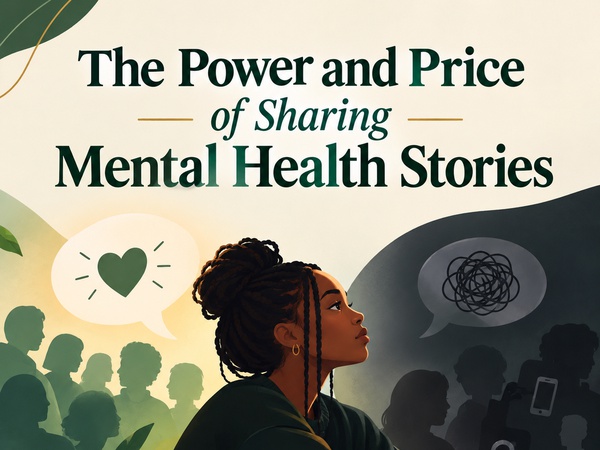
<p>Mental health struggles are often made more difficult by the fear of being judged. Many people suffer in silence, not because they have nothing to say, but because they are afraid of how others might react. In a society where mental health challenges are sometimes misunderstood, speaking publicly about personal experiences can be a powerful way to create change. Although sharing these stories carries risks, I believe the benefits outweigh the disadvantages when people have control over what they disclose.</p><p><br/></p><p>One of the greatest benefits of sharing mental health experiences is dismantling isolation and providing validation. Mental illness often thrives in silence, fueled by the misconception that one's struggles are entirely unique or indicative of personal weakness. When a person speaks publicly about their psychological challenges, it shatters that illusion. For listeners or readers, seeing someone they identify with, whether in terms of background, profession, or identity articulate a similar pain creates an immediate sense of validation. It transforms an isolating, internal burden into a shared human experience, reassuring individuals that they are not alone.</p><p><br/></p><p>Public storytelling can also humanize complex conditions and reduce stigma. Historically, media representations and clinical jargon have often framed mental health conditions through a lens of fear, unpredictability, or weakness. First-person narratives humanize these conditions. By hearing real people describe their day-to-day triumphs and setbacks, society moves away from stereotypes and toward empathy. This cultural shift helps chip away at the deep-seated social stigma that has historically prevented people from seeking help or talking openly about their health.</p><p><br/></p><p>While public speaking on social media can amplify personal voices and drive social change, it introduces profound personal, psychological, and professional risks. Digital platforms offer unprecedented reach, but they lack the protective boundaries of face-to-face dialogue or clinical environments. Consequently, the act of speaking out online often functions as a double-edged sword.</p><p><br/></p><p>The most enduring risk of digital disclosure is permanence. Once a personal story, opinion, or crisis is shared online, control over that narrative is permanently surrendered. Archival tools and search engines ensure that disclosures remain indexed indefinitely, carrying the potential to follow individuals into future employment opportunities, academic pursuits, and personal relationships long after they have moved past that phase of life. Although one may say they can delete posts or request removal, copies may survive and end up resurfacing on the internet.</p><p><br/></p><p>The answer, therefore, is not to discourage people from speaking but to respect their right to choose. Advocacy does not require revealing every detail of one's life. People can educate others, challenge stigma, and support mental health awareness without sacrificing their privacy. Society must also learn to listen without judging and ensure that people are not punished for being honest about their struggles.</p><p><br/></p><p>Ultimately, public mental health disclosures are neither inherently transformative nor universally dangerous; their impact is governed by intentionality and context. Public storytelling creates genuine social change when it is grounded in personal readiness, informed by clear boundaries, and linked to broader structural demands such as better access to mental health care, protection against discrimination, or more responsible media coverage. By prioritizing agency over performance and thoughtful advocacy over real-time exposure, individuals can protect their own well-being while continuing to contribute meaningfully to a more empathetic and supportive society.</p><p><br/></p>
Competition entry
|
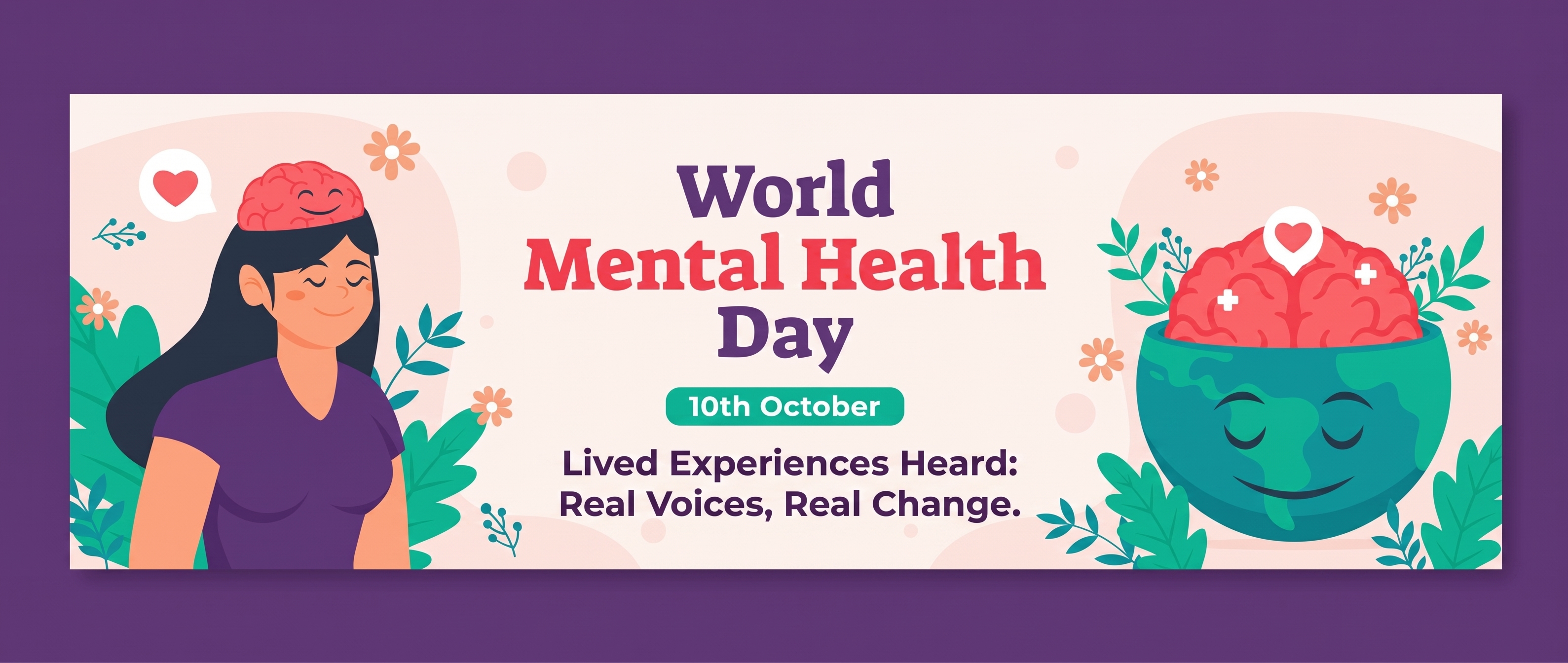
WORLD MENTAL HEALTH DAY: REAL VOICES, REAL CHANGE - SHOULD WE SHARE OUR STORIES?


 18
18


Other insights from The Uncomfortable Pen








Contributor Points
Points-to-Coupons

Referral Earning

Insights for you.


Silence: The things we don't say.🥺
I walked out of my house, shutting the door behind me, and moved to the terrace.I neede...
254 views
60 upvotes
64 comments
Suicide: The Permanent Solution.
“Did you regret it?”“You know…”I hesitated.“What happened?”A heavy sigh was the first r...
269 views
51 upvotes
54 comments

Suicide: The Nigerian perspective.
As we all know, this month, September is Suicide Prevention Month.Today, I'll be talkin...
167 views
46 upvotes
66 comments


2 a.m.
Maybe it's all the nights I spent not sleepingOr all the days I sat thinkingOf how I've...
270 views
52 upvotes
50 comments
Yours in the Empty
Losing a father is one thing,Losing a best friend is another.Losing the "head" is one t...
418 views
60 upvotes
44 comments


I’m Skinny, and So What?
What if I told you that I have cried more over my own arms than over any guy who has ev...
237 views
49 upvotes
51 comments


Shocking Generosity.
Dear Mr. Smith,Good afternoon, sir. I hope this letter meets you well.I write to profus...
136 views
46 upvotes
43 comments


After Alhaji
"Kai, yarinyar nan ta yi sa'a ƙwarai.""Wallahi. Alhaji Ibrahim da kansa zai aura ta.""T...
292 views
37 upvotes
44 comments


One step forward, Three steps back
I'm tired...But not for the reason you're thinking How much more must life take?How muc...
448 views
51 upvotes
41 comments