AFRICA, UNCOVERED — EPISODE 6
When we talk about African independence, we often remember the moment a country raised its flag, celebrated its freedom, and finally had its own government.
But what happens after that celebration?
In the 1980s, a young African leader tried to confront that question.
His name was Thomas Sankara. He became president of Burkina Faso, a small, landlocked country in West Africa.
He was a military officer, but he wanted to be remembered for more than wearing a uniform or occupying the presidential office.
When I look at his story, what stands out to me is not just what he wanted to achieve.
It is the difficult question behind his ambition: How do you build a country that can stand on its own, and what happens when the people leading that change begin to restrict the very people they claim to empower?
FROM UPPER VOLTA TO BURKINA FASO
Before Sankara came to power, the country was known as Upper Volta. It gained independence from France in 1960, but the problems facing ordinary people did not disappear with the departure of colonial rule.
The country was poor, heavily rural, and vulnerable to drought. Access to schools and health services was limited, while political instability had become a recurring problem.
Sankara believed that independence had to mean more than replacing foreign rulers with local leaders.
On 4 August 1983, he came to power through a revolutionary movement involving fellow military officers and civilian supporters.
Then, in 1984, he made a decision that was much more than a change of name.
He renamed the country Burkina Faso, a name commonly translated as “Land of Upright People.”
A country that had been known by a colonial-era name was now being given a name built around dignity and integrity.
Sankara wanted people to see themselves differently, not as a poor country destined to depend on others, but as a people capable of shaping their own future.
Of course, changing a name does not change people's lives by itself.
The real test was what his government would do next.
WHEN DEVELOPMENT MEANT SAVING CHILDREN'S LIVES
One of the most striking things I found in Sankara's story was the vaccination campaign launched in November 1984.
The government called it the “Vaccination Commando.”
The name sounds almost like a military operation and in a way, it was organised with that kind of urgency. Health workers and community teams were mobilised to reach children across the country.
In just about two weeks, approximately 2.6 million children were vaccinated against diseases including measles, yellow fever, and meningitis.
The campaign was supported by national institutions and international partners.
His government also pushed literacy programmes, school construction, rural health care, and efforts to improve food production.
Sankara believed that a country could not call itself truly free while its children were dying from preventable diseases, while people could not read, or while families struggled to feed themselves.
And this is one reason his story matters to me as a storyteller.
When we discuss leadership, we often focus on speeches, political power, and the people surrounding a president.
But sometimes the impact of leadership is better understood by asking a much simpler question:
What changed in the life of an ordinary person?
A COUNTRY THAT WANTED TO PRODUCE FOR ITSELF
Sankara also wanted Burkina Faso to depend less on imported goods and outside assistance.
His government promoted local production, agricultural development, and food self-sufficiency.
It encouraged people to value what they produced at home and challenged the idea that development had to arrive from somewhere else.
There were campaigns to plant trees and address desertification, a serious challenge in the Sahel.
The government also tried to reduce the privileges enjoyed by political officials. Sankara presented himself as a leader who should live more simply and whose government should spend public resources on the needs of the people.
But let us be careful not to turn this into a story where one leader simply solved everything.
Burkina Faso still faced poverty, economic pressures, and major structural challenges. Some policies were difficult to sustain, and the revolution created conflicts with groups that felt threatened by its direction.
Still, the question Sankara raised was important: Why should a country with its own people, land, knowledge, and resources always see itself as incapable of solving its problems?
Self-reliance was not just about refusing foreign goods. It was about building the capacity to produce, learn, organise, and make decisions.
WOMEN WERE PART OF THE REVOLUTION
Another part of Sankara's vision that deserves attention was his position on women.
He argued that a society could not move forward while keeping women behind.
His government appointed women to positions of responsibility and promoted campaigns against practices such as forced marriage and female genital mutilation. It also introduced reforms relating to marriage and family life.
Sankara spoke about women's emancipation not as a separate issue, but as part of the country's development.
And that idea is worth thinking about.
A nation cannot claim to be building a better future if women are denied education, opportunity, safety, or the right to participate in decisions affecting their lives.
But the progress was uneven. Deep-rooted inequalities did not disappear, and some women's organisations operated closely with the revolutionary state.
So even here, the story is not one of complete transformation. It is a story of attempts, change, resistance, and limitations.
WHEN A REVOLUTION BEGAN TO SILENCE PEOPLE
This is the part of Sankara's story we must not ignore.
His government spoke about empowering ordinary people, but it also restricted political opposition.
Political parties were banned, and revolutionary committees sometimes became instruments of intimidation and abuse.
In March 1984, teachers went on strike after the arrest of union leaders. The government responded by dismissing more than a thousand teachers. The International Labour Organization documented the dismissals and raised concerns about the punishment of workers for taking part in a strike.
Think about the contradiction. A government that wanted to expand education was dismissing teachers who challenged it.
This does not erase the achievements of Sankara's government. But it changes how we should understand them.
Because development is not only about vaccination campaigns, schools, roads, or agricultural production.
It is also about whether people can question their leaders, organise independently, and speak without fear.
A leader may have good intentions.
A revolution may begin with a genuine desire to change society.
But when people are no longer allowed to challenge those in power, the question becomes: who is holding the leaders accountable?
A LIFE CUT SHORT, A QUESTION LEFT BEHIND
Thomas Sankara's government lasted only four years. On 15 October 1987, he was killed during a coup led by his former ally, Blaise Compaoré.
His death ended the revolutionary government, but it did not end the questions his life had raised.
What does independence mean if people cannot access education, health care, or food?
Can a country build its future by investing in its own people and resources?
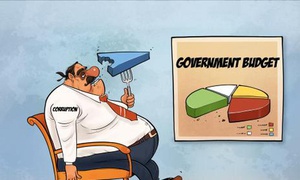
And how do we challenge corruption and inequality without creating new forms of oppression?
For me, Sankara's story is important because it asks us to look at what happens after freedom is declared and at the difficult work of building a society where people can actually live with dignity.
I do not think we need to remember him as a perfect leader to understand why his story matters.
We can recognise the ambition behind his social programmes, learn from the efforts he made, and still be honest about the people who suffered under his government.
His life leaves us with a question that remains relevant across Africa today: What would it take for our countries to invest in their people, trust their own capacity, and build development that is both meaningful and accountable?


 11