She returned to her parents' house quietly, almost as though she were ashamed of being there.
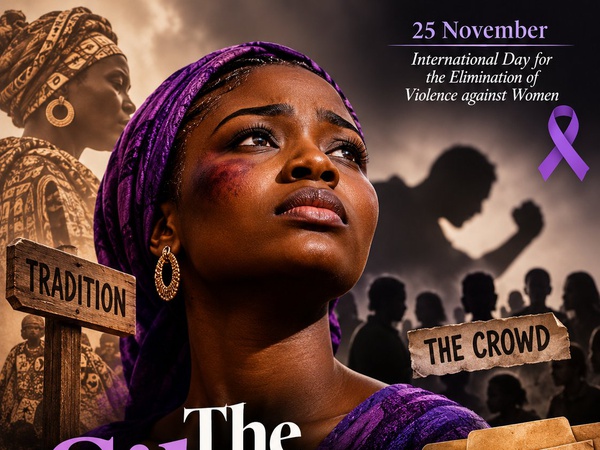
Her eyes were swollen, her lips were bruised, her shoulder ached, her legs felt wobbly. Blood was dripping out of an open wound on her head. She tried but kept failing to stand upright. Her only support was the bag of clothes close to her on the ground.
The neighbors stared, some out of pity, others out of amusement. The door to her parent’s house opened and the familiar face that greeted her at the door struggled to hide its disappointment.
She was somebody's daughter before she became somebody's wife. Yet, standing before the people who had once promised to protect her, she found herself explaining why she could no longer endure the home she had been married into.
There were words gathering somewhere in her throat, words she had rehearsed countless times, but none found their way out. Her mother asked what had happened. Her father listened in silence. But before her pain could receive the attention it deserved, another question emerged:
“What will people say?” Her father asked.
She stared back, short of words.
“I have nowhere to go” she said softly with tears streaming down her eyes.
“Go back and beg your husband” Mama said.
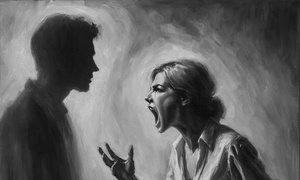
“Mama I cannot endure it anymore. I cannot survive one more day in that house”
“Our tradition does not support this and you know that. Do you want people to laugh at us” Her father said
“Think about your children”.
“Are you sure you didnt misunderstand him”.
“These things hapen in marriage”
On and on the excuses went.
She couldn’t believe her ears.
She knew her parents were traditional to the core but she had hoped for the better.
She was reminded that marriage was not always easy, that women had endured worse and that a home required patience.
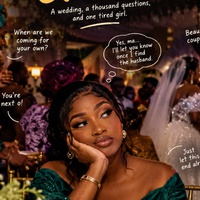
A family meeting was called
Someone suggested that perhaps she had provoked him. Another insisted that she should pray about it. Nobody wanted her marriage to end. Nobody wanted the family name dragged through conversations.
And somehow, nobody seemed to be asking whether she was safe.
She had escaped one home only to discover that the people she ran to were already considering sending her back.
But where was she supposed to go if she refused? How would she survive? Who would support her?
They called a Pastor, because according to her parents, they needed to cast out the spirit making her consider leaving her husband’s house.
And the final advice is that she should return home and make peace with her husband.
With no where else to go and no one to turn to,
She returns.
Days later, news reaches her parents that their daughter is dead.
Suddenly, the same people who insisted that marriage must be preserved begin asking questions. Neighbours who heard the arguments expressed shock. Relatives who knew about the violence claim they never imagined it would go that far. Everyone mourns her, but nobody wants to acknowledge how many opportunities there were to save her.
This is the uncomfortable reality behind violence against women: sometimes, the person inflicting the harm is not the only person standing in the way of justice. The beliefs we inherit, the people who witness abuse and the institutions that dismiss it can all contribute to a society that leaves women with nowhere to turn.
When a woman is expected to tolerate abuse to preserve her marriage, protect family honour or demonstrate obedience, culture becomes an excuse for oppression. No tradition should enjoy greater protection than the human dignity it is supposed to uphold. Our ancestors deserve remembrance, not unquestioning obedience. We honor them est ot by repeating every mistake they made, but by preserving their wisom and haviing the ocurage to correct what caused them.
Beyond tradition is the crowd. Sometimes, it is a relative who know about the abuse but insist that family matters remain private. Sometimes, it is a neighbour who hears cries for help but refuses to intervene. Today, it can also be a group of people recording violence on their phones while doing nothing to help the person experiencing it.
A phone camera can document injustice and preserve valuable evidence. But when footage is circulated without consent, turning a woman's humiliation into public entertainment, documentation becomes exploitation. There is a difference between exposing wrongdoing and exposing the person who has suffered it.
Yet some of the most damaging silences occur behind closed doors. Women who disclose abuse may face pressure from parents, relatives and religious leaders to remain quiet for the sake of family reputation. They may be told to forgive, pray harder or return to their marriages without any assurance that the violence will stop. Forgiveness is a personal choice, not an obligation that should be imposed on someone who remains in danger. Reconciliation without accountability merely creates another opportunity for abuse.
The problem becomes even more serious when institutions repeat the same pattern. When police officers dismiss domestic violence as a family matter or complaints are not properly investigated, survivors are left without meaningful protection.
Nigeria's Violence Against Persons (Prohibition) Act 2015 provides a legal framework for addressing violence, but legislation alone is insufficient. Justice requires effective enforcement, accessible reporting channels and institutions that take complaints seriously.
So, who should be held responsible?
First and foremost, the person who commits the violence. Tradition, anger, marital disagreements and religious beliefs cannot excuse an individual's decision to harm another person. But responsibility does not end there. Those who deliberately conceal abuse, intimidate survivors, obstruct justice or misuse their authority to protect perpetrators must also answer for their actions.
Families must choose their daughters' safety over public reputation. Religious and traditional leaders must challenge harmful interpretations of their teachings and customs. Men must reject violence and entitlement among their peers rather than treating gender-based abuse as a problem women must solve alone. Communities must stop rewarding silence, and institutions must be accountable when their failures deny survivors protection.
Responsibility is shared, but it is not equal. The perpetrator bears primary responsibility for the violence, while those who enable or conceal it must answer for their own contributions.
And what does justice look like?
Justice is more than punishing an offender. It means providing survivors with safety, medical and psychological support, legal assistance and the opportunity to rebuild their lives without intimidation or stigma. It means creating support systems that make leaving an abusive relationship possible, rather than expecting women to escape without shelter, financial security or family support. Above all, it means allowing survivors to make decisions about their lives and tell their stories on their own terms.
But for the woman who returned to her parents' house, justice came too late.
The most devastating part was that she had found the courage once, had asked for help and had been sent back.
The silence we inherit does not have to be the silence we pass on. We can preserve our cultures without preserving their injustices. We can defend family values without defending abuse. We can raise awareness without violating survivors' privacy. And we can build communities where women are not merely encouraged to speak, but are safe enough to be heard.
When harm is done in the name of tradition, tradition must be questioned. When it happens before a crowd, the crowd must be accountable. When it is hidden behind a cover-up, the cover-up must be exposed.
She did not die because nobody knew. She died because too many people knew, yet nobody acted in time.
And perhaps that is the question society must confront: how many women must become memories before we stop teaching them to endure and start giving them reasons to live?



 16