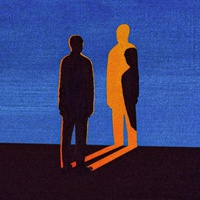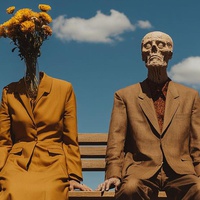
You can sit beside someone, look at the same street, hear the same conversation, and still leave with a completely different experience.
Why?
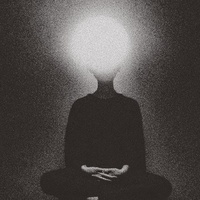
Because your brain isn't a camera.
It doesn't record everything around you and give you an exact copy of reality. It constantly chooses what to notice, what to ignore, and what to connect.
Imagine walking through a crowded place. There may be hundreds of faces around you, dozens of sounds, different smells, movements, colours, and small details happening at the same time.
Yet you only notice a fraction of them.
Your brain has to filter the world because there is simply too much information to process at once.
And here's where it gets interesting.
What you notice can depend on what you're already thinking about.
If you're worried about something, suddenly everything related to it seems to appear everywhere. If you're thinking about buying a particular car, you may suddenly notice that same car on every street.
The cars were already there.
Your attention simply started looking for them.
Even your memories aren't perfect recordings. Each time you remember something, your brain reconstructs it. Small details can disappear, change, or become mixed with later information.
So sometimes, two people can remember the same event differently while both genuinely believe they're telling the truth.
Neither person necessarily decided to lie.
Their minds simply built different versions of the moment.
This raises a strange question:
If our attention selects what we notice, our experiences influence what we expect, and our memories can change over time...
How much of the world do we actually experience as it is?
Maybe reality exists outside of us exactly as it does.
But the reality we experience is always passing through a human mind first.
And perhaps that's one of the strangest things about consciousness:
We don't just live in the world.
We live in the version of the world our minds allow us to experience.


 167