Score |
247


G.G.A.O.

 Co-founder @ God's Will



WHAT HAPPENS WHEN YOU DECIDE TO FIND YOURSELF? PART II
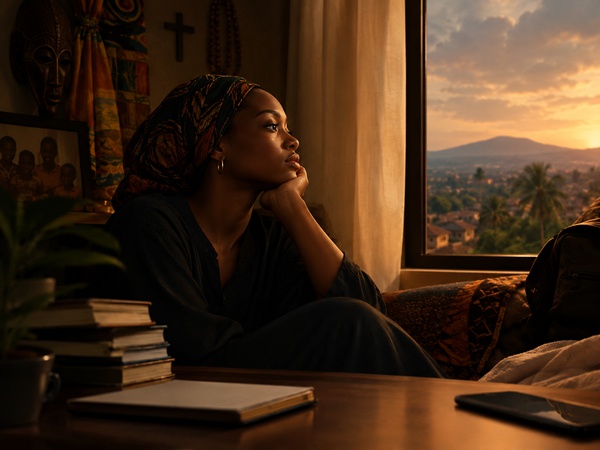
<p>I think the most powerful thing about Tola's story is that it does not have to be a story about whether culture is good or bad.</p><p></p><p>It does not have to be a story about whether religion is liberating or restrictive.</p><p></p><p>And it does not have to be a story about whether parents should have a say in their children's lives.</p><p></p><p>Those conversations matter, but they are not the heart of this story.</p><p></p><p>The heart of the story is what happens when a person begins to realise that the life everyone has prepared her for is not necessarily a life she has consciously chosen.</p><p></p><p>What happens when the values she has inherited meet the convictions she is beginning to develop?</p><p></p><p>What happens when love and loyalty collide with the need for personal agency?</p><p></p><p>What happens when faith becomes something she wants to understand for herself?</p><p></p><p>What happens when she realises that growing up does not simply mean becoming better at fulfilling the expectations she grew up with?</p><p></p><p>Perhaps growing up also means learning how to examine those expectations.</p><p></p><p>Perhaps it means understanding that the people who raised us can love us deeply and still have limited perspectives about the lives we should live.</p><p></p><p>Perhaps it means accepting that our parents' experiences have shaped their understanding of what is safe, wise, and right, without assuming that their experiences are the only lens through which our futures can be understood.</p><p></p><p>Perhaps it means recognising that culture can give us roots without determining every direction in which we grow.</p><p></p><p>And perhaps it means understanding that faith should not prevent us from becoming thoughtful people who can make responsible decisions.</p><p></p><p>I think many young Africans are navigating some version of this tension.</p><p></p><p>They want to honour their parents, but they also want to make their own decisions.</p><p></p><p>They want to remain connected to their culture, but they are asking questions about practices they have never been allowed to examine.</p><p></p><p>They want to take their faith seriously, but they are learning to distinguish their personal convictions from the expectations of their religious communities.</p><p>They want to build meaningful lives, but they are discovering that the definition of a meaningful life can differ across generations.</p><p></p><p>And they do not always know how to communicate these differences without creating conflict.</p><p></p><p>Some remain silent.</p><p></p><p>Some comply.</p><p></p><p>Some rebel.</p><p></p><p>Some leave.</p><p></p><p>Some stay and slowly learn how to negotiate the boundaries between their own convictions and the expectations of the people they love.</p><p></p><p>But beneath these different responses is a common question:</p><p></p><p>Can I become my own person without losing the people, values, and faith that matter to me?</p><p></p><p>There may not be one answer that works for everyone.</p><p></p><p>Some relationships will require difficult conversations. Some boundaries will need to become firmer. Some expectations may eventually be reconsidered. And some differences may remain unresolved for a long time.</p><p></p><p>But perhaps we should stop treating personal growth and cultural belonging as though they must always be enemies.</p><p></p><p>Perhaps the conversation we need is not about choosing between our roots and our future.</p><p>Perhaps it is about learning how to carry our roots into the future without allowing them to prevent us from growing.</p><p></p><p>And perhaps we need to create families, religious communities, and societies where young people can ask honest questions without immediately becoming disappointments.</p><p></p><p>Because a young person who is never allowed to question an expectation may eventually abandon it without understanding why.</p><p></p><p>But a young person who is allowed to examine it may develop a deeper, more thoughtful conviction about whether it deserves to continue.</p><p></p><p>We should want more than compliance.</p><p></p><p>We should want understanding.</p><p></p><p>We should want more than people who know how to behave correctly when they are being watched.</p><p></p><p>We should want people who understand the values behind their actions and can live them out with integrity.</p><p></p><p>And we should want young people who can honour their families without disappearing into the identities their families have constructed for them.</p><p></p><p>That is the conversation Tola's story invites us to have.</p><p></p><p>Not a conversation about rejecting everything.</p><p></p><p>A conversation about becoming conscious of what we accept, what we preserve, what we question, and what we choose.</p>


 34


Other insights from G.G.A.O.






Contributor Points

Points-to-Coupons

Referral Earning

Insights for you.


THE FISH HOUSE
One morning, I went with my mum to the … should I say fish house or fish market or fish...
1372 views
44 upvotes
26 comments

Let's Forikori
Honestly, I have been hearing "Olodo Uprising" for the longest time, and I think it's h...
239 views
36 upvotes
30 comments


My journey:From the Gates of UniAbuja...
The dust of Gwagwalada hung in the air, a familiar yet distinct scent that marked the b...
456 views
27 upvotes
39 comments

Happy Birthday Tobi 🤍
It's funny how much I've been built Many characters and scenes are definitely factors B...
152 views
35 upvotes
24 comments

HOW PETTY THEY CAN BE
I've always enjoyed Spotify and other streaming services, I mean if nothing I get to co...
708 views
35 upvotes
25 comments

Abeg
Is it a crime to want to be seenOkay there's supposed to be question mark there. Sorry,...
131 views
25 upvotes
26 comments

Leadership begins with us
Let us face the truth. We're quick to point fingers at the government, but let's be rea...
870 views
19 upvotes
16 comments

The conversation
Tell me, why are you ashamed?No, no, no, no…Tell me why.Come on, talk to me.You dressed...
113 views
24 upvotes
25 comments
Guys, Tobi is married
You want to know how I know and how I figured out abi?Don't worry, follow me till the e...
165 views
23 upvotes
26 comments































