One thing I truly appreciate about history is that it’s not just about the past. It always connects the past, present, and even the future.
Many people think history is useless. They see it as only old leaders, story, wars, dead people, and dates we memorize for exams.
But history is much bigger than that. It explains why societies are the way they are today. It explains the issues we accept as normal. History even suggests solutions long before we’re ready to hear them.
Earlier this week in class, we discussed the Arab Spring, the wave of uprisings that affected North Africa and the Middle East around 2011. When we talked about Libya, one name came up: Muammar Gaddafi. He was a controversial leader and an authoritarian ruler.
History does not overlook the brutality associated with his government. However, in the midst of all the debates about him, one idea he often promoted stuck with me after class.
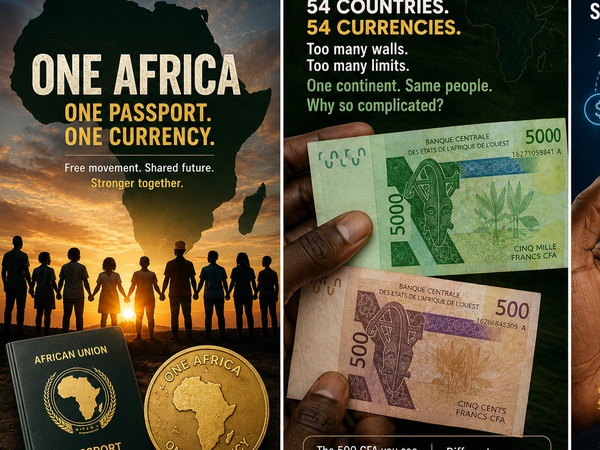
He believed Africa should unite more. He talked about a United States of Africa. One Africa.
He questioned why Africans needed visas to travel to other African countries. He discussed stronger cooperation, a single African passport, smoother movement across borders, and even conversations about a unified African currency.
At first, it sounded like one of those political ideas people cheer for during speeches but then forget. His idea was part of a wider Pan-African vision often discussed at the African Union level, but it never got implemented because of political disagreements and institutional problems.
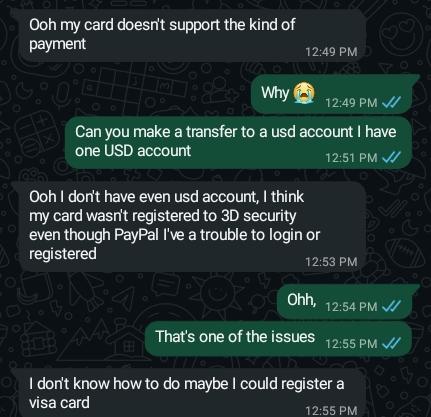
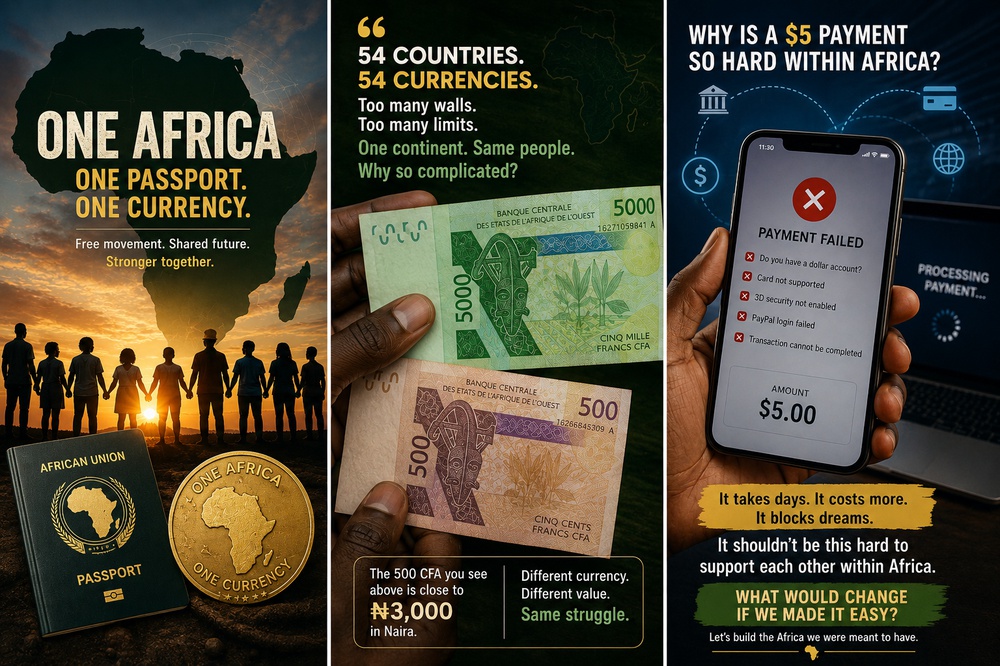
Recently, someone from Tanzania wanted to buy my book. Just a simple $5 transaction but what followed was frustrating and disappointment.
Do you have a dollar account?" I asked. He replied no.
"PayPal?" He couldn’t even log in.
"Send Naira?" Not possible
At one point, he said, “Ooh my card doesn't support that type of payment.”
I asked myself, Are we not on the same continent? Why is this so hard?
Why do we even need a USD account at the first place?
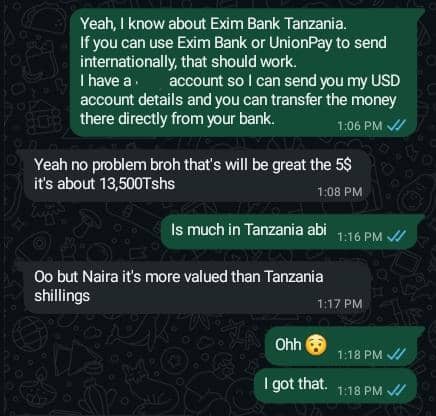
We were two Africans. Same continent trying to complete a $5 transaction.
And we struggled.
He told me the $5 was around 13,500 Tanzanian shillings.
That shocked me. it made me think deeply about how economically disconnected Africa still is, even from itself.
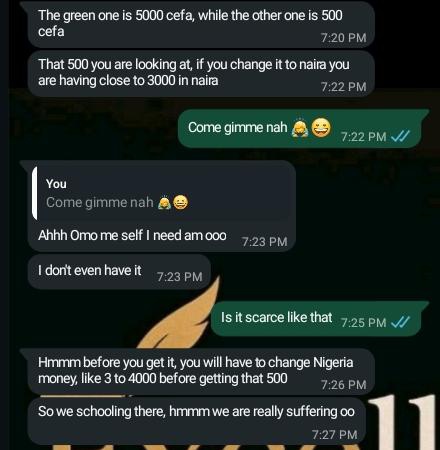
I once had a conversation with a close friend in Benin Republic, i asked her for a small amount of CFA francs. When I converted it in my head to Naira, I thought it was something equal to Naira.
She laughed and said to me: "No, Naira is worth more. This amount I’m talking about, even as a student here, I can barely access it"
It shocked me. Same Africa, same struggle, but the currency confusion makes us misread each other's reality. Small issues feel big, and big issues feel impossible.
And the CFA franc? Shared by eight West African nations, yet still tied to France and not fully controlled by the African hands that use it daily. It is a shared currency, but still has colonial ties.
I recalled another experience.
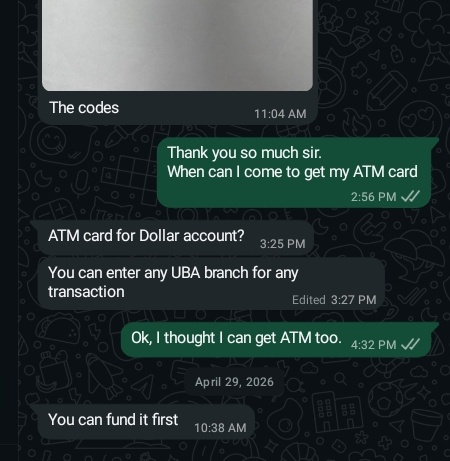
Some time ago, I went to the bank to pickup my international card for online payments and transactions.
The card fee alone was difficult for me to afford. I remember standing there thinking, “I need to have this money… but why is it this hard just to access something so basic?”
It wasn’t even about luxury. It was just access to the digital world, access to opportunities, access to simple transactions.
I kept asking myself, why does something so basic feel like a privilege?
Why does it sometimes feel easier to transact with people outside Africa than with fellow Africans?
Why must Africans go through dollar systems before helping each other?
Why are students, creatives, entrepreneurs, researchers, and young people trying to work together across Africa still facing these barriers?
Even when applying for freelancing platforms or opportunities, many platforms require international payment systems that most ordinary African students don’t have access to.
In most cases, transfers take up to 5 working days, transaction charges are painful. Sometimes platforms simply don’t work in specific African countries.
And quietly, opportunities disappear there.
Projects stop there.
Dreams fade there.
This is why history matters to me. The real issue is not that Africans are unwilling to trade, it’s that the systems were never designed for Africans to trade easily with one another.
Sitting in that classroom learning about Libya and Gaddafi, I suddenly realized that: History pointed out the problem decades ago, sometimes someone already identified the crack in the wall.
The messenger may have had flaws. The politics may have been contentious. The methods may have failed.
But the question still remains.
Why is Africa still so tough for Africans?
Europe has different languages, cultures, and histories, yet many European countries trade easily under one system and one currency through the Euro.
Meanwhile, Africans still ask each other:
“Do you have a dollar card?”
Honestly, I think that should concern us a lot more than it currently does.
Because this is not just about money. It’s about the young African with an idea who can’t get support from another African country easily.
It’s about the writer who struggles to sell to another African. It’s about the student who can’t access opportunities because systems weren’t made with Africans in mind.
Maybe the next step for Africa is not just political unity but also financial and digital unity, systems that allow Africans to move, pay, and build across borders without friction.
This week History taught me that the past isn’t dead. It still speaks through the present. History is not only what happened to us. It’s what we choose to fix after understanding it.
One of the biggest mistakes we make is thinking history belongs only in textbooks when, in reality, history is happening around us every single day.
Maybe Africa still has unfinished conversations. And maybe our generation is the one that needs to continue them.
What would change for you if moving money across Africa became easy?
What dream would suddenly become possible?
I genuinely want to know.


 242