Score |
212


Big Dee

 Writer | Speaker | Creative Voice. I tell stories, make calls & design confidence. @ Yabatech
Writer | Speaker | Creative Voice. I tell stories, make calls & design confidence. @ Yabatech



My love, Nigeria... I hope you get better soon...

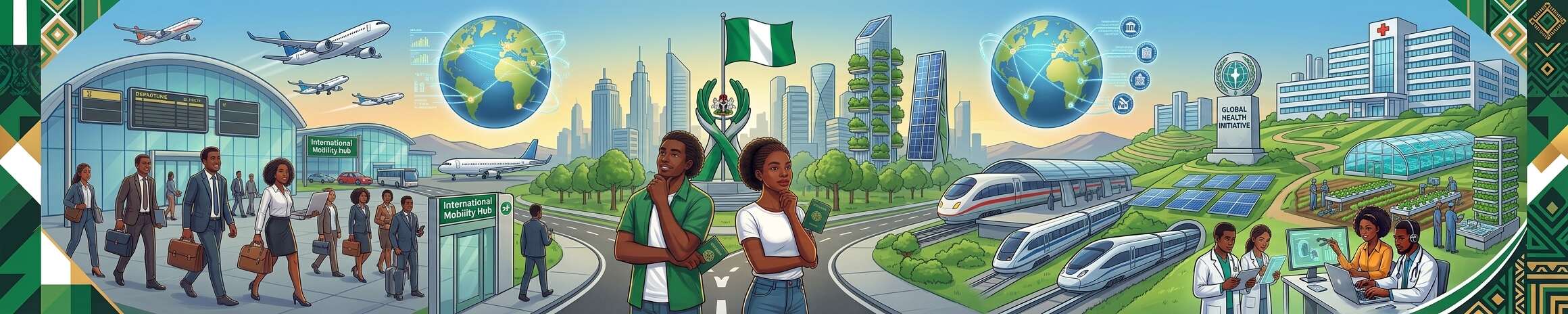
<p><span style="background-color: transparent;">About five years ago, my aunt left Nigeria, she went abroad as a student, worked while studying, and basically had to build her life from scratch, this year, she came back, and one of the things that amazed me was that she had built a house here and was also running a business, which is one reason I have been thinking about the whole idea of “Japa” and what we actually mean when we say someone has left Nigeria.</span></p><p><br/></p><p>I think sometimes we make it sound like leaving automatically means you have given up on your country, but my aunt did not leave because she hated Nigeria, she left because she wanted a chance to build a better life, and leaving did not stop her from contributing here later, if anything, she returned with money, experience and exposure that she probably would not have had if she had stayed.</p><p><br/></p><p>I think sometimes we also misunderstand what people mean when they say they want a better life abroad, it is not always about having a big house, driving a nice car or suddenly living a perfect life, my aunt herself had to work and study, and I know that being abroad comes with its own struggles, but sometimes people are simply looking for an environment where their effort has a better chance of becoming something, where a child can learn a skill and actually have somewhere to learn it properly, where going to school means more than just passing exams, where infrastructure is not something you constantly have to work around, where even ordinary things like moving around, exploring, accessing healthcare or trying something new do not always have to come with the same level of calculation, safety, money, connections and luck.</p><p><br/></p><p>I am not saying Nigeria has nothing to offer, neither am I saying everybody abroad is doing well, there are Nigerians abroad who are struggling, lonely, underpaid and trying to survive too, but that does not cancel the reasons people leave, it only reminds us that “abroad” is not a magical solution, people are still making a choice between different kinds of difficulty.</p><p><br/></p><p>I understand this because I have experienced, in my own small way, what it means when a system does not work the way it should, when I became seriously ill and could not sit my examinations, I submitted my medical documents and followed the process I was given, months passed, the matter was still unresolved, my results eventually came out with the missed courses recorded as carryovers, and after going back and forth, I lost an academic year.</p><p><br/></p><p>I was grateful to be alive and recovering, but I was also angry about what had been lost, the money, the time, the energy, the opportunity to graduate with my mates, and the feeling that maybe this could have been handled differently if the system worked better, that experience made something very clear to me, sometimes the problem is not that citizens are unwilling to contribute, sometimes ordinary people are simply paying the price for systems that do not function properly.</p><p><br/></p><p>So when we ask, “Why don't young Nigerians stay and build the country?”, I think we have to be careful with the question, because the people being asked to stay, endure and build are living people, with limited time, limited money, limited opportunities and, sometimes, families depending on them, we cannot keep asking a generation to sacrifice years of their lives to repair foundations they did not create.</p><p><br/></p><p>At the same time, the argument that everyone should simply leave has its own problem, because Nigeria cannot build a functioning future if everyone who has the ability to contribute eventually leaves, and this is not just an emotional argument, Nigeria is already dealing with the effects of human capital migration, especially in healthcare, where the World Health Organization has identified Nigeria among countries facing severe health workforce shortages.</p><p><br/></p><p>The scale of the desire to leave is also not something we can dismiss as social media pressure or young people being ungrateful, a 2024 Afrobarometer survey found that 56% of Nigerians said they had considered emigrating, rising to 60% among 18 to 35 year olds and 71% among people with post-secondary qualifications, with work opportunities and economic hardship among the main reasons given.</p><p><br/></p><p>That should tell us something, people are not only leaving because they do not love Nigeria, many are responding to what they see around them and trying to make rational decisions about their own lives.</p><p><br/></p><p>So, does a Nigerian have a responsibility to stay and help build the country?</p><p><br/></p><p>I think we have a responsibility to contribute, yes, but I do not think patriotism should mean sacrificing yourself indefinitely, especially when the systems around you repeatedly make ordinary life harder than it needs to be, loving your country should not mean pretending that everything is fine, and leaving should not automatically be treated as betrayal.</p><p><br/></p><p>For me, the real question is not whether Nigerians should stay at all costs, it is what would make staying worth choosing, because if we genuinely want young Nigerians to remain, build businesses, create technology, practise medicine, teach, invent and raise families here, then Nigeria also has to become a place where those efforts have a real chance to grow.</p><p><br/></p><p>Patriotism can ask me to care, to contribute, to vote, to pay my taxes where applicable, to do honest work and to leave something better behind than I found it, but I do not think it should ask me to prove my love by accepting every failure as my responsibility.</p><p><br/></p><p>If we want people to stay and build Nigeria, then perhaps we should spend less time asking why they want to leave, and more time asking what kind of country would make them want to stay.</p>


 77
77







Other insights from Big Dee













Contributor Points

Points-to-Coupons

Referral Earning

Insights for you.


Papa wasn't mine...
My father died on a Tuesday.The man who raised me. The quiet one. The one who came home...
202 views
47 upvotes
49 comments

70
70Seventy is one of those numbers that seems to carry weight.Not because there's anythi...
321 views
48 upvotes
50 comments

After Alhaji
"Kai, yarinyar nan ta yi sa'a ƙwarai.""Wallahi. Alhaji Ibrahim da kansa zai aura ta.""T...
318 views
37 upvotes
44 comments



TUNANI
Last week at work, I watched the girls in the office stare at me. I could hear the envy...
193 views
33 upvotes
36 comments

How To Prepare Akara
A masterclass in why having the ingredients has never been the same thing as knowing ho...
153 views
35 upvotes
37 comments

Hot Body?
Since I clocked thirteen, getting dressed has felt like walking through a minefield. It...
148 views
38 upvotes
43 comments