Score |
407


Princess Chronicles
 Writer || Speaker || Storyteller @ Adekunle Ajasin University
Writer || Speaker || Storyteller @ Adekunle Ajasin University



Postpartum Psychosis Meets Justice.
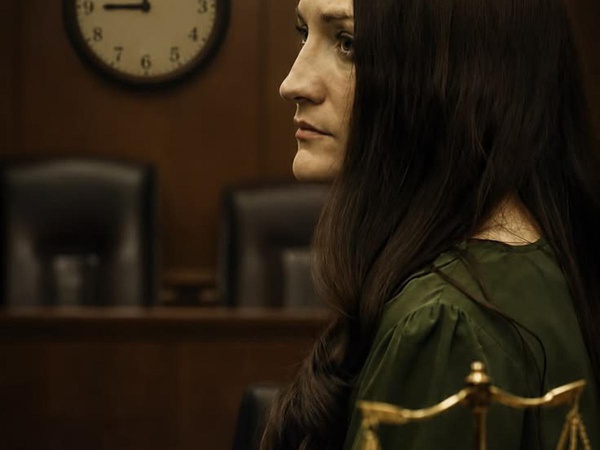
<p>Eleven jurors said she was not criminally responsible.</p><p>One juror disagreed.</p><p>And because one person would not move, there was no verdict.</p><p>There was something else left behind: A question</p><p><br/></p><p>So, from my little corner of social media, I want to reopen it.</p><p>I was not in that courtroom. I did not hear six weeks of testimony. But eleven people did. They listened to the witnesses, examined the evidence and deliberated for seven days. Eleven reached one conclusion. </p><p><br/></p><p>That does not prove Lindsay Clancy was not criminally responsible.</p><p><strong>But it tells me this question is far more complicated than simply asking, “She killed her children, so what else is there to discuss?”</strong></p><p><br/></p><p>There is quite a lot.</p><p>Cora. Dawson. Callan.</p><p><br/></p><p>Three children whose lives ended in the most horrific way.</p><p>the rights, death and the fathers grief...</p><p>But so does the mind of the woman at the centre of this case.</p><p><br/></p><p>Because the real question was never simply whether Lindsay killed her children. It was whether she was criminally responsible for what she did.</p><p><br/></p><p>Massachusetts law gives us a specific test: a person is not criminally responsible if, because of a mental disease or defect, they lacked the substantial capacity to appreciate the criminality or wrongfulness of their conduct or to conform their conduct to the law. The Commonwealth carries the burden of proving criminal responsibility beyond a reasonable doubt.</p><p><br/></p><p>And Massachusetts makes one word especially important: Appreciate.</p><p>The instruction explains that “appreciate” means to understand, rather than merely to know. The question is whether the person had a meaningful understanding of the legal or moral significance of what they were doing.</p><p>That distinction changes the conversation.</p><p><br/></p><p>What happened to Lindsay was not one bad day.</p><p>There was a history.</p><p>Patrick testified about her depression, insomnia, psychiatric treatment and deterioration. He described her intrusive and “horrible” thoughts. She spent five days at McLean Hospital. Her treatment involved multiple psychiatric medications, and her own writings documented how she was feeling.</p><p>This tells us that this was a mind already in serious distress.</p><p><br/></p><p>And postpartum psychosis is a severe psychiatric emergency that can involve confusion, delusions, hallucinations and a loss of touch with reality.</p><p>So when we ask what happened in that house, I cannot look only at the final minutes.</p><p><br/></p><p>Massachusetts law itself allows jurors to consider evidence of a defendant’s actions before and after the crime when deciding criminal responsibility.</p><p>Then comes the prosecution’s strongest question:</p><p>“But she planned it.”</p><p><br/></p><p>Yes. That matters.</p><p>But a plan tells us that actions were organised. It does not, by itself, answer what was happening inside the mind carrying out that plan.</p><p><br/></p><p>Patrick could tell the court when he left and when he returned.</p><p>A timeline can tell us where a person was.</p><p>A clock cannot tell us what reality looked like inside a person’s mind.</p><p>That is the gap I cannot ignore.</p><p><br/></p><p>For years, Lindsay had been the mother of these children. She had cared for them. She had lived with them. Then, during a documented period of serious psychological deterioration, something changed.</p><p>I keep coming back to that.</p><p><br/></p><p>If we are going to call someone criminally responsible, we have to examine the state of the mind at the time of the act, not only the horror of the outcome.</p><p><br/></p><p>And what about the children?</p><p>Cora deserved to grow up.</p><p>Dawson deserved to grow up.</p><p>Callan, only eight months old, deserved to grow up.</p><p><br/></p><p>I will never argue that their mother’s illness makes their deaths matter less. But their right to justice does not require us to ignore the condition of the person who caused their deaths.</p><p><br/></p><p>Justice can include protection. It can include secure psychiatric treatment, supervision and continued care.</p><p>Removing criminal responsibility does not mean saying, “Nothing happened.”</p><p>It means recognising that a person can be severely mentally ill, dangerous and still in need of treatment rather than criminal punishment.</p><p><br/></p><p>And Lindsay can still need help after that finding. She can still experience depression, guilt, trauma or suicidal thoughts. Removing criminal responsibility would not erase the illness or the consequences. Perhaps this is where the case becomes bigger than Lindsay.</p><p><br/></p><p>In Nigeria, we have our own cultural and spiritual ways of explaining unusual behaviour after childbirth. Sometimes a struggling mother is told to pray harder, endure more or simply “be strong.”</p><p><br/></p><p>But motherhood does not cancel the brain’s need for care.</p><p><br/></p><p>We need more research into postpartum mental illness, childbirth recovery, depression, anxiety, psychosis, sleep deprivation and the quality of care mothers receive after delivery.</p><p><br/></p><p>Because I do not want the next mother to become a defendant before we realise she was a patient.</p><p><br/></p><p>So yes, I stand with the position that severe mental illness should completely remove criminal responsibility when it genuinely destroys the mental capacity the law requires.</p><p><br/></p><p>The crime was horrific.</p><p><br/></p><p>The children mattered.</p><p><br/></p><p>Their lives still matter.</p><p><br/></p><p>And precisely because all of that matters, I believe we must ask the hardest question too:</p><p><br/></p><p>At the moment she did it, was Lindsay capable of understanding the wrongfulness of what she was doing or conforming her conduct to the law?</p><p><br/></p><p>Eleven jurors said the evidence left them unable to hold her criminally responsible.</p><p><br/></p><p>One disagreed.</p><p><br/></p><p>I am not that jury.</p><p><br/></p><p>I am just the girl writing from the sidelines.</p><p><br/></p><p>But if eleven people who sat through the evidence, watched the witnesses and deliberated for seven days could reach that conclusion, then I think the rest of us should be willing to sit with the question too.</p><p><br/></p><p>Because sometimes justice begins by looking beyond what a person did and asking what was happening to the mind that did it.</p><p><br/></p><p><br/></p>



 107
107





Other insights from Princess Chronicles













Contributor Points

Points-to-Coupons

Referral Earning

Insights for you.



Silence: The things we don't say.🥺
I walked out of my house, shutting the door behind me, and moved to the terrace.I neede...
254 views
60 upvotes
64 comments
Suicide: The Permanent Solution.
“Did you regret it?”“You know…”I hesitated.“What happened?”A heavy sigh was the first r...
269 views
51 upvotes
54 comments

Suicide: The Nigerian perspective.
As we all know, this month, September is Suicide Prevention Month.Today, I'll be talkin...
168 views
46 upvotes
66 comments


2 a.m.
Maybe it's all the nights I spent not sleepingOr all the days I sat thinkingOf how I've...
270 views
52 upvotes
50 comments

Yours in the Empty
Losing a father is one thing,Losing a best friend is another.Losing the "head" is one t...
418 views
60 upvotes
44 comments


I’m Skinny, and So What?
What if I told you that I have cried more over my own arms than over any guy who has ev...
237 views
49 upvotes
51 comments


Shocking Generosity.
Dear Mr. Smith,Good afternoon, sir. I hope this letter meets you well.I write to profus...
136 views
46 upvotes
43 comments


After Alhaji
"Kai, yarinyar nan ta yi sa'a ƙwarai.""Wallahi. Alhaji Ibrahim da kansa zai aura ta.""T...
292 views
37 upvotes
44 comments


One step forward, Three steps back
I'm tired...But not for the reason you're thinking How much more must life take?How muc...
448 views
51 upvotes
41 comments