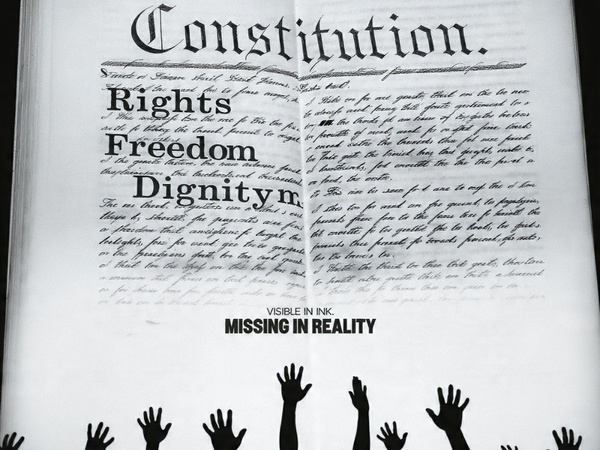
Nigeria knows how to write beautifully.
Omo!💔
give this country a microphone,
a constitution,
and one serious-looking lawyer…
suddenly suffering starts sounding sophisticated.
Because on paper?
We are protected.
Respected.
Represented.
Ink fully loaded with promises.
Right to life.
Right to dignity.
Right to expression.
Big big grammar.
English that wears suit and tie.
But outside the paper?
Ah!
Different behavior.
Because rights in Nigeria behave like MTN network.
Very visible.
Very unstable.
One minute:
“You are a citizen.”
Next minute:
“Who sent you?”
And that is the confusion.
Because how can rights exist loudly in theory
but quietly disappear in practice?
We have freedom of expression,
until expression starts expressing too much.
We have dignity,
until poverty strips it publicly.
We have the right to life,
yet people pray before entering hospitals
like treatment and testimony are competing.
This country is interesting.
Very interesting.
Our laws sound like they were written for Switzerland.
But the experience?
Omo!💔
Different location entirely.
Because tell me why Nigerians know the national anthem
better than their actual protection.
Tell me why survival has become a skill set.
Tell me why resilience is now treated like a personality trait instead of evidence of systemic failure.
And maybe the funniest part is this:
we are always told:
“Know your rights.”
But nobody prepares you
for the moment you discover
knowing your rights
and enjoying your rights
are cousins…
not twins.
Because some rights only exist where cameras are present.
Some only appear during campaigns.
Some survive beautifully inside courtrooms
but faint outside courtroom gates.
And somehow,
citizens have mastered adaptation so well
that endurance now sounds patriotic.
No light?
Adapt.
No safety?
Adapt.
No jobs?
Adapt.
No accountability?
Ah!
lower your expectations and drink water.
This country can normalize almost anything.
And that scares me.
Because when people suffer too long,
they stop asking:
“Why is this happening?”
and start asking:
“How do we survive it?”
That shift is dangerous.
Because survival is not the same thing as freedom.
And coping is not proof that a system works.
Yet every election season,
promises return dressed in agbada and loudspeakers.
Rights return too.
Smiling.
Campaigning.
Shaking hands like old friends that disappeared after the last election.
And somehow,
we still clap.
Still hope.
Still queue under hot sun believing maybe this time, citizenship will finally feel like protection instead of perseverance.
Maybe that’s why this country exhausts people emotionally.
Not because Nigerians are weak,
but because existing here often feels like carrying a passport and a prayer at the same time.
And honestly?
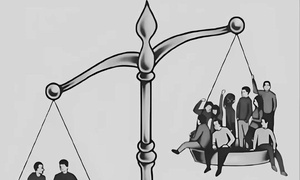
A right is not truly a right
because it was written boldly in ink.
A right becomes real
when ordinary people can experience it
without begging, bribing, fearing, or bleeding for it.
Until then
too many Nigerians are still living inside a country
where rights sound more functional in speeches
than they feel in reality.
💥
Maybe the problem is not that Nigerians don’t know their rights.
Maybe the problem is that too many of those rights
expire the moment reality begins.



 245