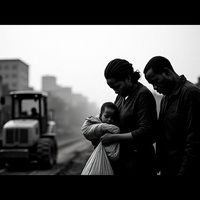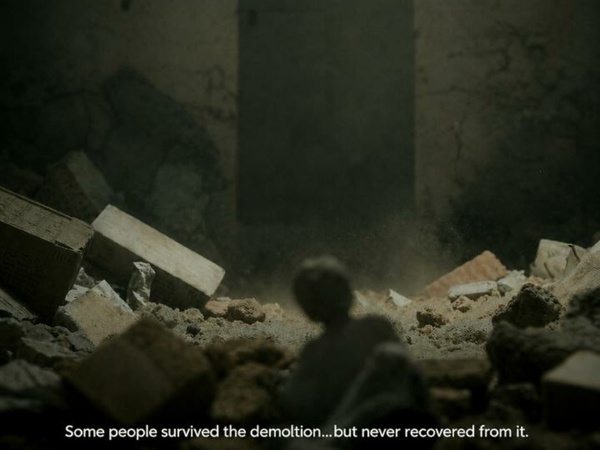
I visited a demolition site.
somewhere between the dust,
the silence,
and the smell of broken concrete,
it stopped feeling like a site.
And started feeling like evidence.
Because people think demolition begins
when the bulldozer arrives.
No.
By then, the fear has already entered.
Sometimes it starts at dawn.
Not with warning.
Before morning fully woke up,
the street already knew something was wrong.
Dogs barked before people did.
Windows opened carefully.
Fear moved from door to door
faster than sunlight touched the roofs.
Then,
boots.
Sirens.
Bangs loud enough
to make walls sound borrowed.
“Come outside!”
And just like that,
homes became emergencies.
Women tying wrappers with shaking fingers,
children coughing before understanding danger,
men dragging properties like memories could be rescued by force.
Then the smoke came.
Tear gas.
Thick.
Sharp.
Cruel.
The kind that enters eyes without permission,
lungs without apology,
homes without conscience.
A child died that day.
Not from collapse.
Not from fire.
From tear gas beside the mother’s arms
and somehow,
the news still struggled to sound heavy enough.
Because official statements have a strange talent:
They know how to make pain sound procedural.
“Operation successful.”
“Area cleared.”
“Situation under control.”
Controlled?
Tell that to the mothers
still washing dust from clothes they no longer have wardrobes for.
Tell that to the people
whose eyes never recovered properly after the smoke,
some now moving around with glasses,
not for fashion,
but because force left residue behind.
Tell that to the pregnant woman.
The one running during the demolition,
heart racing faster than her footsteps.
One child in her hand.
Another inside her womb.
Chaos everywhere.
People pushing.
People shouting.
People escaping.
Then suddenly,
one hand became empty.
She lost the child she was holding
while trying to survive.
And somewhere between panic and pressure,
she gave birth to the one inside her.
I still cannot explain
how one day managed to hold that much loss and life together.
And the craziest part?
Somewhere far from the dust,
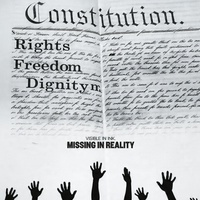
government kept speaking
like none of this was touching actual humans.
Like broken homes are statistics.
Like displacement is grammar.
Like trauma disappears once the bulldozer leaves.
But demolition does not end when buildings fall.
That is where the real destruction starts.
Because after the noise,
comes the aftermath.
The overthinking.
The sickness.
The silent hypertension.
The youths slowly adapting to survival with smoke and substances.
Not always because they are stubborn—
sometimes hopelessness simply needs an escape route.
And at night,
some people still return there.
Not because they want to stay.
But because they genuinely have nowhere else to go.
So they build temporary spaces with trampolines and torn covers,
sleeping beside rubble
like grief refuses to leave the last place it recognized as home.
And honestly,
that image disturbed me more than the demolition itself.
Because everybody else went home after watching the incident.
But some people’s homes
were the incident.
That day taught me something painful:
Sometimes development arrives with maps and machines…
but leaves carrying pieces of people nobody plans to replace.
And maybe the saddest part of all this
is how quickly society adjusts afterward.
Traffic returns.
Conversations move on.
Another project begins.
While somewhere,
someone is still rebuilding eyesight.
Still rebuilding health.
Still rebuilding stability.
Still rebuilding the meaning of home.
💥
The buildings did not suffer the longest.
The people did.
And some of them still are.


 261