Score |
96


Izrplays
 Student @ Uniabuja
Student @ Uniabuja



THE COST OF BEING HEARD

<p>At sixteen, I wrote in my journal: "My head felt like a ticking time bomb... I felt like I had lived the past few years of my life in a completely wrong direction."</p><p><br/></p><p>I didn't write that for likes. I didn't write it for advocacy. I wrote it because I didn't know where else to put the pain.</p><p><br/></p><p>In Nigeria, we have many names for that pain — "You're just lazy," "Na village people," "Go and pray about it," "Just be strong, kpele." But in reality we have just a few safe places to actually talk about it.</p><p><br/></p><p>Yes, sharing our mental health stories publicly can create real change. I will not deny that.</p><p><br/></p><p>When one person says, "I went through anxiety, depression, burnout," another person watching feels less alone, knowing that someone out there is experiencing the exact same thing. Social media has done what clinics could not do for years — it made mental health a normal conversation. Seeing someone like you speak up is powerful. It reduces shame. It tells people that it is okay to ask for help. That is advocacy, and it matters.</p><p><br/></p><p>But that is only half of the truth.</p><p><br/></p><p>The other half is this: not every story shared online is received with kindness.</p><p><br/></p><p>We like to say "the internet is supportive," but the internet is also permanent. A story you share in a moment of courage can be screenshotted, mocked, labelled, and carried for years, leaving behind a stigma you sometimes cannot bear to carry. I have seen people judged by family members who said, "Why did you disgrace us online?"</p><p><br/></p><p>Judged by close friends, who stop offering support to protect their reputation and self-interest.</p><p><br/></p><p>Judged by employers who quietly think, "This person is unstable," not knowing the pain the person carries deep inside.</p><p><br/></p><p>Judged by future partners who never see beyond one bad season. The stigma we are trying to fight can sometimes follow the person who fought it the longest.</p><p><br/></p><p>What then can we do?</p><p>What solution should be applied?</p><p><br/></p><p>That is where advocacy comes into play.</p><p><br/></p><p>Advocacy is controlled, intentional, and often shared after healing. It has a purpose: to educate, to support, to change policy. Oversharing is raw, immediate, and driven by pain in that moment. Social media blurs that line because it rewards pain with likes. When sharing stops being healing and becomes a doom-scrolling ritual — chasing likes rather than recovery — the person sharing is left more exposed, not more healed, leaving a hurt that is sometimes too great to heal.</p><p><br/></p><p>So who gets to decide when, where, and how a person tells their story?</p><p><br/></p><p>Only the person who lived it.</p><p><br/></p><p>I have understood through different events that have happened over time in my life that you cannot truly grasp the pain someone feels unless you have experienced it yourself.</p><p><br/></p><p>I have experienced pain when I feel like I can't explain my problems to anyone simply because they would not be able to grasp the true depth.</p><p><br/></p><p>"Sharing is caring" loses meaning at some point, and then you start to question what influence the statement carried in the first place.</p><p><br/></p><p>Everyone hurts, but not everyone heals from that hurt. We cannot help someone lighten their shoulders from the burdens they carry unless we share a linked sight and heart to feel the pain that they feel too.</p><p><br/></p><p>Real change does not mean everyone must post their trauma. Real change means everyone has the _option_ to speak without punishment, and the _option_ to stay private without guilt.</p><p><br/></p><p>If we say only public stories count, we make private healing look like weakness. It is not. Choosing to keep your struggles private — to work through them with a therapist, a trusted friend, a diary, or your faith — can prove to be a way of liberating you from them. It protects your boundaries, your future, and your peace.</p><p><br/></p><p>I agree with the position: public sharing can spark change, but the risks are real and they can outweigh the benefits greatly if we remove consent, context, and control from the person.</p><p><br/></p><p>Real voices do create real change. I really believe so. But a real voice is also allowed to whisper, to wait, or to stay silent until it is ready.</p><p><br/></p><p>Ultimately, the future of mental health advocacy will not be measured by how loudly we speak, but by how safely we allow others to speak — or not speak — at all. True progress is not a world where everyone is forced to tell their story; it is a world where every story, spoken or unspoken, is met with dignity, protection, and choice.</p><p><br/></p><p>That is the kind of change people keep living on to see. The kind of change that does not disappear after World Mental Health Day ends and the Two Cents platform brings up a prompt for another write-up. The kind that lives on in families, in policy, in schools where counsellors and guardians actually exist, in workplaces where that usually stuck-up guy can say, "I'm not okay" without fear of being shunned or ignored.</p><p><br/></p><p>That is the real test of this year's theme: _Lived Experiences Heard: Real Voices, Real Change._</p><p><br/></p><p>Are we hearing people who got tired of sitting idle, speaking up to address the case of mental health management to feel inspired for a day? Or are we hearing them to build something that will outlive us?</p><p><br/></p><p>I have come to believe that real change isn't about being loud, but about having a lasting impact. It is not measured by how many stories go viral, but by how many people get to keep on hoping, staying whole and dignified after their story is told.</p><p><br/></p><p>As for me, I am still learning when to speak and when to stay silent. And that, to me, is what real advocacy looks like — not forcing someone to bleed in public to be believed, but fighting for a cause you have sworn to make better. Whether you whisper, write like me, or shout the truth, you should still be met with care, not judgement.</p><p><br/></p><p>If we can build that — a system where speaking up is safe and silence is also respected — I truly believe we would have created more than just a conversation, but a future someone can keep on living to see.</p>
Competition entry
|
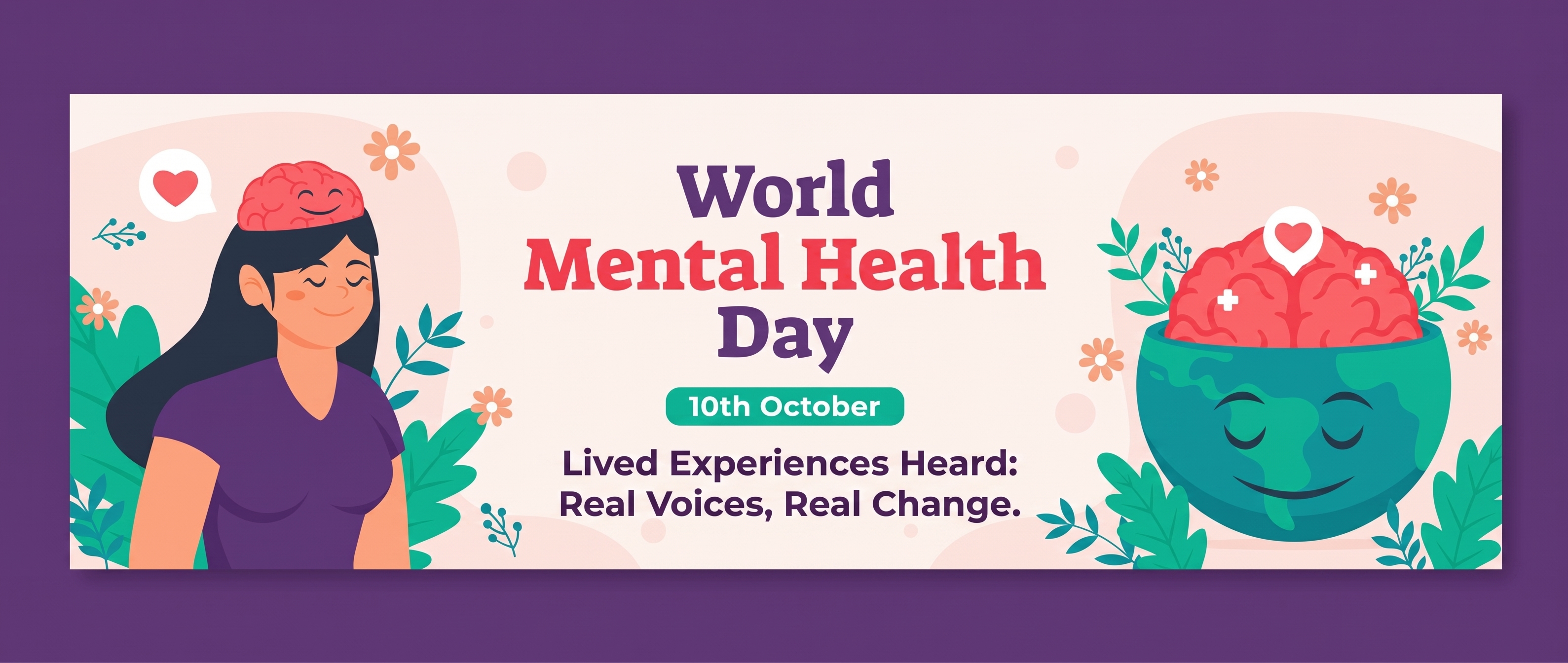
WORLD MENTAL HEALTH DAY: REAL VOICES, REAL CHANGE - SHOULD WE SHARE OUR STORIES?


 20
20


Other insights from Izrplays










Contributor Points

Points-to-Coupons

Referral Earning
Insights for you.


Silence: The things we don't say.🥺
I walked out of my house, shutting the door behind me, and moved to the terrace.I neede...
254 views
60 upvotes
64 comments
Suicide: The Permanent Solution.
“Did you regret it?”“You know…”I hesitated.“What happened?”A heavy sigh was the first r...
269 views
51 upvotes
54 comments
Suicide: The Nigerian perspective.
As we all know, this month, September is Suicide Prevention Month.Today, I'll be talkin...
167 views
46 upvotes
66 comments


2 a.m.
Maybe it's all the nights I spent not sleepingOr all the days I sat thinkingOf how I've...
270 views
52 upvotes
50 comments
Yours in the Empty
Losing a father is one thing,Losing a best friend is another.Losing the "head" is one t...
418 views
60 upvotes
44 comments

I’m Skinny, and So What?
What if I told you that I have cried more over my own arms than over any guy who has ev...
237 views
49 upvotes
51 comments

Shocking Generosity.
Dear Mr. Smith,Good afternoon, sir. I hope this letter meets you well.I write to profus...
136 views
46 upvotes
43 comments

After Alhaji
"Kai, yarinyar nan ta yi sa'a ƙwarai.""Wallahi. Alhaji Ibrahim da kansa zai aura ta.""T...
292 views
37 upvotes
44 comments


One step forward, Three steps back
I'm tired...But not for the reason you're thinking How much more must life take?How muc...
448 views
51 upvotes
41 comments