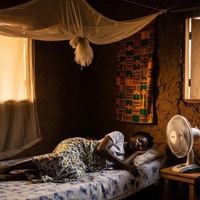



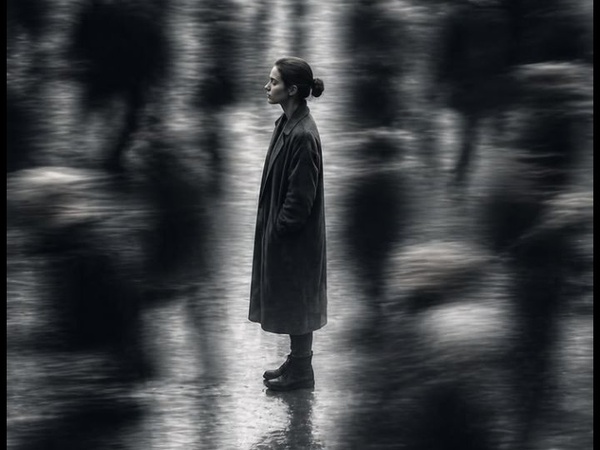
It's a hot Wednesday afternoon.
You just got back from your mum's shop after leaving school. Your back aches, and you haven't been able to keep anything down.
Seems your period is coming early.
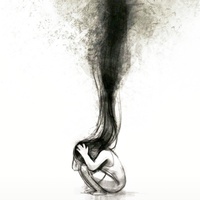
Your abdomen is on fire, and somehow, it seems the sun has gotten closer.
Suddenly, a force tugs your hair from behind.
Before you can look back, you're on the floor.
Next thing you know, you're not thinking about your period coming early, or whether somebody saw you stained, or whether people were there.
You see a crowd.
And you're thinking about making it out alive.
What is the bystander effect?
The bystander effect is a psychological and social phenomenon in which people are less likely to help someone in distress when other people are present.
This doesn't necessarily mean that nobody wants to help.
It simply means that nobody does.
If this happens, where does justice come in?
Honestly, it rarely does.
Consider this: in some parts of the world where jungle justice is practised, people push through crowds to see the end of the victim. Some abandon their wares and belongings just to have first-row access to the "show."
People who might have intervened instead become spectators.
And that is what makes the bystander effect so frightening.
This month's theme asks a difficult question:
Who should be held responsible?
I don't think it's that simple.
Of course, it is easier to point at the perpetrators. But what about their families? What about culture and society? What about tradition? What about the bystanders? What about social media?
If we were to point fingers, we could argue that we are all responsible for the crimes others commit.
But I don't think responsibility works that way.
I believe the primary responsibility belongs to those who commit the violence, but it doesn't end there.
Hold on.
I'll explain.
I'm not saying the woman who was attacked is responsible.
I'm not saying the person who watched from a distance carries the same blame as the person who caused the harm.
And I'm certainly not saying every person who failed to intervene is secretly an accomplice.
The person who commits the violence carries the greatest responsibility.
The person who encourages it carries another.
The person who watches, laughs or records it for entertainment carries another.
The person who knows what happened and pressures the victim into silence carries another.
The family that protects a perpetrator because of a surname carries another.
The institution that dismisses violence as a "family matter" carries another.
Different actions. Different levels of responsibility.
But they can all lead to the same place:
A victim suffering while the person responsible gets away with it.
And that is the part we need to talk about.
First, the crowd.
There is something disturbing about watching someone suffer and knowing that dozens of people are watching too.
You assume someone else will help.
Someone else will call the police.
Someone else will intervene.
Someone else will say something. What about you?
But we must also be fair.
Not every bystander can safely confront a violent group. Not everyone has the physical ability to intervene. Someone who is alone and unarmed should not be expected to put themselves in fatal danger just to prove they care.
Then, the family.
I believe the family carries one of the greatest responsibilities in society.
Every person in society comes from a family.
If families worked together to raise people who understand accountability, consent, empathy and consequences, perhaps the rate of violence in society would diminish.
We shouldn't protect a family name so fiercely that we forget the person bearing it.
And if we stopped trying so hard to protect a name rather than the person bearing that name, perhaps November 25th would simply be another day.
Because what happened to that 17-year-old girl could have been prevented.
And no, I'm not sharing the blame with her.
She was a victim.
Any of us could have been in her shoes.
Would the situation be different then?
Would the perpetrators suffer the consequences?
Or would we still be more concerned about protecting the family name?
A family's reputation should never be more valuable than a person's safety.
We need to ask difficult questions about the traditions we inherit.
Who benefits from them?
Who is harmed by them?
Who gets to question them?
And, most importantly, who gets to say no?
If a practice requires someone to surrender their dignity, safety or consent, calling it tradition does not make the harm disappear.
Tradition should be preserved where it preserves humanity.
Not where it destroys it.
The law should not become interested only when social media becomes interested.
Police, courts, community leaders and other institutions have a responsibility to make reporting violence possible, safe and meaningful.
A woman should not have to become a stranger to the person who harmed her before her suffering is considered serious.
And those who deliberately obstruct justice—whether by threatening a survivor, destroying evidence or pressuring her into silence—should not be allowed to hide behind family, status, religion or tradition.
But what does justice actually look like?
It is easy to think justice means punishment.
And yes, consequences matter.
But justice is bigger than punishment.
Justice is a survivor being believed enough to receive proper help.
It is medical care.
It is psychological support.
It is protection from retaliation.
It is a fair investigation.
It is the freedom to tell her story—or choose not to tell it.
So, who should be held responsible?
The perpetrators should answer for the violence they committed.
But responsibility does not stop there.
The person who encourages violence should answer for their role.
The person who deliberately enables it should answer for theirs.
The family member who silences a survivor should answer for that silence.
The leader who protects an abuser should answer for that protection.
The institution that repeatedly ignores violence should answer for its failure.
And the crowd?
The crowd must answer for what it chooses to become.
Women should not have to carry the entire burden of teaching society how to treat them.
We all have a role.
Because if women don't feel safe, and more feminists and misandrists emerge every day, perhaps we should ask why? instead of asking, "What was she wearing?"
How long until we realise that silence isn't helping?
How long until we realise that the problem isn't just the act, but the effect?
How long until we realise that individually and familially, we need to work together to curb violence against living, breathing human beings, regardless of gender or means of identification?
The girl on the bike deserved someone who would see it, hear it and say something.
She deserved a society where the people watching were more concerned about saving her than witnessing her suffering.
She deserved a system where speaking about what happened did not become another thing to fear.
And she deserved justice.
So perhaps the question is not simply, "Who should answer?"
Perhaps we should also ask:
"What are we doing that allows the question to keep being asked?"
Because what kind of society are we building when the person committing the violence fears the law less than the woman fears speaking about what happened to her?


 27