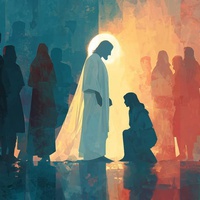
In most churches, the image on the wall does not resemble the place where it was born.
We grew up seeing a pale figure with light eyes and hair that had never known desert sun, and we were taught to call that holiness.
The iconography was so persistent that divinity itself began to look foreign.
We learned to bow to a God who did not look like the street we lived on.
And yet the historical record is inconveniently simple.
A man born in first-century Judea, under Roman occupation, to a Jewish family in Nazareth.
A man who walked dusty roads in relentless heat.
He would not have been fair-skinned.
He would have been brown.
Dark hair, dark eyes, skin weathered by sun — a Middle Eastern man who would have been stopped at most modern borders.
We bleached him.
Not out of malice, but out of power.
Because when you can paint God in your own image, you never have to explain why you rule.
The theology shifted with the paint.
A white Christ can remain an idea.
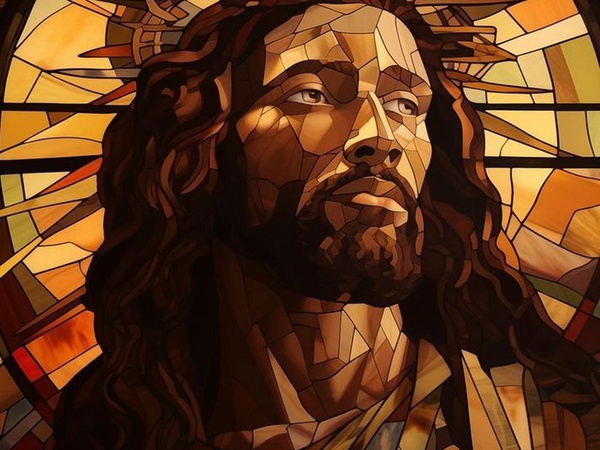
A distant savior in a stained-glass window, a king for cathedrals.
A brown Christ cannot.
A brown Christ is forced to be human.
He is not a monarch; he is a refugee.
He is not a CEO; he is a carpenter who understands labor.
He is not untouched; he is colonized, occupied, executed by an empire.
This is why the image matters.
"We did not just change his color. We changed his sympathies."
"When God looks like the oppressor, the oppressed will always feel they must apologize for their prayers."
For centuries, we were handed a God who needed to be rented — through the right institution, the right language, the right performance of piety.
A God that required translation.
And rent, by its nature, keeps you grateful and small.
But the Jesus who would have actually existed does not need translation.
He would have understood hunger without being told, understood displacement without a parable to explain it, understood what it means to have no room at the inn because his own story begins there.
The question is no longer whether he was black or white.
The question is why we were so desperate for him to be white.
Perhaps because if God is dark-skinned, sun-beaten, poor, and politically suspect, then holiness has been living on the wrong side of town all along.
And if that is true, then faith is not an escape to heaven.
It is a return to the street.


 84