Score |
1196


Stargirl.

 Student and freelancer. @ Adekunle Ajasin University Akungba Akoko
Student and freelancer. @ Adekunle Ajasin University Akungba Akoko



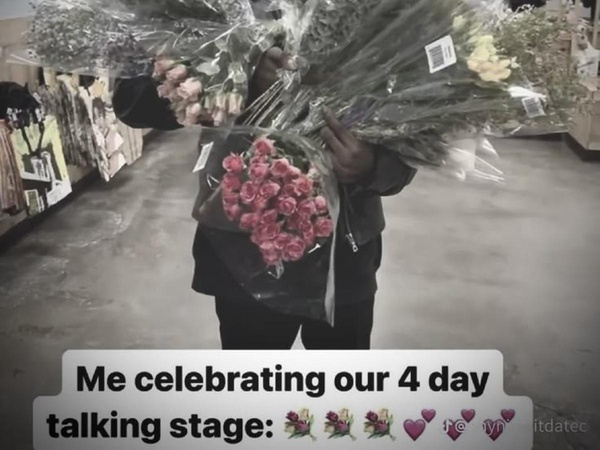
The Talking Stage Is the Point: Must We Date? Can’t We Just Talk? .
<p><em>A guide for people who aren't looking to get married next week or next year .</em></p><p><br/></p><p>I believe talking stages should not be run away from.</p><p><br/></p><p>Yes, I know. Strange advice in a generation where the moment someone says, “Can we talk?” we start calculating the fastest route to disappearance. But hear me out. When you're single, you're fine. You're good. You're okay. You know yourself, you have your routines, your peace, your little quirks, and nobody is there to disturb your carefully constructed understanding of who you are.</p><p><br/></p><p>Then you start talking to someone, and suddenly, you're meeting yourself all over again.</p><p><br/></p><p>You begin to notice things you conveniently ignored while you were single. “Wait, I’m actually an impatient asshole?” Apparently. “Why do I take three business days to reply a message?” Good question. “Why does someone asking where I am suddenly feel like an attempted invasion of my privacy?” Also a good question. Then you realise you have trust issues, your self-esteem could use some attention, you don't communicate as well as you thought you did, and you have a rather complicated relationship with vulnerability. You cuss at the slightest provocation and somehow still have the audacity to ask, “Why am I like this?”</p><p><br/></p><p>But here's where I think we sometimes get it wrong.</p><p><br/></p><p>A talking stage doesn't only introduce you to your flaws. Sometimes, it introduces you to your strengths too. You might discover that you're actually a really good listener. Maybe you're more thoughtful than you realised, or you remember tiny details people tell you in passing. Perhaps you find out that you are patient when you genuinely care about someone, that you can have difficult conversations without running away, or that you're actually very good at making people feel safe enough to be themselves.</p><p><br/></p><p>You might even discover that you are funny. And not the “my friends laugh because they love me” kind of funny. I mean genuinely funny. You might discover that you enjoy having someone to share your random thoughts with, that you like being affectionate, that you know how to encourage people when they're struggling, or that you're surprisingly good at expressing yourself when you stop trying to act like you don't have feelings.</p><p><br/></p><p>And sometimes, the biggest discovery is that you don't actually want a relationship with the person.</p><p><br/></p><p>You just like them. As a person. You enjoy their company, you like their sense of humour, you appreciate the way they think, and eventually you both realise that perhaps romance isn't where this is going. And guess what? They might become your friend. The person you send ridiculous screenshots to, the person you call when something funny happens, the person who knows some of your strangest opinions and has somehow decided to remain your friend anyway.</p><p><br/></p><p>That is not necessarily a failed talking stage. Not every meaningful connection has to end with two people holding hands under fairy lights while a photographer screams, “One more!”</p><p><br/></p><p>Of course, this does not mean you should stay in every talking stage just because there is supposedly something to learn. Please. There are some situations where the lesson is very clearly, “Leave.” If someone is manipulative, disrespectful, dishonest, abusive, or consistently makes you feel unsafe, you don't need to remain there for character development. You can collect your dignity and exit the building. Self-awareness should never become an excuse for self-abandonment.</p><p><br/></p><p>But we also shouldn't approach every talking stage with the mindset that it must either become a relationship or become a complete waste of time.</p><p><br/></p><p>Sometimes, the person is teaching you what you like. Sometimes, they are showing you what you don't like. Sometimes, you realise that you have certain standards you never actually thought about before. Sometimes, you discover that you need more emotional maturity before getting into a serious relationship. Sometimes, you realise that you are actually ready for one. And sometimes, you realise that you are very much not ready and should probably go and sit down somewhere.</p><p><br/></p><p>All of these are useful discoveries.</p><p><br/></p><p>Because how else do you learn how you actually function with another person? How do you know whether you communicate well when you're upset, whether you can apologise without writing a five-paragraph defence, whether you can express your needs without expecting someone to read your mind, or whether you can disagree with someone without mentally drafting their obituary?</p><p><br/></p><p>You learn by interacting. You learn by paying attention to yourself while you are interacting with other people.</p><p><br/></p><p>That, to me, is one of the underrated benefits of talking stages. They give you an opportunity to observe yourself outside the comfort of your own head. You get to see how you love, how you withdraw, how you communicate, how you handle uncertainty, how you receive affection, how you respond to conflict, and even how you behave when you genuinely care about someone.</p><p><br/></p><p>And sometimes, you discover something beautiful.</p><p><br/></p><p>You discover that you are capable of loving more gently than you thought. You discover that you can be vulnerable. You discover that you can make someone feel seen. You discover that you actually enjoy companionship. You discover that beneath all the “I don't need anybody” speeches, you are, in fact, a human being who enjoys being known.</p><p><br/></p><p>So no, I don't think every talking stage deserves to be pursued endlessly. But I also don't think every talking stage deserves to be feared.</p><p><br/></p><p>Get to know people. Ask questions. Have conversations. Pay attention. Set boundaries. Enjoy the process. And while you're getting to know the other person, get curious about yourself too.</p><p><br/></p><p>Because maybe the talking stage will lead to love. Maybe it will lead to friendship. Maybe it will lead to a very necessary lesson about your attachment style and your questionable communication habits.</p><p><br/></p><p>Or maybe, after all the conversations, you'll simply realise that you are not ready.</p><p><br/></p><p>Whatever the outcome, you don't have to call it a waste.</p><p><br/></p><p>At least you know that you are, in fact: terrifyingly impatient.</p>


 182
182





Other insights from Stargirl.












Contributor Points

Points-to-Coupons

Referral Earning

Insights for you.


Gen Z, Are We.... Hungry?
If aliens were to read our texts, they'd think Gen Z are in a perpetual state of starva...
623 views
62 upvotes
71 comments



The Gender War.
I was doomscrolling yesterday.I hardly do that, but for some reason, I chose that and s...
233 views
55 upvotes
68 comments


SHAPE SHIFTER ???
I think we have been terribly unfair to the chameleon. For years, we have used its name...
206 views
50 upvotes
52 comments

In Her Likeness.
I hail from the southwestern part of Nigeria, and oftentimes, when I walk through the n...
193 views
49 upvotes
56 comments

The Yahoo Culture.
Let's talk about the Yahoo CultureSomething that is gradually becoming a norm.And every...
211 views
50 upvotes
61 comments


Dear Dad
Dear dad,It's been 7 years, 3 months and 1 day and your name still echoes in my brain.W...
311 views
49 upvotes
44 comments



HE IS EVERYWHERE
Yes, He is everywhere I have gone to a place where needles are used to pound yam. I saw...
114 views
41 upvotes
45 comments


Curiosity or Clout?
Omooo I have a bad habit. 😭Whenever something starts trending in Nigeria, I click on it...
253 views
36 upvotes
49 comments