Score |
11


Nimmat

 Writer. @ University of Abuja
Writer. @ University of Abuja



The Wrong Audience

<p>I remember someone asking me if I was okay, and I said yes.</p><p>I knew I wasn't.</p><p>I just didn't feel like explaining it. So I gave the easiest answer, the conversation moved on, and I went on with my day. I replied to messages, laughed at things on my phone and carried on like nothing was wrong.</p><p>Nobody knew.</p><p>I think about that whenever people say we should speak up about mental health.</p><p>Speak up to whom? Our parents? Our friends? The same people who hear “I'm struggling” and respond with “Go and pray,” “Na only you get problem?” or “Other people have it worse”?</p><p>In Nigeria, you can gather the courage to explain what is happening inside you and leave the conversation wishing you had kept quiet.</p><p>Some parents were taught to endure pain, not discuss it. They reach for prayer, comparison or discipline because those are the answers they know. But a child who gets punished for being vulnerable learns a lesson quickly: next time, suffer quietly.</p><p>Then the same adults complain that young people no longer open up to them.</p><p><img alt="" src="/media/inline_insight_image/IMG_8030.jpeg"/><br/></p><p>We keep telling people to speak. We spend far less time asking whether we are worth speaking to.</p><p>And stigma is only part of the problem. Nigeria has fewer than 300 practising psychiatrists serving more than 234 million people. In a nationwide study of 228 early-career psychiatrists, 85.8% had considered leaving the country, 69.2% were planning to leave at the time of the study, and 52.9% had taken practical steps towards migration.</p><p>We have too few professionals, and a significant number of those we have are thinking of leaving.</p><p>So when home is not a safe place to talk, professional help is out of reach, and the people trained to provide it are leaving, where exactly is someone supposed to take their pain?</p><p><img alt="" src="/media/inline_insight_image/IMG_8040.jpeg"/><br/></p><p>For some, the answer is the internet.</p><p>A stranger describes something you have spent years trying to understand about yourself. Suddenly, you have words for an experience you thought you were facing alone. You recognise yourself in somebody else's story. Their honesty makes it easier to admit that you need help.</p><p>That matters. A person can spend years believing they are weak, lazy or broken before discovering that there is a name for what they are experiencing. Someone else's story can be the first thing that makes them seek support.</p><p>Silence protects ignorance, too. When nobody talks about depression, people keep calling it laziness. When everyone hides their struggles, those who dismiss mental illness never have to question what they believe.</p><p>But the internet is not a support group simply because someone has shared something painful.</p><p>You can tell thousands of people the worst thing you have ever experienced and discover that some of them are less interested in understanding you than in finding something to laugh at. Your words can be screenshotted, passed around group chats and dragged out of context. A confession made in pain can become somebody else's entertainment.</p><p>A 2026 qualitative study of suicide attempt survivors found that social media disclosure could bring support and connection, but also trolling, cyberbullying and judgment.</p><p>Think about that. Someone can finally find the courage to speak and end up facing another reason to wish they had stayed silent.</p><p>Look at Wentworth Miller, the actor from Prison Break. In 2016, a Facebook page turned a photograph of him into a joke about his weight. Miller responded by explaining that the photograph came from a period when he had been struggling with depression and suicidal thoughts.</p><p>The people laughing at the picture did not know what that period of his life had cost him. They saw a body they could mock. They did not see the person who had been fighting to survive his own mind.</p><p>He should never have needed to explain his suffering for the mockery to be cruel.</p><p>That is what makes public vulnerability so complicated. People demand honesty from those who are struggling, but honesty does not guarantee compassion. Sometimes, the moment you reveal where you hurt is the moment someone learns where to aim.</p><p>And when the damage is done, what then? Do the people who mocked you take responsibility? Do the screenshots disappear? Does an apology return your privacy?</p><p>The person who made the joke gets to move on with their day. You are the one left dealing with what they did with your pain.</p><p><img src="/media/inline_insight_image/IMG_8042.jpeg"/><br/></p><p>This is why I refuse to treat public disclosure as the only proof of courage.</p><p>There is a difference between being heard and being exposed. Needing help does not mean wanting an audience. Wanting someone to understand does not mean consenting to have your history picked apart by strangers.</p><p>Your pain does not become more legitimate because you publish it. You should not have to turn your worst experience into a lesson, a brave confession or an inspirational story before people decide you deserve compassion.</p><p>And we need to stop congratulating people for speaking up while ignoring what happens after they do. We cannot demand honesty and then punish people for being honest. We cannot tell someone to open up, mock what they reveal, and still pretend we are helping to end stigma.</p><p>If we want people to talk about mental health, we need to learn how to listen. That means resisting the urge to compare suffering, preach at people, spread their private experiences or dismiss what we do not understand. It also means making professional care accessible. “Speak up” is not a treatment plan, and encouragement cannot replace the help someone needs.</p><p>So, should we share our stories?</p><p>Yes, when we choose to. When sharing helps us find support, challenge ignorance or make someone else feel less alone. But nobody should have to make their suffering public to prove it happened.</p><p>I said I was okay that day because I wasn't ready to explain that I wasn't.</p><p>I did not owe everyone an explanation.</p><p>And my silence did not make my pain any less real.</p><p>Real voices deserve to be heard. They do not owe the world access to every wound.</p><p><img src="/media/inline_insight_image/IMG_8044.jpeg"/><br/></p>
Competition entry
|
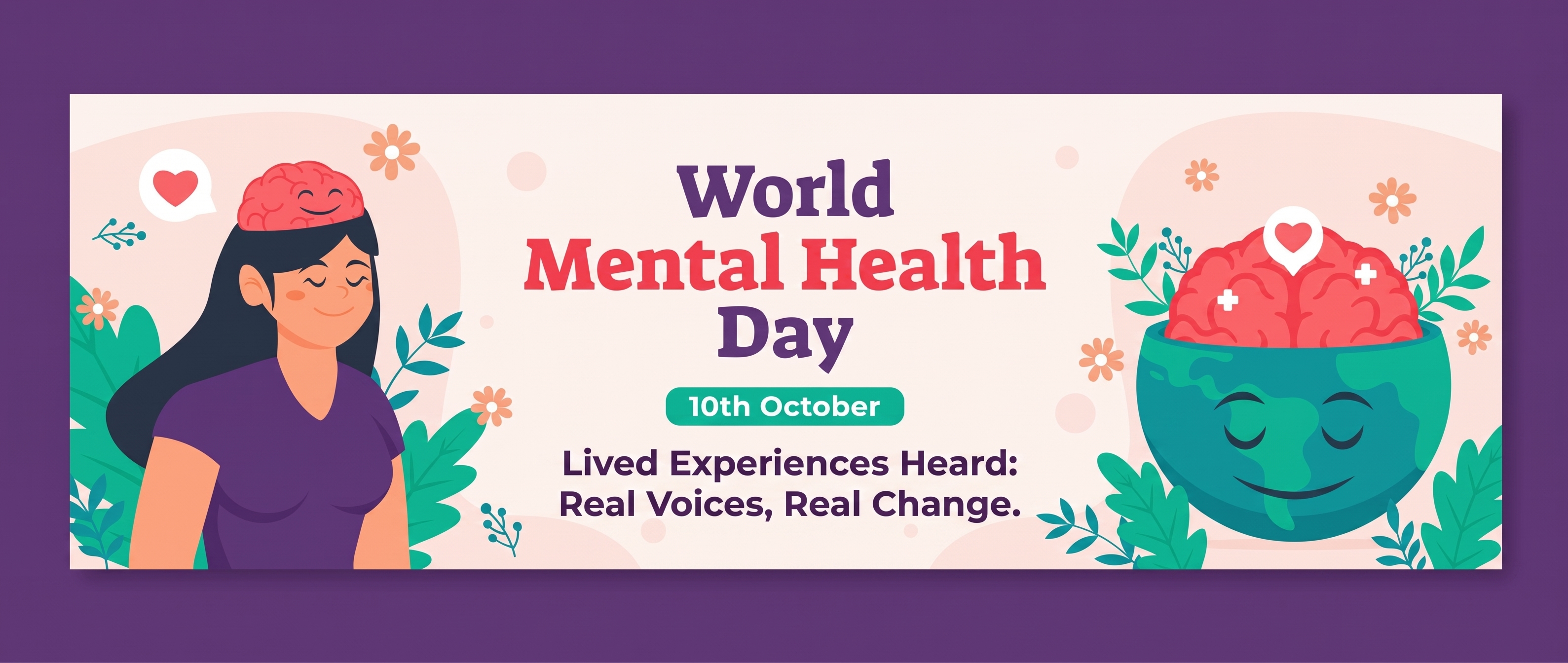
WORLD MENTAL HEALTH DAY: REAL VOICES, REAL CHANGE - SHOULD WE SHARE OUR STORIES?


 11
11





Other insights from Nimmat








Contributor Points

Points-to-Coupons

Referral Earning

Insights for you.


Silence: The things we don't say.🥺
I walked out of my house, shutting the door behind me, and moved to the terrace.I neede...
254 views
60 upvotes
64 comments



Can We Talk About Period Pain?
Yesterday I nearly died. And please, I’m not even exaggerating. Menstrual cramps are ac...
211 views
58 upvotes
60 comments
Suicide: The Permanent Solution.
“Did you regret it?”“You know…”I hesitated.“What happened?”A heavy sigh was the first r...
269 views
51 upvotes
54 comments
Suicide: The Nigerian perspective.
As we all know, this month, September is Suicide Prevention Month.Today, I'll be talkin...
167 views
46 upvotes
66 comments


2 a.m.
Maybe it's all the nights I spent not sleepingOr all the days I sat thinkingOf how I've...
270 views
52 upvotes
50 comments
Yours in the Empty
Losing a father is one thing,Losing a best friend is another.Losing the "head" is one t...
418 views
60 upvotes
44 comments

I’m Skinny, and So What?
What if I told you that I have cried more over my own arms than over any guy who has ev...
237 views
49 upvotes
51 comments
Curiosity or Clout?
Omooo I have a bad habit. 😭Whenever something starts trending in Nigeria, I click on it...
237 views
36 upvotes
48 comments