Score |
151


Nimmat

 Writer. @ University of Abuja
Writer. @ University of Abuja



Who Gets to Be Heard?
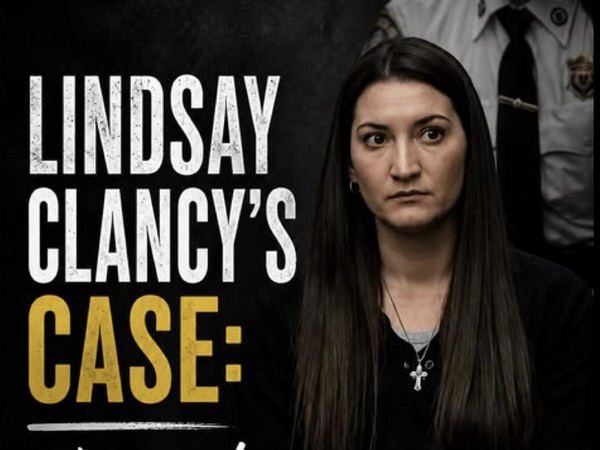
<p>It was a normal night. I had just finished watching a horror movie and, because apparently I enjoy making bad decisions, I was now too scared to sleep. So I picked up my phone and started scrolling through TikTok for a while.</p><p>That was when I saw a man talking passionately about a woman who had killed her three children. I thought it was an old case that had randomly resurfaced, so I watched for a few seconds and scrolled away.</p><p>Then I saw it on my friend Faye’s status.</p><p>I went back to TikTok and suddenly the case was everywhere. My FYP had become Lindsay Clancy. People were talking about postpartum psychosis, the trial, her husband, the doctors and whether she should be held responsible. I checked the date and realised the killings happened in January 2023.</p><p>Three years ago.</p><p>So why was everybody talking about it now?</p><p>That was when I actually started reading about the case, and it reminded me of something from home. Whenever my siblings and I were fighting, everybody would be shouting their own version of what happened. My mother would listen for a while and then ask, “Okay, but what actually happened?”</p><p>I found myself asking the same question here, except this time there were three people who could never answer it.</p><p>Cora was five. Dawson was three. Callan was eight months old.</p><p>Lindsay did not abuse these children ooo. She strangled them, one by one.</p><p>That was the point where this stopped feeling like another internet debate to me.</p><p>I understand why postpartum psychosis is part of the conversation. It is a real and severe psychiatric condition, and research estimates that it affects roughly 1 to 2 women per 1,000 births. Postpartum depression is much more common, with about one in eight women with a recent live birth reporting symptoms.</p><p>But understanding a condition and deciding what responsibility looks like are two different questions.</p><p>Andrea Yates shows just how complicated that question can become. She drowned her five children in 2001. Her first murder conviction was overturned after problems with prosecution psychiatric testimony, and at her retrial she was found not guilty by reason of insanity and committed to a state mental hospital.</p><p>Lauren Dickason’s case went differently. She killed her three daughters in New Zealand and argued that severe postpartum depression affected her responsibility. Her mental-health difficulties were acknowledged, but the jury rejected her defence and convicted her of murder.</p><p>Then we have Lindsay Clancy. Her defence argued that postpartum psychosis made her not criminally responsible. Prosecutors argued that she acted deliberately. After seven days of deliberation, the jury deadlocked 11–1 and a mistrial was declared. Eleven jurors reportedly favoured a verdict of not guilty by reason of insanity; one did not.</p><p>Reading these cases made me realise why this argument cannot be reduced to “she was mentally ill” or “she killed her children.” The law has to wrestle with what a person understood, what they were capable of understanding, and what responsibility means when severe mental illness is involved.</p><p><br/></p><p>But there is another part of this conversation that I think we are uncomfortable saying out loud.</p><p>The person who suffers from the illness is not the only person who matters.</p><p>As the saying goes, “A child is a child of the community.” Their lives do not become less important because the person who killed them was suffering too.</p><p>A mother can be desperately unwell. The healthcare system can fail her. She can need psychiatric treatment. None of that changes what happened to those three children.</p><p>Those truths do not cancel each other out.</p><p>In fact, the healthcare question makes the situation even more serious. After the Clancy mistrial, Massachusetts Governor Maura Healey proposed increased postpartum support, including voluntary home nurse visits and additional funding for maternal mental-health services.</p><p>Good. We should want that.</p><p>But prevention and accountability are not opposites.</p><p>If someone is genuinely too psychotic to be held criminally responsible, I don't think that should mean everyone simply walks away from the consequences. It can mean secure psychiatric treatment, continued supervision and protection of other people. And if the evidence establishes criminal responsibility, mental illness should still be considered in determining the appropriate punishment.</p><p>What I cannot accept is a conversation where compassion for the mother becomes so loud that the children become background noise.</p><p>I saw how quickly the internet turned the Clancy case into something people could pick apart. By August 21, more than 164,400 TikTok videos had appeared under <a class="tc-blue external-link external-link" href="https://twocents.space/insights/tag/clancy" rel="noopener noreferrer" target="_blank">#Clancy</a>, with people analysing testimony and forming their own theories while the trial was still going on.</p><p>Everybody had something to say.</p><p>The children did not.</p><p>And that is what I keep coming back to.</p><p>Cora.</p><p>Dawson.</p><p>Callan.</p><p>Three children should not become the smallest part of a conversation about their own deaths.</p>



 72
72





Other insights from Nimmat













Contributor Points

Points-to-Coupons

Referral Earning

Insights for you.


Gen Z, Are We.... Hungry?
If aliens were to read our texts, they'd think Gen Z are in a perpetual state of starva...
605 views
59 upvotes
68 comments



Can We Talk About Period Pain?
Yesterday I nearly died. And please, I’m not even exaggerating. Menstrual cramps are ac...
211 views
58 upvotes
60 comments


The Gender War.
I was doomscrolling yesterday.I hardly do that, but for some reason, I chose that and s...
206 views
54 upvotes
67 comments


In Her Likeness.
I hail from the southwestern part of Nigeria, and oftentimes, when I walk through the n...
181 views
48 upvotes
55 comments

The Yahoo Culture.
Let's talk about the Yahoo CultureSomething that is gradually becoming a norm.And every...
193 views
49 upvotes
60 comments


Dear Dad
Dear dad,It's been 7 years, 3 months and 1 day and your name still echoes in my brain.W...
300 views
48 upvotes
44 comments

Curiosity or Clout?
Omooo I have a bad habit. 😭Whenever something starts trending in Nigeria, I click on it...
237 views
36 upvotes
48 comments

Dear Future Me
“Are you happy?”The woman sitting across from me smiled before answering. “You really h...
169 views
39 upvotes
47 comments