Oh, please. Spare me the lectures about what an African story is supposed to sound like.
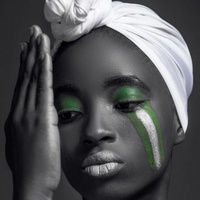
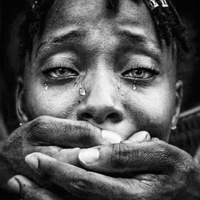
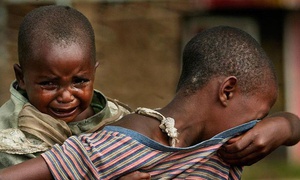
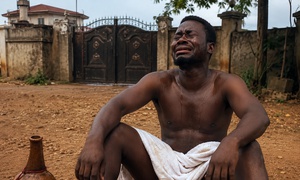
Funny how Africa seems to have a casting requirement. Give us a poor village, a starving child, a corrupt politician and a war-torn community, and the story practically arrives with its authenticity certificate. Everybody knows what they're looking at. Authentic. Powerful. Raw. So African.
But let an African family live comfortably. Let the daughter attend a good university, the father drive a nice car, and the family worry about marriage, ambition, bills or what to have for dinner. Suddenly, the story needs an explanation.
Funny, isn't it? Poverty needs no explanation, but comfort must defend its existence.
We have reduced an entire continent to a handful of familiar images and then mistaken our ability to recognise those images for an understanding of Africa.
Chimamanda Ngozi Adichie described this problem in her TED Talk, The Danger of a Single Story. A professor questioned the authenticity of her novel because her characters were educated, middle-class and drove cars. Her American roommate was equally surprised that she spoke English so well because she came from Nigeria.
Adichie's experience exposes the arrogance of treating one person's limited knowledge of Africa as the authority on what Africans can realistically experience.
The audacity of questioning an African writer's imagination because it exceeds your own idea of Africa is quite something.
The problem with a single story is not just that it leaves things out. It teaches people to distrust whatever falls outside it. And that distrust doesn't disappear when the conversation moves from readers to the people who publish, review and judge African literature.
In fact, we have found another way to question the people behind the stories.
Now, a writer's English can become evidence against them.
Beautifully constructed sentences? AI. Unusual vocabulary? AI. A polished paragraph? Somebody must have generated it. The writer is pronounced guilty before anyone has bothered to examine the work.
Are we now expected to make our work less intelligent to make it more believable? Should an African writer deliberately damage a perfectly good sentence so that nobody questions its origin?
Let's not be ridiculous. Please.
Passing off AI-generated work as entirely your own is dishonest. Writers have every right to object to it. But suspicion is not evidence, and knowing how to write is hardly a criminal offence.
And isn't there something deeply ironic about all this? Humans created AI, trained it on human language and writing, and now some people are treating human writing as suspicious because it resembles what they taught a machine to produce. We built a machine to imitate us, and somehow, we are beginning to question whether the humans sound too much like it.
A 2023 study by researchers at Stanford University found that several AI-writing detectors disproportionately misclassified writing by non-native English speakers as AI-generated. The study did not specifically examine African writers, but it exposed a serious weakness in tools increasingly used to judge human writing.
An African writer can spend years studying the language, reading widely and sharpening their craft, only to have that very improvement presented as evidence of artificial writing.
We should be careful about the confidence with which these tools make accusations. A detector can produce a result. It cannot tell you the entire history of the person who wrote the sentence.
This is what makes the Ake Arts and Book Festival's 2026 theme, Native Intelligence, particularly relevant. African knowledge did not begin with artificial intelligence, and African creativity does not need a machine to validate its existence. The festival's programme even includes a panel titled “The Future of Creative Work with Artificial Intelligence.” Yet here we are, questioning whether African writers can produce the very thing AI was built to imitate: human imagination, intelligence and language. If originality is what we claim to protect, why are we so quick to put human brilliance on trial?
And the people making these decisions are not limited to individual readers. Publishers, literary prize panels and international institutions help determine which books receive attention, funding, reviews and wider distribution. Their choices have consequences beyond the writers who get recognised. They influence which stories become visible and, eventually, which stories audiences repeatedly associate with Africa.
That is an alarming amount of power for an industry that cannot possibly dictate the literary identity of an entire continent.
Africa has thousands of languages, different cultural traditions and experiences that cannot be squeezed into one description. Some writers work in English. Others write in Pidgin, indigenous languages or a mixture of several languages. Some write romance. Others write science fiction, satire, family drama, horror or political fiction.
None of these becomes less African because it doesn't resemble a story someone has already approved.
And before anyone misunderstands me, this is not an argument for giving African writers automatic praise. A terrible novel is still a terrible novel. Poor character development deserves criticism. Plagiarism deserves consequences. A writer should be questioned about the quality and originality of their work.
But there is a difference between finding fault with a story and deciding that the person who wrote it could not possibly have produced it.
Who appointed these people custodians of African authenticity?
It isn't always a foreign reader. Africans can do it too. We can dismiss stories that don't resemble our own experiences, ridicule unfamiliar expressions and treat one person's cultural reality as the standard for everybody else. We can become so attached to the version of Africa we recognise that we start rejecting the versions we don't.
That is how a narrow definition survives. It doesn't need one permanent gatekeeper. It only needs enough people willing to guard the same gate.
So, when we talk about authenticity, we need to be careful about what we're actually demanding. Are we asking whether a story is honestly written, thoughtfully developed and culturally grounded? Or are we asking whether it looks and sounds familiar enough to satisfy us?
One is literary judgement. The other is prejudice pretending to be discernment.
A story should be judged for what it does on the page. Its characters can be challenged. Its arguments can be dismantled. Its writing can be criticised. But an author's nationality, vocabulary or choice of subject should not become a substitute for literary analysis.
My verdict: I refuse to accept that an entire continent must keep producing familiar evidence of its own identity before its writers are allowed to experiment.
The African writer is not responsible for making every reader feel at home. Literature is not a guided tour, and a novel is not required to explain an entire continent to someone who has never bothered to look beyond its pages.
Your unfamiliarity with a story is not evidence against it. Your inability to recognise its language does not make it artificial. And your limited picture of Africa does not give you the authority to declare its other realities unbelievable.
Africa is not a genre with a fixed cast of characters. And no reader gets to turn their limited imagination into everybody else's writing instruction.



 4