We often speak of love
as something that binds
two people
drawn together
by desire,
by choice,
by something that feels
mutual.
And so we say:
If both people agree,
then it is right.
But agreement
has never been that simple.

Because consent can exist
inside pressure.
Inside expectation.
Inside the quiet fear
of losing someone
if you say no.
A “yes” can be spoken
while something inside
hesitates.
A “yes” can be learned
repeated
performed.
So the question becomes:
is it still freedom
if you feel you cannot refuse?

Marriage, we are told,
is unity.
Two lives
woven together
until they are no longer
easily separated.
But when does connection
become entanglement?
When does closeness
begin to erase
the edges
that make us individuals?
Love should not require
the disappearance of self.

There are spaces
where people remain
not because they want to,
but because leaving
feels impossible.
Where intimacy becomes
something endured
rather than shared.
Where the body is present,
but the person
is somewhere else entirely.
Consent, in these moments,
becomes a word
that no longer protects.
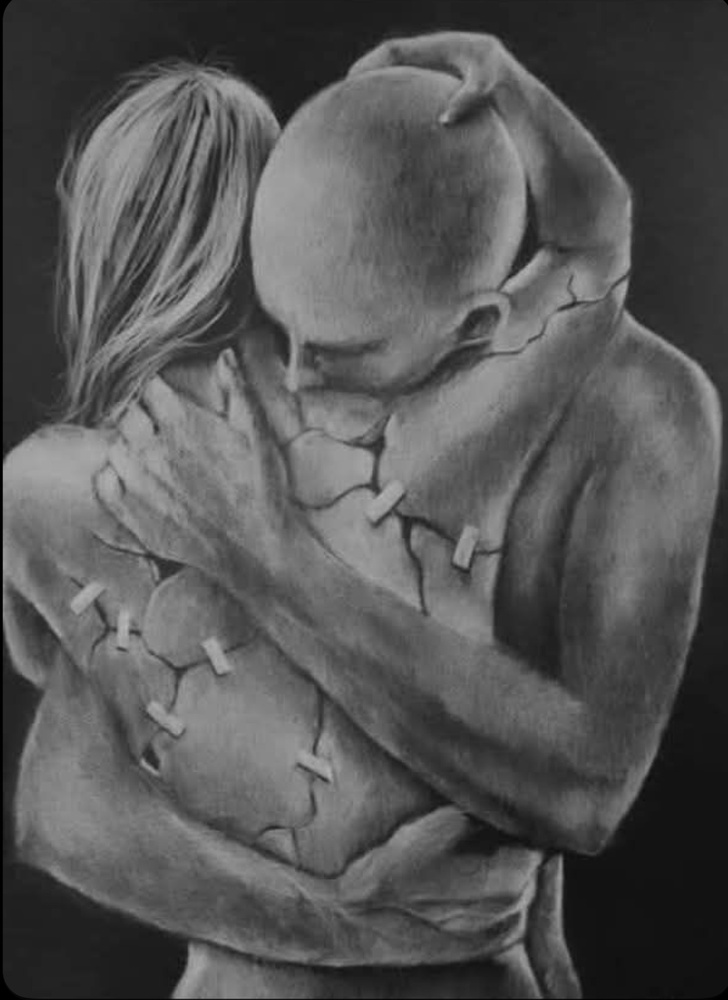
And yet
we return to love
as something sacred.
Something worth protecting.
Something worth repairing.
But repair is not silence.
It is not endurance.
It is not the quiet acceptance
of harm
in the name of commitment.
Love does not mean
you owe your body.
Marriage does not mean
you surrender your boundaries.
And consent
real consent
is not just the absence of “no,”
it is the presence
of safety, of choice, of self.
So yes,
there must be limits.
Not because love is restricted,
but because people
are not possessions.
Not because desire is wrong,
but because dignity
must remain untouched.
Because without limits,
What we call love
can slowly become
something else entirely.






 338