Imagine a 22 year old Nigerian writer being questioned for writing too well. Her grammar is flawless, her arguments are carefully developed, and she uses words that some people consider too sophisticated for someone of her background. Instead of appreciating her work, people begin to wonder whether she used AI. Suddenly, her vocabulary becomes suspicious, her fluency becomes questionable, and her ability to express herself becomes something she must defend. This raises an important question,when did writing well become evidence against a writer? The African voice is not being questioned for the first time, but in the age of artificial intelligence, the reasons for questioning it have taken a new form. While genuine AI generated writing must be addressed, writers should not be judged by narrow expectations of what African writing ought to sound like.
Long before AI became part of conversations about authorship, African writers had already experienced questions about the authenticity of their stories. In his essay, An Image of Africa Racism in Conrad's Heart of Darkness, Chinua Achebe criticizes Joseph Conrad's representation of Africa in Heart of Darkness. Achebe challenges the way Africa and its people are presented, particularly the reduction of the continent to a place of darkness and otherness. His criticism raises a broader question about representation who has the authority to determine how Africa is seen and understood? This also affects how we judge African writers. When people already have a particular idea of what African stories should look like, they may reject stories that do not match what they expect.
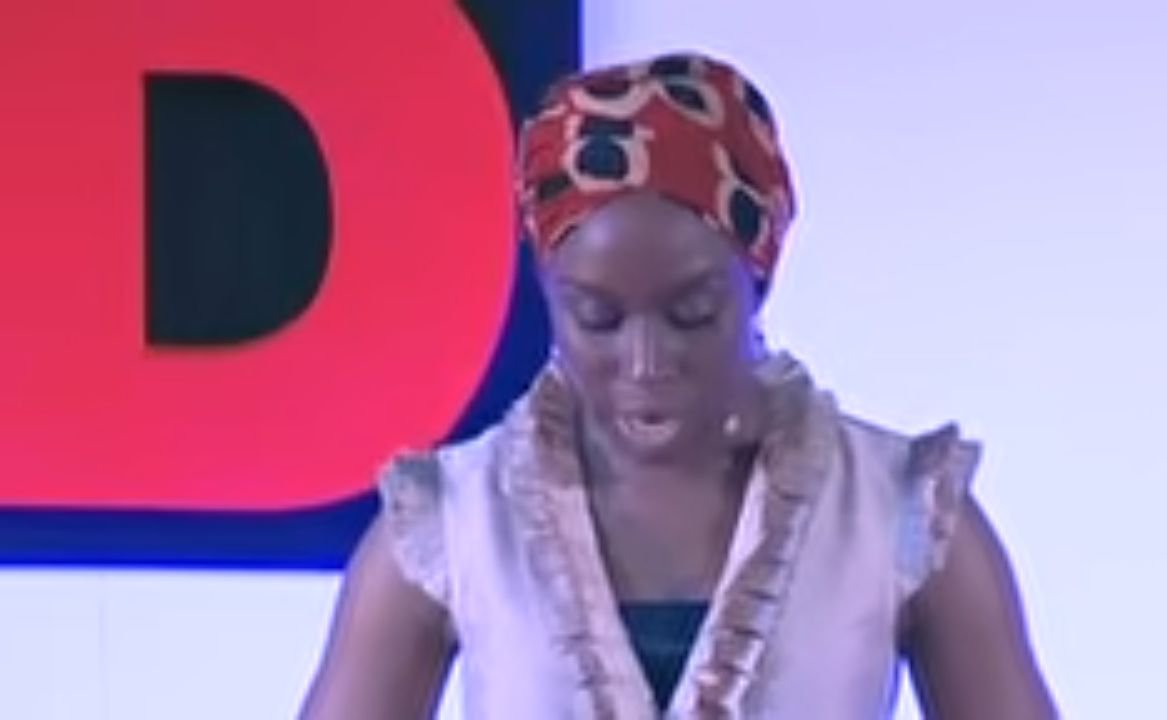
Chimamanda Ngozi Adichie The Danger of a Single Story further demonstrates how these expectations influence the way people understand others. As a child, Adichie read mostly British and American books, which influenced the kinds of stories she initially wrote. Her experiences later challenged her understanding of storytelling. She recalls how her American roommate was surprised that she spoke English so well, revealing an expectation shaped by a limited understanding of Africa. She also remembers a professor who questioned the authenticity of her novel because its characters were so much like him a middle class educated man. To the professor, these characters apparently did not fit his idea of what an African story should contain.Africans are educated, wealthy, poor and everything in between. Adichie also acknowledges that she had formed her own single story about Mexicans. Her experience reminds us that anyone can develop limited assumptions about people they do not fully understand. The problem, therefore, is not simply who is judging, but the assumptions they bring to that judgement.
AI has become another reason African writers are questioned. A writer can put so much effort into producing a good essay, only for the quality of the writing to make people suspect that AI was involved. A 2023 study by researchers at Stanford University, titled GPT Detectors Are Biased Against Non native English Writers, found that some AI detectors wrongly identified essays written by non native English speakers as AI-generated. In fact, the study recorded an average false positive rate of 61.3 per cent on the TOEFL essays examined. This means that some essays written by real people were wrongly flagged as AI generated. Although this findings does not mean that the same rate applies to all African writers, it shows that AI detectors are not always reliable. A detector's result should therefore not be enough to conclude that someone used AI.
Consider two Nigerian students submitting essays to a lecturer. The first writes with excellent grammar and well developed arguments. The lecturer suspects that the student used AI because the writing appears unusually polished. The second submits an essay containing grammatical errors, and the lecturer assumes that it must be genuinely human because it appears less sophisticated. But does the second student's grammatical weakness automatically make the essay more authentic? Does the first student's fluency make the work artificial? Neither conclusion is justified by writing quality alone. A person can write beautifully without using AI, just as someone can submit AI generated work containing errors. The ability to explain one's arguments, discuss one's research and demonstrate an understanding of one's work can help an assessment, but even this should form part of a fair investigation rather than become an unquestionable test.
The controversy surrounding Nigerian writer Jerry Falade and his book Call Me, I'll Hide the Body also illustrates the difficult questions surrounding authorship in this period. The book attracted attention amid reports of a substantial publishing deal and subsequent allegations concerning AI use. Falade denied that the book was AI generated and reportedly distinguished between using AI for research and having AI write the book, I keep wondering what exactly does it mean to use AI in the writing process, and at what point does assistance become a replacement for the writer's own work? These distinctions matter because not every form of technological assistance is the same. Correcting a spelling mistake, checking grammar, and submitting an entirely AI generated argument as one's original work are different activities. The rules governing their use must be clear.
The theme of Native Intelligence offers another way to examine what society recognizes as intelligence and originality. In her explanation of the concept, Lola Shoneyin draws attention to the knowledge that exists outside formal education. People do not acquire all their intelligence from classrooms, certificates or universities. There is also knowledge developed through observation, experience, community, culture and the practical demands of everyday life. Sometimes, people who have received formal education mistakenly treat their educational achievements as the only measure of intelligence, forgetting that people were creating, surviving, solving problems and passing knowledge between generations long before modern educational institutions existed.
This idea reminds me of my grandmother, She did not receive much formal education, although she attended primary school,she was a housewive and she could read the Bible,her example makes me think about the many things a person can learn through living, observing and interacting with others. Her knowledge cannot be measured only by the number of years she spent in school. This is important to the discussion of African voices because knowledge is not produced only in universities,communities have their own ways of understanding the world, preserving knowledge and communicating experiences. Native Intelligence reminds us not to mistake the absence of knowledge from school for the absence of intelligence from communities
There is also no single African voice that every writer must reproduce. Africa contains many countries, languages, cultures and experiences. Even within Nigeria, people communicate through different languages, accents . Nigerian Pidgin, for example, is not failed English. It has its own patterns of expression and can communicate humour, relationships, social realities and identity. Proverbs also carry knowledge, cultural memory and meanings that may not survive a direct translation into another language. These forms of expression should not automatically be regarded as evidence of poor writing.
But what, then, makes a voice truly yours? I believe it involves more than vocabulary, grammar or the language in which a person writes. It includes the writer's experiences, perspectives, imagination and creative decisions. Two people may grow up in the same community, attend the same school and experience similar circumstances, yet tell entirely different stories because they do not interpret the world in exactly the same way. Background influences a person's voice, but it does not completely determine it. This is why writers should not be expected to sound alike simply because they share a nationality or cultural background. Neither should a particular writing style be treated as the property of artificial intelligence. A polished sentence does not automatically belong to AI, just as a sentence containing grammatical errors does not automatically belong to a human being.
Defending writers against unfair accusations does not mean pretending that the problem of AI generated submissions does not exist. When someone submits work written by AI and claims it as their own, they take credit away from writers who have spent time researching, thinking and developing their ideas. Writing communities therefore have a responsibility to protect original work. However, protecting originality should not mean accusing people based on assumptions. There is a difference between suspecting someone, having evidence and proving that they have done something wrong. An AI detector may give people a reason to look more closely at a piece of writing, but its result alone cannot prove which tool was used, how it was used or whether the writer broke any rules. Writers should be given the chance to explain themselves instead of being judged by a detector's result alone. At the same time, writers must be honest about the kind of help they received.
Finally😂(I know it's broad😭😂) the question is not whether AI should replace human creativity or whether every accusation against a writer is wrong. What matters is how we can protect original writing without making people feel that they must write in a particular way to be accepted. African writers have faced questions about who they are, and the stories they tell. The arrival of AI should not become another reason to doubt writers simply because their work does not match what people expect. Native Intelligence reminds us that people gain knowledge in different ways, just as African writers express themselves in different ways. A voice is truly yours not because of the accent you use, the words you choose or how perfect your grammar is, but because it reflects your own thoughts, experiences and the way you see the world. There is no single way to sound African, and no writer should have to make their writing less intelligent just to be believed.



 52